
Author
After 19 years inspecting vehicles, I’ve seen the same handful of mistakes drain more money from RV owners than anything else. None of them are exotic. They’re the quiet, boring decisions people get wrong — and then pay for over the next ten years.
Here are the ones that cost the most, and exactly how to avoid each.
1. Ignoring Water Until It’s Too Late
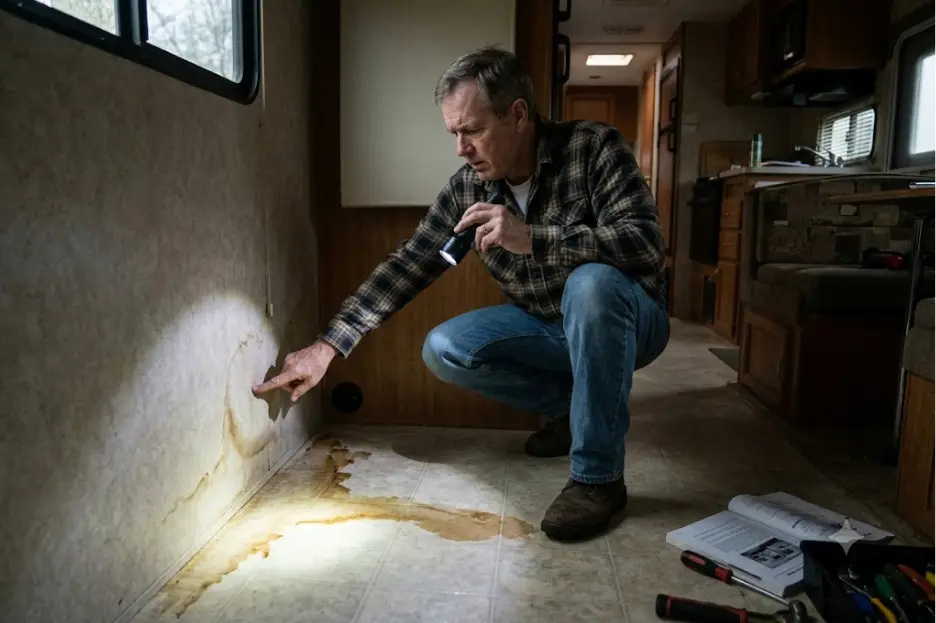
This is the number-one money mistake, full stop. Undetected water intrusion rots the structure — and a rotted wall or floor commonly runs $5,000–$15,000+ to repair, often more than the rig is worth.
The fix: treat sealing and covered storage as non-negotiable. A few hundred dollars a year of prevention protects thousands in value. It’s the single most important habit in every decision that saves you thousands.
2. Buying “Cheap” Because It’s Damaged
A rig that’s cheap because it has frame, floor, or water damage isn’t a deal — it’s a money pit that costs more to fix than it’s worth and won’t hold value.
The fix: buy clean, pay a fair price for sound structure and a real service history. As I explain in reliability vs purchase price, the low sticker is the least reliable number in the deal.
3. Paying for the Look, Skipping the Structure
Buyers fall for LED lighting, quartz counters, and a big touchscreen — and never check the subfloor, the seams, or whether components can be serviced. The result is a modern-looking rig with thousands in problems underneath.
The fix: price what you can’t see, not what shines. Glamour is cheap to add; structure is expensive to fix.
4. Skipping the Pre-Purchase Inspection
People spend $40,000+ on a used RV after a ten-minute walkthrough. That’s how the expensive surprises get through.
The fix: run a real inspection with a few cheap tools — see the full pre-purchase RV inspection checklist and the inspection tools worth owning. Fifteen minutes of checking beats a five-figure regret.
5. Letting the House Battery Die in Storage
A battery left deep-discharged over winter sulfates and loses its capacity for good — and it’ll read a healthy 12.7V at rest while being finished under load. Owners replace batteries constantly because they never maintained the last one.
The fix: keep the battery charged in storage and load-test before you trust it. More in our RV battery runtime guide.
6. Chasing the Newest Model
Buy the newest rig and you eat the steepest depreciation in the first years; buy the oldest and you inherit corrosion and unfindable parts.
The fix: aim for the age sweet spot — a moderately recent, proven, well-maintained model. We break the math down in our new-vs-used RV cost comparison.
7. Getting Insurance Wrong — Both Directions
Over-insuring a paid-off old rig wastes money every month; under-insuring the way you actually live (full-timing on a weekend policy) can be catastrophic when you file a claim.
The fix: match coverage to the rig’s real value and your real use. See how it fits the bigger picture in depreciation, maintenance & insurance.
8. Storing It Uncovered and Forgetting It
Sun, weather, and static tires do quiet damage all winter. Tires die of age and UV, not mileage; seals dry and crack; the battery drains. An RV that sits neglected loses value faster than one that’s driven and maintained.
The fix: cover it (breathable), keep the battery up, and check the seals before each season.
The Common Thread
Every one of these mistakes has the same root: looking at the price or the surface instead of the ten-year, whole-system cost. Keep the water out, buy sound structure, inspect before you sign, and maintain what you own — and you’ll skip the bills that catch most owners by surprise.
It all comes back to one idea: the decisions that save you thousands are the boring, structural ones you make before you sign.

Published on July 23, 2026
Mike Dawson
Mike Dawson is RVGeo's lead editor, applying inspection-grade rigor to RV research - verifying manufacturer specs, testing components, and fact-checking pricing and claims before they're published. RVGeo's approach draws on a background in automotive technical inspection, applied specifically to RV electrical, power, and safety systems. Mike oversees RVGeo's foundational guides on power systems, DIY conversions, and van-life setup, with every recommendation checked against real specs and current pricing rather than assumptions.
This post contains affiliate links. If you make a purchase through these links, we may earn a commission at no extra cost to you.