
Author
By Mike Dawson
RVGeo Lead Editor | Inspection Expertise by Mohamed Najib, Certified Automotive Technical Inspector — 19 years of vehicle inspection experience
The cheapest RV on the lot is almost never the cheapest RV to own.
Price is what you pay once. Reliability is what you pay — or save — every year after. After 19 years inspecting vehicles, I can tell you the buyers who come out ahead over a decade aren’t the ones who chased the lowest sticker. They’re the ones who paid a fair price for a sound, well-kept rig and then barely touched their repair budget.
Here’s how to tell the difference before you buy — and why reliability, not price, is the number that actually matters.
The 10-Year Math: Reliability Wins
Buyers fall into camps. Some chase the newest model, some stay loyal to a brand, some want speed and options, some just want the lowest price. The ones who consistently win financially are the ones who prioritize robustness and buy a proven model that’s been maintained.
It plays out the same way every time. A rig that’s cheap because it’s been neglected or damaged is a money pit — it costs more to fix than it’s worth, and it won’t hold value. A slightly more expensive rig with sound structure and a clean service history quietly saves you thousands over ten years. That’s the whole argument in one line: pay a little more for reliability, or pay a lot more later for a bargain.
(This is the same principle at the heart of the biggest RV ownership decisions.)
Don’t Trust the Price — and Don’t Blindly Trust the Paperwork Either
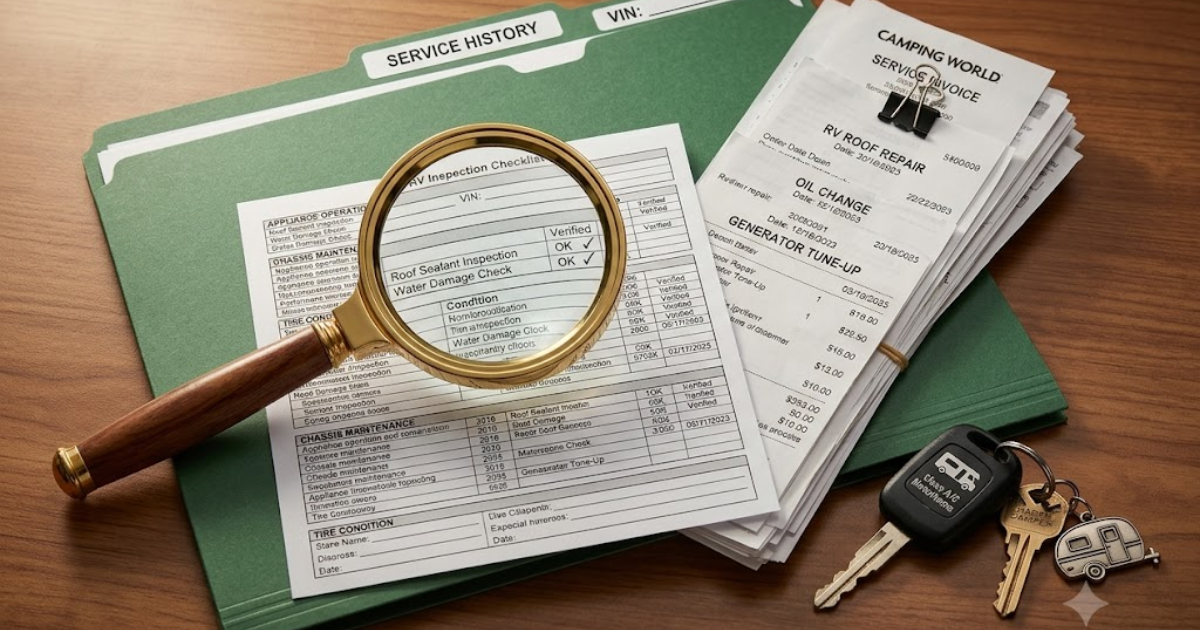
A thick folder of service receipts feels reassuring. It shouldn’t be the end of your due diligence — it should be the start.
Maintenance history matters for evaluating a rig. But a folder of paperwork proves what someone says was done, not the condition the vehicle is in today. Sellers can be optimistic. Receipts can be incomplete. The paperwork can tell a story the rig doesn’t back up.
An inspection exists to confirm or contradict that story. The documents can be flattering; the vehicle, when you put eyes and instruments on it, can’t lie. So cross-check: if the file says the roof was resealed last year, the sealant should look it. If it claims a new house battery, the battery should hold voltage under load. When the paperwork and the physical evidence agree, you have real confidence. When they don’t, believe the vehicle.
The Reliability Hierarchy: Check It in This Order
Not everything on an RV carries the same weight. Some faults are bargaining chips; some are safety issues you don’t negotiate. Work top-down.
1. Safety and structure first (the vehicle side).
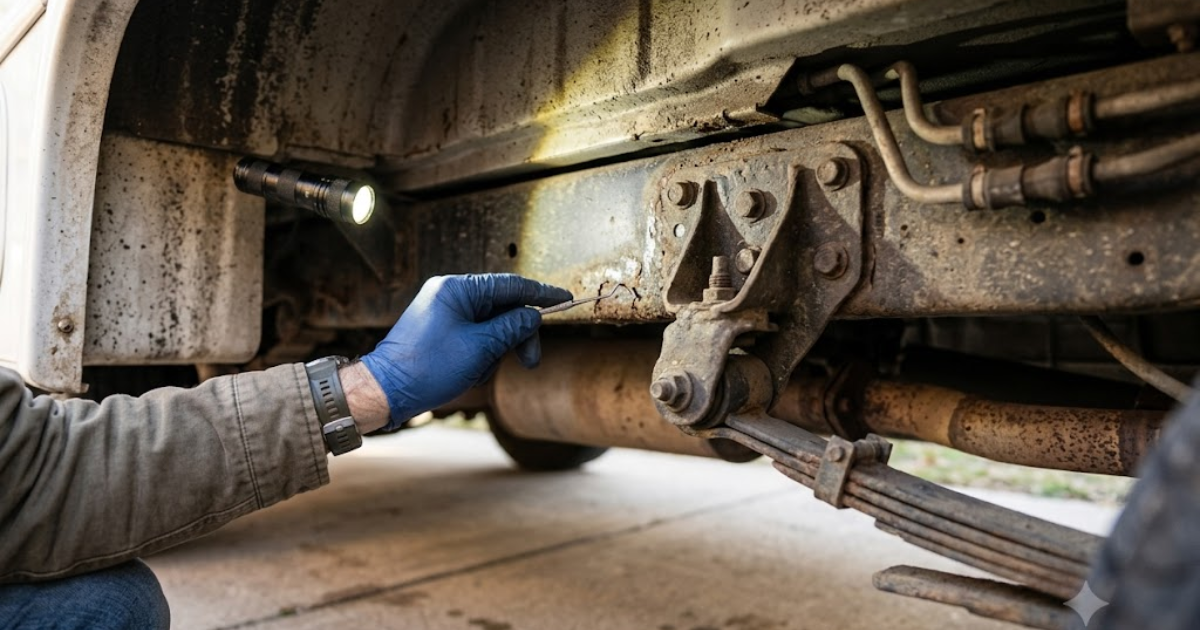
Brakes, body and frame/structure, and suspension come before anything else. These are both safety-critical and expensive, and a serious fault here isn’t a discount — it’s a reason to walk away. A rig that can’t stop, sit, or hold its structure straight is not a “project,” it’s a liability.
2. Then the “house” systems (the build).
Once the vehicle side is sound, most of the surprise repair bills live in the RV living quarters:
– Electrical — the coach power circuits, the house battery, and the charging system. This is where previous owners improvise, and where a tired battery or a botched DIY job hides.
– Water — the pump, the hoses, and the pressurized lines. A slow leak here does invisible damage under the cabinets.
– Appliances — the fridge, furnace, and water heater, which are the most expensive things to replace and the quietest to fail.
The Warning Signs That Predict Expensive Failures
Reliability shows itself in small tells long before something breaks. A few of the ones I look for:
- A house battery that reads fine at rest but collapses under a small load — its capacity is gone.
- A water pump that clicks on by itself with every faucet closed — a leak is bleeding off pressure.
- A 3-way fridge burning a yellow flame instead of a clean blue — its cooling unit is on the way out.
- Spongy walls or a soft floor — hidden structural rot, the one that isn’t worth fixing.
Each of these is a reliability red flag and a price you’ll pay later if you ignore it. For the full method — the exact zones, tools, and numbers — run the pre-purchase RV inspection checklist before you sign.
Where Reliability Peaks: the Age Sweet Spot
Reliability isn’t just “newer is better.” Buy the newest rig and you overpay through depreciation. Buy the oldest and you inherit corrosion, worn-out components, and — the real killer — parts that are no longer made.
The reliable choice sits in the middle: a moderately recent, proven model that’s been well maintained. New enough that parts and systems are still supported, old enough that someone else already absorbed the steep depreciation. That’s where reliability and value meet.
Bottom Line
The sticker price is the least reliable number in the whole deal. What actually protects your money is a rig that’s structurally sound, mechanically safe, and honestly maintained — verified with your own eyes and instruments, not just a seller’s folder.
Pay for reliability. A clean, well-kept RV at a fair price will always cost you less over ten years than a cheap gamble that looked like a deal on the day you signed.
This reliability-over-price principle is not specific to RVs. RVGeo founder Mohamed Najib, a certified automotive technical inspector, made the same argument about long-service engineering when Observer cited him on the Toyota Land Cruiser — see our press and media mentions.

Published on July 21, 2026
Mike Dawson
Mike Dawson is RVGeo's lead editor, applying inspection-grade rigor to RV research - verifying manufacturer specs, testing components, and fact-checking pricing and claims before they're published. RVGeo's approach draws on a background in automotive technical inspection, applied specifically to RV electrical, power, and safety systems. Mike oversees RVGeo's foundational guides on power systems, DIY conversions, and van-life setup, with every recommendation checked against real specs and current pricing rather than assumptions.
This post contains affiliate links. If you make a purchase through these links, we may earn a commission at no extra cost to you.