
Author
Honda EU2200i vs Champion 2000W: Which RV Generator Is Worth It in 2026?
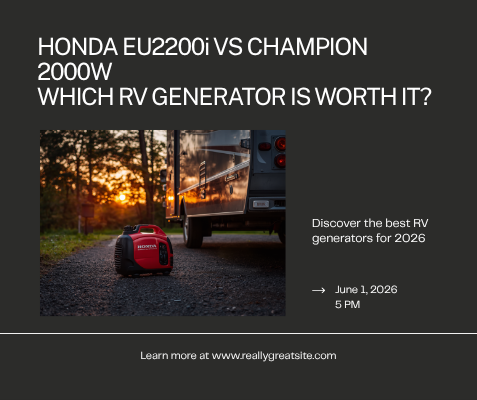
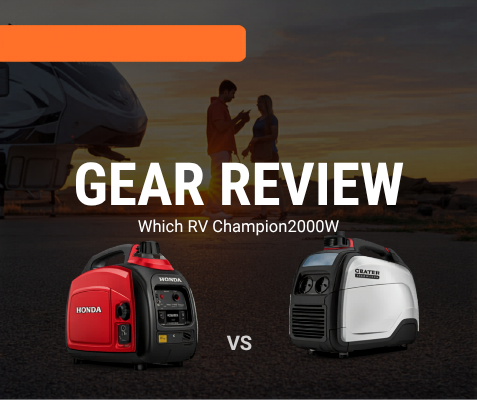
Honda EU2200i and Champion 2000W are the two most purchased portable inverter generators for RV use. Honda costs nearly twice as much. Is it worth it? This comparison gives you an honest answer based on noise, reliability, runtime, and total cost of ownership over 5 years.
Quick Comparison
| Honda EU2200i | Champion 2000W | |
|---|---|---|
| Running watts | 1,800W | 1,700W |
| Peak watts | 2,200W | 2,000W |
| Noise at 25% load | 48 dBA | 53 dBA |
| Runtime (25% load) | 8.1 hours | 11.5 hours |
| Weight | 47 lbs | 39 lbs |
| Fuel tank | 0.95 gallons | 1.1 gallons |
| Parallel capable | Yes | Yes |
| Price (2026) | ~$1,100 | ~$550 |
| Warranty | 3 years residential | 3 years |
Noise: The Most Important Factor at a Campsite
At 25% load, Honda runs at 48 dBA — barely audible at 50 feet. Champion runs at 53 dBA — a 5 dBA difference that sounds roughly 50–60% louder to human ears due to the logarithmic nature of decibel measurement.
In practice: at a quiet campsite, you can hear the Champion clearly from a neighboring site. The Honda blends into background noise. If you camp at crowded campgrounds or near other rigs, the Honda’s quieter operation is a genuine quality-of-life improvement — for you and your neighbors.
At full load, both generators are louder — Honda reaches 57 dBA, Champion around 65 dBA. The gap widens under heavy use.
Winner: Honda EU2200i — meaningfully quieter at all load levels.
Runtime: Champion Wins Clearly
Champion’s 11.5-hour runtime at 25% load vs Honda’s 8.1 hours is a significant practical difference. On a camping trip where you run the generator 4 hours in the evening for AC and charging, Champion goes 3 nights between refuels vs Honda’s 2 nights.
Over a week of boondocking, this means 2–3 fewer fuel runs with Champion. For remote camping where carrying extra fuel is inconvenient, the runtime advantage matters.
Winner: Champion 2000W — 42% longer runtime per tank.
Reliability: Where Honda Earns Its Premium
Honda’s GX engine series is among the most reliable small engine platforms ever built. RVers report Honda generators running 10–15 years with basic oil changes and minimal issues. The EU2200i has a proven track record across millions of units worldwide.
Champion is reliable for its price point — but “reliable for its price” is different from Honda reliable. Common Champion issues reported after 3–5 years of regular use include carburetor problems, starter cord wear, and voltage regulator failures. Champion’s 3-year warranty covers these, but after warranty expiry, repair costs can approach the price difference between the two generators.
Winner: Honda EU2200i — long-term reliability is genuinely superior.
Weight and Portability
At 39 lbs, Champion is 8 lbs lighter than Honda’s 47 lbs. For RVers who load and unload the generator solo, especially from a truck bed or storage compartment, 8 lbs is a noticeable difference. Champion also has a more ergonomic handle design that makes it easier to carry one-handed.
Winner: Champion 2000W — lighter and easier to handle.
Parallel Capability
Both generators support parallel operation — connecting two units to double output. Honda’s parallel cable produces 4,400W from two EU2200i units, enough to run a full-size 15,000 BTU RV air conditioner. Champion’s parallel kit produces 3,400W from two 2000W units — enough for a 13,500 BTU AC with headroom.
If you plan to eventually run two generators in parallel for AC, both options work. Honda’s parallel output is higher, but both cover the most common RV AC units.
Winner: Tie — both support parallel, Honda has higher combined output.
5-Year Total Cost of Ownership
| Cost | Honda EU2200i | Champion 2000W |
|---|---|---|
| Purchase price | $1,100 | $550 |
| Oil changes (annual, $15) | $75 | $75 |
| Spark plug (every 2 years) | $20 | $20 |
| Repairs (estimated) | $50 | $150 |
| Resale value (5 years) | -$400 | -$100 |
| Net 5-year cost | $845 | $695 |
The 5-year cost difference narrows significantly due to Honda’s resale value. A used Honda EU2200i in good condition sells for $700–800 — a Champion sells for $200–300. Factor in the resale and Honda’s net cost advantage shrinks to about $150 over 5 years.
Who Should Buy Each Generator
Buy the Honda EU2200i if:
- You camp at crowded campgrounds where noise affects others
- You plan to keep the generator 7–10+ years
- Reliability is more important than initial cost
- You want the highest resale value
- You need the absolute quietest option available
Buy the Champion 2000W if:
- You camp fewer than 30 nights per year
- Budget is a primary constraint
- Longer runtime per tank is more important than noise
- You’re lighter and need to move the generator frequently
- You’re not sure if you’ll keep the rig long-term
Frequently Asked Questions
Can the Champion 2000W run an RV air conditioner?
With a soft starter installed on your AC unit, a Champion 2000W can handle a 13,500 BTU rooftop AC. Without a soft starter, the startup surge (2,800–3,500W) exceeds Champion’s 2,000W peak. Install a Micro-Air EasyStart before relying on Champion for AC.
How often should I change the oil on my RV generator?
First oil change after 20 hours of use (break-in period), then every 50–100 hours or annually, whichever comes first. Use the manufacturer-specified oil weight — typically 10W-30 for most conditions.
Is Champion a reliable brand?
Champion is reliable for the price. Their generators consistently run without major issues for 3–5 years of moderate use. For occasional campers, Champion’s reliability is more than sufficient. For full-timers running the generator daily, Honda’s longevity justifies the premium.
See Also
- RV Solar vs Generator for Boondocking: Real Cost & Performance
- Best RV Inverter Charger in 2026: Tested & Ranked
- How to Size Your RV Battery Bank: Step-by-Step Guide
- RV Power System Setup: Complete Guide for Vans and RVs
Fuel Efficiency and Real-World Runtime
Runtime numbers on the spec sheet assume steady 25% load, which rarely matches real camping use — running a CPAP overnight, charging devices, and occasionally powering a fan or small appliance creates a variable load that falls somewhere between the 25% and 50% load ratings. In practice, most RVers get 6-9 hours from the Honda and 8-11 hours from the Champion on a single tank under typical mixed camping loads, meaning the Champion’s larger fuel tank and slightly better fuel efficiency at low loads translate into genuinely less frequent refueling — a real convenience during multi-day boondocking stretches without easy fuel access.
Which One Should You Buy?
Buy the Honda EU2200i if: you camp at campgrounds or shared boondocking spots where neighbors are close, noise etiquette matters to you, and you’re willing to pay a premium for the quietest possible generator and Honda’s reputation for long-term reliability.
Buy the Champion 2000W if: budget matters more than the last few decibels of noise reduction, you mostly boondock in more remote/spread-out locations where noise is less of a factor, and you want the longer runtime per tank for extended off-grid stretches.
Both generators are legitimate choices — the “best” one depends entirely on where and how you camp, not on one being objectively superior across every dimension.

Published on June 3, 2026
Mike Dawson
Mike Dawson is RVGeo's lead editor, applying inspection-grade rigor to RV research - verifying manufacturer specs, testing components, and fact-checking pricing and claims before they're published. RVGeo's approach draws on a background in automotive technical inspection, applied specifically to RV electrical, power, and safety systems. Mike oversees RVGeo's foundational guides on power systems, DIY conversions, and van-life setup, with every recommendation checked against real specs and current pricing rather than assumptions.
This post contains affiliate links. If you make a purchase through these links, we may earn a commission at no extra cost to you.