
Author
Running your RV air conditioner 24/7 burns through power fast — even on a large solar system. Smart RVers combine passive cooling strategies with targeted AC use to stay comfortable while preserving their battery bank for nighttime and cloudy days.
These 10 techniques can reduce your AC runtime by 40–60% without sacrificing comfort.
1. Choose Your Campsite Strategically
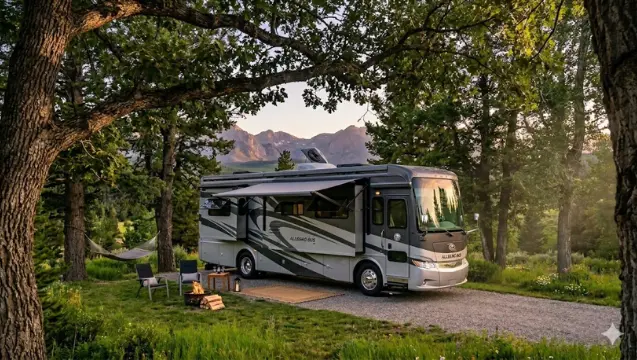
The single most impactful cooling decision happens before you even set up. Parking in the shade can reduce your RV’s interior temperature by 15–20°F compared to full sun exposure.
What to look for:
– Natural shade from trees (afternoon shade on the sunny side matters most)
– Elevation — higher elevations run 10–15°F cooler
– Breezy spots with natural airflow
– East-facing orientation — morning sun warms the RV, afternoon sun (the hottest) hits the side with fewer windows
2. Reflective Window Covers (The Biggest Impact Per Dollar)
Windows are your RV’s biggest heat source. Standard RV curtains block light but not heat. Reflective covers bounce up to 95% of solar heat away before it enters.
Best options:
– Reflectix between your window shade and glass — cheap and very effective
– Dedicated RV window insulation panels (custom-fit for each window)
– Reflective windshield cover for the cab area (huge heat source on Class A/C)
Result: Properly covered windows can reduce interior heat gain by 60–70%, dramatically cutting how hard your AC has to work.
3. Use a MaxxAir or Fan-Tastic Vent Fan
A quality roof vent fan draws hot air out while pulling cooler outside air in through open windows. When outside temps are below 82–85°F, this alone keeps most RVs comfortable.
Power draw comparison:
– MaxxAir vent fan: 35–50W
– 13,500 BTU AC: 1,200–1,500W
Running a vent fan instead of AC saves ~1,200W per hour — enormous on a solar system.
Setup: Open the window on the shady side, run the fan on exhaust from the vent on the sunny side. Creates effective cross-ventilation.
4. Pre-Cool Your RV Before Peak Heat
Peak heat hits between 1–5pm. Running your AC from 7–10am (when it’s cooler and your solar panels are generating) pre-chills your RV’s thermal mass so it stays comfortable longer without AC.
Why this works: Your RV’s walls, floor, and furniture absorb the cool air. When you turn AC off at 11am, internal temps stay manageable until 2–3pm, then you run AC again for 1–2 hours.
This cycle can cut daily AC runtime from 8 hours to 3–4 hours — saving 5,000–7,000 Wh per day.
5. Cook Outside or Use No-Heat Cooking Methods
Cooking inside your RV adds significant heat. A stovetop or oven running for 30 minutes can raise interior temps by 5–10°F — undoing the work of your AC.
Alternatives:
– Outdoor propane grill
– Instant Pot (generates less heat than stovetop)
– No-cook meals (salads, sandwiches) during peak heat hours
– Air fryer (faster, less heat than oven)
6. Insulate Your Roof and Walls
Factory RV insulation is often minimal. Adding insulation dramatically reduces heat transfer.
DIY options:
– Reflectix under roof vents and skylights
– Foam tape on door seals (stops hot air infiltration)
– RV roof coating (white elastomeric coating reflects solar radiation)
A white roof coating alone can reduce roof surface temperature by 50–80°F and interior temperature by 5–10°F.
7. Use Your Awning
Your awning does more than provide shade for sitting outside — it blocks solar radiation from hitting your RV’s side wall directly.
Most effective orientation: Extend the awning on the side that gets the most afternoon sun (usually the driver’s side when parked nose-west).
8. Time Your Activities and Ventilation
Morning (6–10am): Open all windows. Let cool morning air flush out overnight heat.
Mid-morning (10am–noon): Close windows and shades before it heats up. Run AC briefly if needed to pre-cool.
Peak heat (noon–5pm): Windows closed, shades down, vent fan running if under 85°F outside. Minimal AC.
Evening (5pm+): Open windows again as temps drop. Natural ventilation overnight.
9. Use a Portable Evaporative Cooler (In Dry Climates)
In low-humidity climates (Desert Southwest, Mountain West), a portable evaporative cooler (“swamp cooler”) can provide meaningful cooling at 50–150W — far less than AC.
Important caveat: Evaporative coolers only work when humidity is below 40–50%. In humid climates (Southeast, Gulf Coast), they’re ineffective and add moisture.
10. Combine with Strategic AC Use
None of these tips means abandoning your AC entirely. The smart approach:
- Use passive cooling (shading, ventilation, pre-cooling) to handle 70% of the cooling load
- Use AC only during peak heat or when outside temps exceed 90°F
- Keep AC set to 78–80°F rather than 72°F (each degree warmer saves ~3% energy)
Result: A well-managed setup with 600W solar and 400Ah LiFePO4 can maintain comfortable temps in most US climates without a generator.
Gear That Makes the Biggest Difference
| Item | Cost | Power Savings |
|---|---|---|
| MaxxAir vent fan | $150–$200 | Replaces 3–6 hrs of AC/day |
| Reflective window covers | $50–$150 | Reduces AC load 30–40% |
| White roof coating | $100–$200 | Reduces interior temp 5–10°F |
| Awning | Already installed | Reduces wall heat gain significantly |
| Soft start (for AC) | $280–$350 | Enables solar/generator AC use |
Frequently Asked Questions
At what outside temperature do you need AC in an RV?
Most RVers find they need AC when outside temps exceed 85–90°F. Below that, vent fans plus shade typically keep interiors comfortable.
Does parking in shade really make that much difference?
Yes — substantially. A black RV roof in full sun can reach 160°F+ surface temperature. In shade, it stays near ambient. The interior temperature difference is 15–25°F.
What’s the best RV fan for summer cooling?
The MaxxAir Deluxe 6200K and Fan-Tastic Vent 6000R are the most popular options. Both move high CFM (cubic feet per minute) of air and have reversible airflow.
To understand your AC’s power requirements, read How Many Watts Does an RV AC Use. For a full off-grid power setup, see our RV Boondocking Power Setup guide.

Published on June 13, 2026
Elena Brooks
Elena Brooks covers RV insurance for RVGeo, researching policy types, state requirements, and provider comparisons in depth before publishing. Her guides follow RVGeo's editorial standard of verifying every coverage detail, price, and policy term directly against insurer documentation rather than repeating marketing claims - so RV owners can compare real options, not sales pitches.
This post contains affiliate links. If you make a purchase through these links, we may earn a commission at no extra cost to you.