
Author
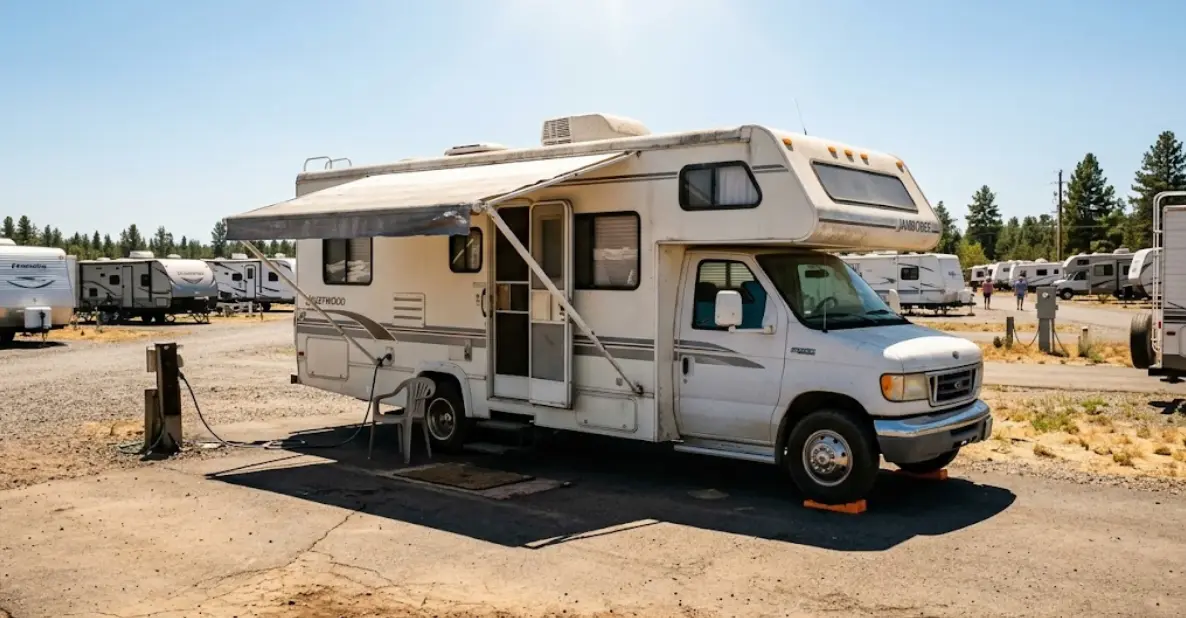
If your RV spends months parked outside, faded paint may be the first thing you notice.
It should not necessarily be the first thing you worry about.
Long-term sun exposure affects more than appearance. UV radiation, heat and repeated outdoor exposure can gradually affect headlights, tires, seals, roof penetrations and other components that matter for safety and function.
Visible deterioration and functional deterioration are not always the same thing.
The observations in this article come from 19 years of vehicle technical inspection experience. When components fail, it’s rarely because they stopped looking good-it’s because they stopped functioning properly.
What UV and Heat Actually Do to RV Materials
UV radiation can trigger chemical degradation in polymers and coatings. Heat adds another stressor. This is why there is no credible universal answer to “Will one summer damage my RV?” It depends on UV intensity, climate, material composition, color, previous condition, maintenance, orientation and exposure time.
1. Headlights: Producing Light Isn’t the Same as Producing a Good Beam
Modern vehicle headlamp lenses commonly use polycarbonate because it combines low weight with high impact resistance. But prolonged environmental exposure can eventually deteriorate the lens and its protective surface.
“A headlight can still produce light and yet no longer produce a good beam.”
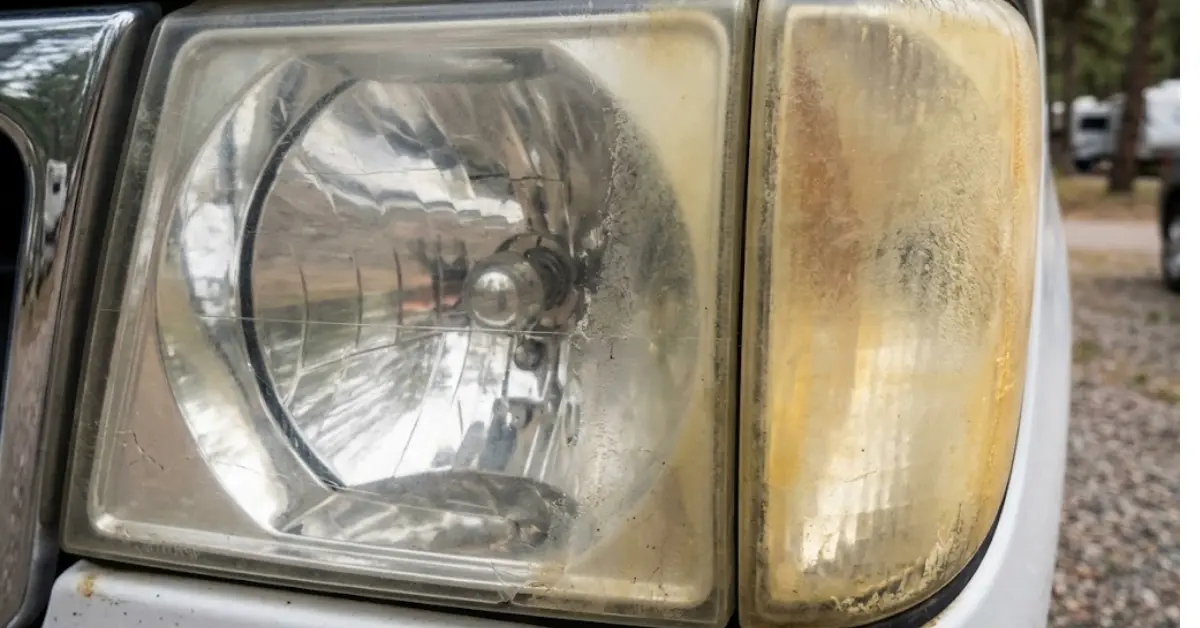
A driver sees light coming from the headlights and may assume the lighting system functions correctly. But the important question is how that light is distributed onto the road.
2. Paint and Clear Coat: The Damage Accumulates
Paint is probably the most obvious victim of long-term sun exposure. Modern automotive finishes use several layers, including primer, color and a protective clear coat.
UV damages the paint system, not the metal underneath. Corrosion becomes a concern when failed paint or existing chips allow moisture to reach exposed metal.
3. RV Tires: Tread Depth Doesn’t Tell the Whole Story
NHTSA specifically identifies recreational vehicles and other vehicles driven infrequently as situations where tire aging can become particularly relevant.
The key inspection principle is: Tread depth does not measure UV or environmental aging.
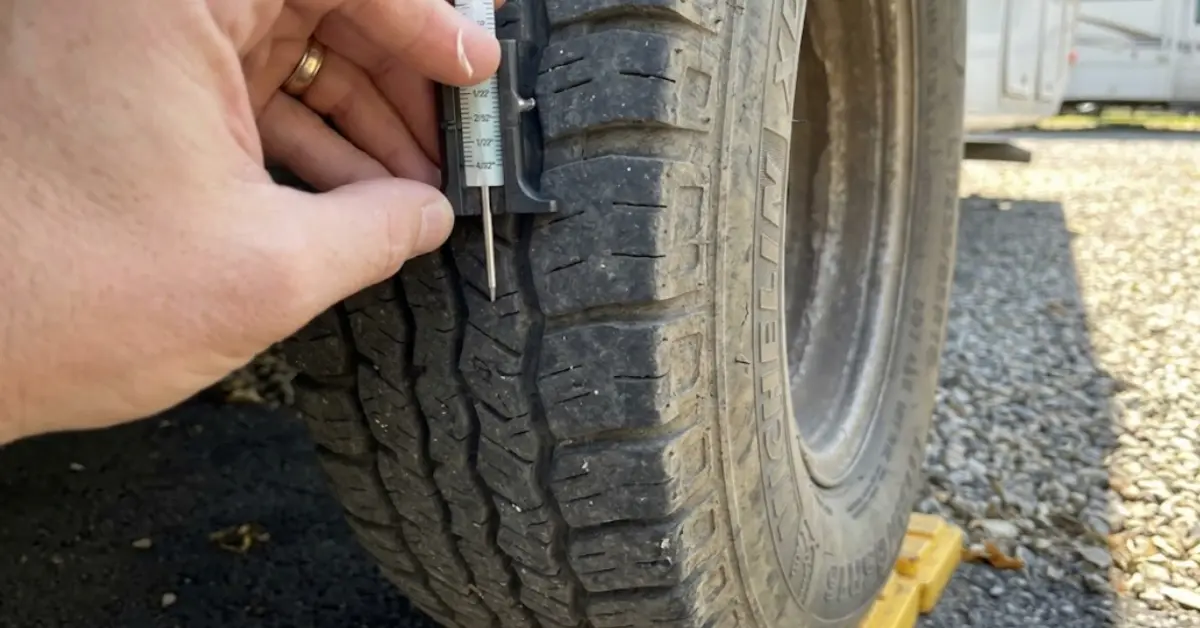
A tire can retain tread while other parts of the tire are aging. For RVs parked outside for extended periods, purpose-designed tire covers can reduce direct sunlight exposure.
4. Seals: Start With the Consequence
Seal deterioration ? reduced sealing performance ? water intrusion ? moisture ? secondary damage
An RV has numerous potential water-entry points: doors, windows, roof vents, antennas, solar installations and other roof-mounted equipment.
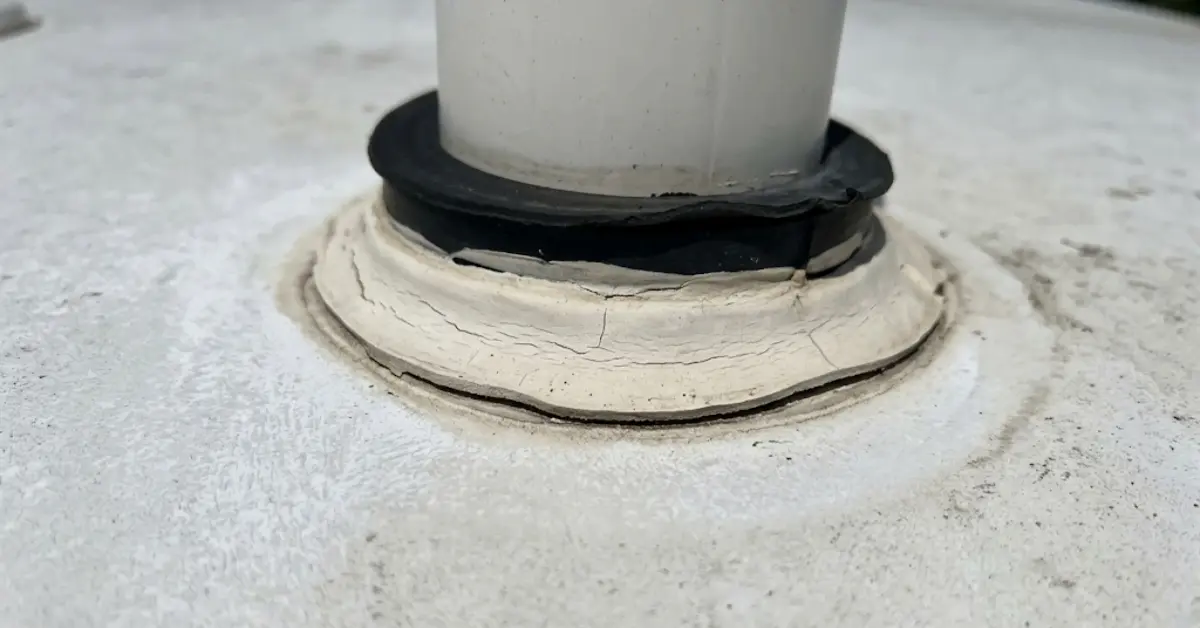
It is that a relatively inexpensive sealing problem can become a much more expensive moisture problem when ignored.
5. RV Covers: What Actually Helps
A purpose-built outdoor RV cover and a generic tarp are not necessarily equivalent. The useful characteristics to look for are: UV resistance, breathability, non-abrasive inner surface, and secure fit.
A cover can reduce direct solar and UV exposure, but it does not magically eliminate heat.
6. The RV Solar Paradox
RV owners with solar have an unusual problem. They want sunlight. Their RV doesn’t necessarily want the same amount of it.
“Optimize the solar exposure of the panels, not the solar exposure of the entire RV.”

The U.S. Department of Energy confirms that PV orientation and tilt are design variables and that appropriate configuration depends on factors including location and energy requirements.
RV Sun-Damage Inspection Checklist
After prolonged outdoor storage or summer exposure, inspect: Paint (fading, chalking, peeling), Headlights (yellowing, haze), Windshield (cracks, coating damage), Mirrors (cloudiness), Wipers (cracking), Seals (cracks, shrinkage), Roof penetrations (sealant cracking), Tires (cracks, pressure, tread), Exterior plastics (fading), Solar installation (mounts, wiring).
The Biggest Mistake RV Owners Make With Sun Damage
The biggest mistake is treating prolonged sun exposure as purely cosmetic. But deterioration involving tires, lighting, sealing or water intrusion can become a safety or financial issue.
Prevention and early inspection can reduce risk and help identify deterioration before it develops into a more expensive or safety-critical problem.
Mike Dawson is a gear and power specialist focused on the equipment that keeps RV adventures moving. From solar panels and lithium batteries to generators, inverters, and campsite essentials, he breaks down complex technical topics into clear, practical advice.
This article incorporates insights from Mohamed Najib, RVGeo founder and certified automotive technical inspector with 19 years of vehicle inspection experience.
Sources & References
- NHTSA TireWise: Tire Aging and RV Storage
- NHTSA: Tire Inflation Pressure and Safety
- U.S. Department of Energy: Solar PV Technology Basics

Published on August 12, 2026
Mike Dawson
Mike Dawson is RVGeo's lead editor, applying inspection-grade rigor to RV research - verifying manufacturer specs, testing components, and fact-checking pricing and claims before they're published. RVGeo's approach draws on a background in automotive technical inspection, applied specifically to RV electrical, power, and safety systems. Mike oversees RVGeo's foundational guides on power systems, DIY conversions, and van-life setup, with every recommendation checked against real specs and current pricing rather than assumptions.
This post contains affiliate links. If you make a purchase through these links, we may earn a commission at no extra cost to you.