
Author
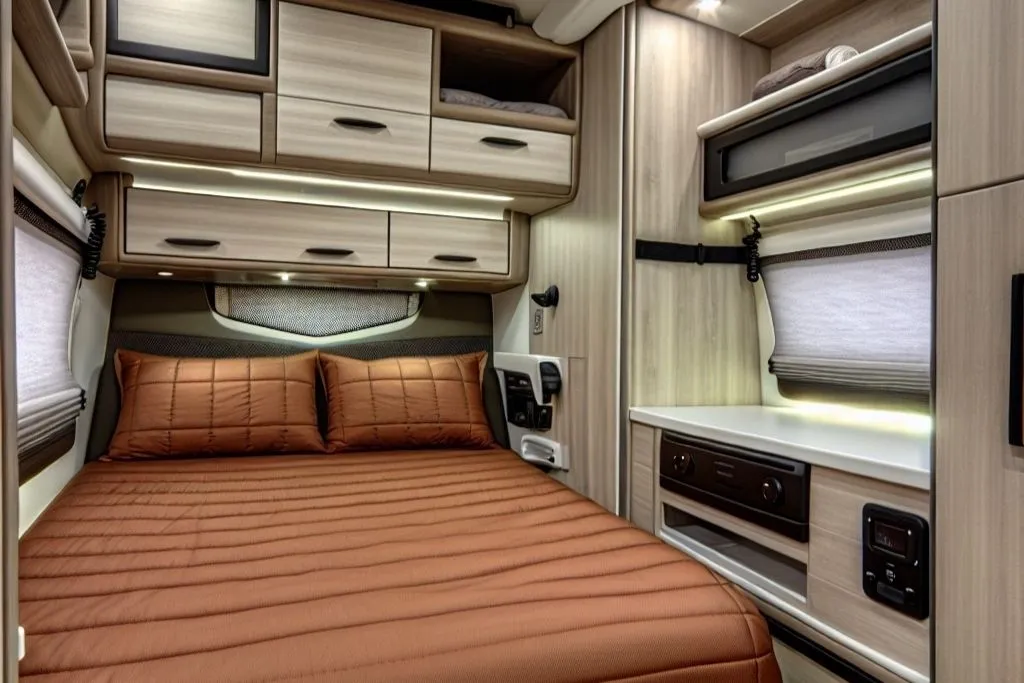
The bedroom in an RV is one of the smallest spaces you will ever sleep in regularly, but it does not have to feel that way. With the right design choices, a well-organized RV bedroom can be genuinely comfortable, surprisingly functional, and even luxurious compared to what most first-time RVers expect.
Start with the Bed: Your Most Important Decision
In most RVs, the bed defines the bedroom layout and cannot easily be changed. But you can dramatically improve your sleeping experience by upgrading the mattress. Most factory RV mattresses are inadequate for long-term comfort. An aftermarket gel memory foam mattress cut to fit your specific RV bed size (common non-standard sizes include short queen, RV king, and bunk sizes) is one of the highest-value upgrades you can make.
Mattress toppers are a lower-cost alternative that add significant comfort without the expense of a full replacement. High-quality bedding designed for temperature regulation also helps in a space that can swing from cold to warm quickly depending on weather and insulation.
Maximize Storage Without Adding Clutter
Storage is the biggest challenge in any RV bedroom. The goal is maximizing every cubic foot without making the space feel like a warehouse.
- Under-bed storage: If your bed lifts (common in Class A motorhomes and many fifth wheels), use the full depth of the space with stackable bins organized by category. Label everything.
- Over-door organizers: The back of the bedroom door is often completely unused. An over-door organizer adds meaningful storage without taking up floor or counter space.
- Vacuum storage bags: Seasonal clothing, extra bedding, and bulky items compress dramatically in vacuum storage bags, reclaiming significant space in closets and under-bed storage.
- Built-in drawer organizers: Drawers in RV bedrooms are often generic sizes with no internal organization. Adding drawer organizers prevents the chaos of everything shifting while driving.
Lighting: The Most Underrated Comfort Factor
The lighting in most stock RV bedrooms is functional at best. Upgrading to warm LED reading lights on each side of the bed, a dimmable overhead light, and a night light near the floor for middle-of-the-night navigation makes an enormous difference in how the space feels.
Blackout curtains or shades are also essential for anyone who camps in full-sun sites or wants to sleep past sunrise. Most factory window coverings in RV bedrooms are inadequate for genuine light blocking.
Temperature Control in the Bedroom
RV bedrooms at the rear of a coach can be significantly warmer or cooler than the main living area depending on insulation quality and the position of the climate control system. A small 12V fan near the bed improves air circulation significantly. In winter, a small ceramic electric heater in the bedroom (only used when awake and never left running while sleeping) supplements the furnace in a focused way.
Personal Touches That Make It Feel Like Home
Small details matter more in a small space. A few framed photos, a scent diffuser with a calming essential oil, quality window treatments that match your personal style, and a bedside tray for your phone, book, and glasses all contribute to a space that feels intentional rather than generic. The goal is a bedroom that you look forward to retreating to at the end of a long travel day.
Solving Common RV Bedroom Problems
Not enough headroom over the bed: Common in over-cab bunks and some slide-out bed configurations. A slimmer mattress topper (2-3 inches instead of 4+) preserves comfort while recovering headroom, and switching to lower-profile bedding reduces the effective height further.
Bed access is awkward: Island beds and walk-around configurations in larger rigs are easiest, but many RVs have at least one side pushed against a wall or slide. A small folding step stool stored under the bed helps with high beds, and a grab handle mounted near the entry point reduces strain getting in and out, especially valuable for older RVers with mobility considerations.
Bedroom feels separate/cold from the rest of the RV: Adding a door curtain instead of a solid door in smaller rigs helps the space feel connected while still offering privacy, and matching the bedroom’s color palette to the main living area makes the whole rig feel more cohesive rather than like two disconnected spaces.
Frequently Asked Questions
What size mattress topper works best for RV beds?
2-3 inches of gel memory foam balances comfort improvement against headroom loss — thicker toppers feel great but can create clearance problems in bunks or slide-out beds with limited overhead space.
Are blackout curtains worth the investment?
Yes, especially for anyone who camps in full-sun sites or values sleeping past sunrise — factory RV window coverings are rarely effective at full light blocking, and this is one of the highest-impact, lowest-cost upgrades available.
How do I keep the bedroom from overheating in summer?
A dedicated 12V fan positioned to circulate air toward the bed, combined with reflective window coverings during the day, makes a meaningful difference — the bedroom is often the last room to receive conditioned air from a single rooftop AC unit.
Is it worth replacing the entire mattress or just adding a topper?
A topper is the better first move for most RVers — it’s a fraction of the cost and solves comfort issues for the majority of factory mattress complaints. A full replacement makes sense if the mattress itself is worn out, an unusual size that’s hard to supplement, or if you’re already planning other bedroom upgrades at the same time.

Published on December 24, 2025
Michael Carter
Michael Carter covers RV solar, batteries, and power systems for RVGeo, focusing on component specs, wiring safety, and system sizing. His guides break down solar arrays, charge controllers, inverters, and battery banks using manufacturer documentation and verified pricing, with an emphasis on the electrical safety fundamentals that matter most in a moving vehicle.
This post contains affiliate links. If you make a purchase through these links, we may earn a commission at no extra cost to you.