
Author
Affiliate disclosure: RVGeo may earn a commission if you buy through links on this page, at no extra cost to you. This checklist helps full-time RVers connect routes, campgrounds, insurance, fuel, budget, maintenance, and backup plans before travel days get complicated.
Quick verdict
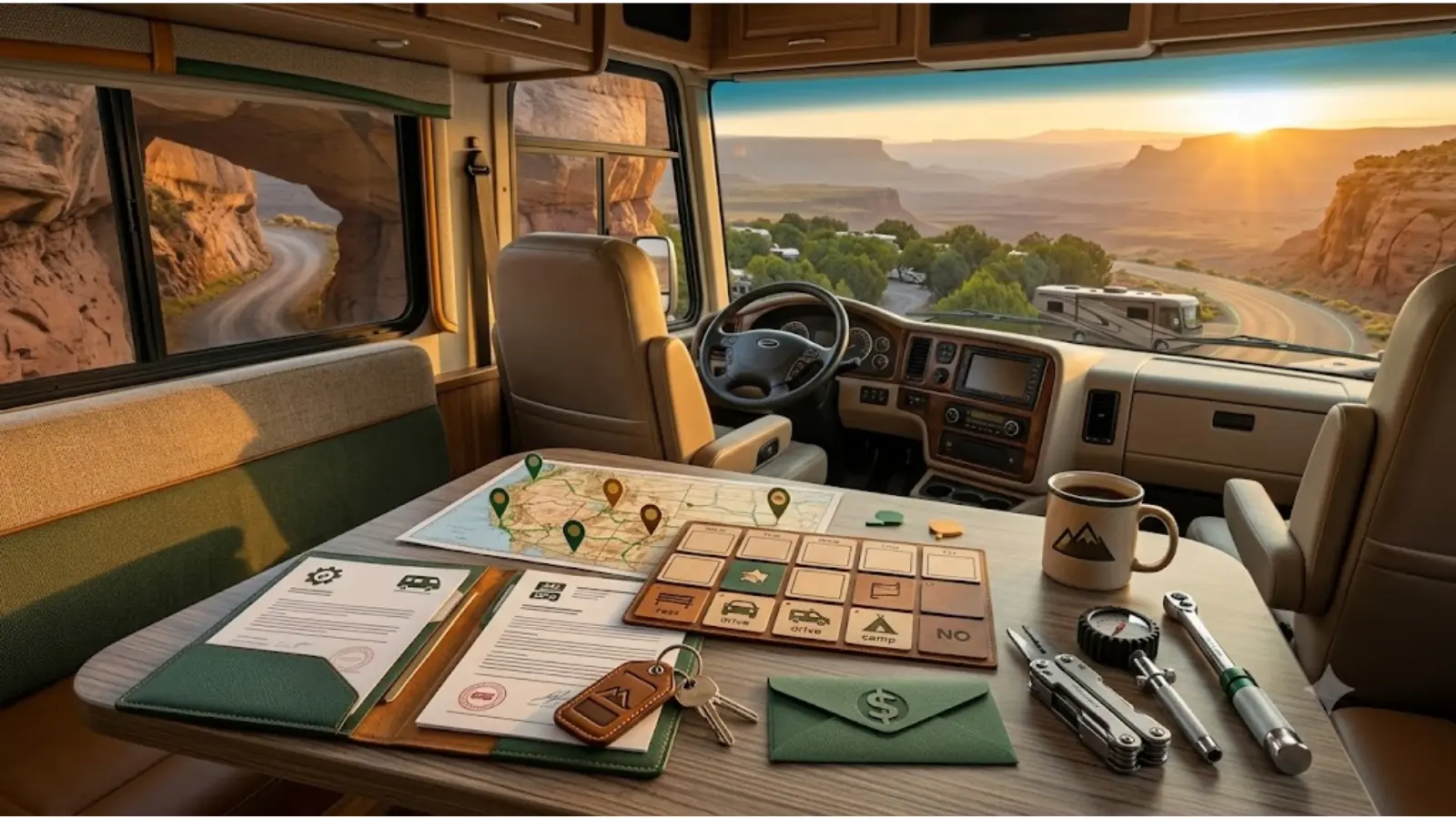
Full-time RV planning is not one trip plan. It is a rolling system. You need a route window, campground strategy, insurance check, fuel budget, maintenance rhythm, mail plan, connectivity plan, and backup options before the road starts making decisions for you.
Full-time RV travel has a different planning rhythm than vacation travel. You are not just building one route. You are managing where you sleep, how far you move, how much you spend, where you receive mail, how you stay connected, and what happens when weather or repairs change the plan.
The checklist below is designed for practical planning, not fantasy travel. It is about keeping life on the road calm enough to enjoy.
Reader shortcut: Full-time RVers should plan in 30- to 90-day windows: anchor locations, travel days, campground reservations, fuel budget, insurance status, maintenance dates, mail, internet, and backup stops.
Full-Time RV Planning Checklist
| Planning area | What to decide | Why it matters |
|---|---|---|
| Route window | Where you expect to be over the next 30, 60, or 90 days. | Prevents constant last-minute routing decisions. |
| Campgrounds | Anchor stays, travel-night stops, backup stops, and booking windows. | Full-timers need both flexibility and a safe place to land. |
| Fuel budget | Expected miles, MPG, fuel-price assumptions, and relocation frequency. | Moving more often usually costs more. |
| Insurance | Coverage type, address rules, full-time use, deductibles, and roadside needs. | Full-time use can change insurance requirements. |
| Maintenance | Oil, tires, brakes, batteries, roof checks, and service appointments. | Deferred maintenance becomes harder when your home is the vehicle. |
| Mail and documents | Forwarding, registrations, medical paperwork, and renewals. | Admin tasks become travel tasks if you ignore them. |
| Connectivity | Cell coverage, campground Wi-Fi expectations, backups, and work needs. | Bad connectivity can ruin work days and planning days. |
1. Plan Routes in Windows, Not Forever
Full-time travel works better when you plan in windows. A 30-day window gives you control over immediate campground and fuel decisions. A 90-day window helps with weather, seasons, medical appointments, family visits, and budget pacing. Planning an entire year in detail can become brittle.
For the route-building process, read how to plan an RV road trip. For tool comparison, start with best RV trip planner apps.
2. Build a Campground Strategy
Full-time RVers need more than one type of stop. You may use monthly stays to control cost, short stays to move between regions, state parks for slower travel, private parks for services, and backup stops when weather or fatigue changes the route.
Before booking, check route position, rig fit, access roads, cancellation rules, cell signal, and the next travel day. Our RV campground trip planner explains this stop-by-stop workflow.
3. Connect Budget to Travel Speed
Full-time RV budgets are shaped by how often you move. Frequent relocation increases fuel costs, travel-day spending, wear, and sometimes campground cost. Slower travel can reduce fuel cost but may require better campground booking strategy.
Use the RV trip cost calculator to estimate fuel, campgrounds, food, tolls, maintenance buffer, and travel extras.
4. Check Insurance Before the Trip Forces the Question
Full-time RV use can create insurance questions that occasional travel does not. Coverage type, garaging address, personal belongings, roadside assistance, deductibles, and full-time use should be reviewed before you rely on the policy.
Use the RV insurance cost estimator to get a planning range. This is especially useful when you are comparing rigs, changing states, or moving from seasonal travel to full-time travel.
5. Keep a Maintenance and Admin Rhythm
Full-time RVers cannot separate travel from maintenance. Tire pressure, roof checks, batteries, fluids, brakes, filters, registration, mail, prescriptions, and appointments all need a rhythm. Put these items on the trip calendar so they do not become emergencies.
RVGeo recommendation: Full-time RV planning should combine route planning, campground strategy, insurance review, fuel budgeting, and maintenance timing. Treat the road like a system, and the lifestyle becomes easier to sustain.
Why RV LIFE Trip Wizard Fits Full-Time Planning
RV LIFE Trip Wizard is useful for full-time RVers because it supports route planning, campground planning, fuel stop decisions, and travel-day structure. It gives you a place to build the plan before the travel day starts, which is exactly what full-time travel needs.
If you want a product-specific breakdown, read the RV LIFE Trip Wizard review. If you are deciding between route tools, compare RV LIFE Trip Wizard vs Roadtrippers.
FAQ
How far ahead should full-time RVers plan?
Many full-time RVers do best with a 30- to 90-day planning window. It gives enough structure for campgrounds, weather, fuel, and appointments without locking the entire year too tightly.
What should be on a full-time RV planning checklist?
Include route windows, campground reservations, fuel budget, insurance review, maintenance, mail, connectivity, medical needs, document renewals, and backup stops.
Do full-time RVers need different insurance?
They may. Full-time use can affect coverage needs, personal belongings, liability, address rules, and roadside assistance. Review your policy before relying on it for full-time travel.
Sources and Review Notes
- Official product page: RV LIFE Trip Wizard and RV LIFE App
- Review note: insurance requirements, campground rules, mail-forwarding needs, and route conditions can change and should be verified before major full-time travel decisions.


Published on July 11, 2026
Mike Dawson
Mike Dawson is RVGeo's lead editor, applying inspection-grade rigor to RV research - verifying manufacturer specs, testing components, and fact-checking pricing and claims before they're published. RVGeo's approach draws on a background in automotive technical inspection, applied specifically to RV electrical, power, and safety systems. Mike oversees RVGeo's foundational guides on power systems, DIY conversions, and van-life setup, with every recommendation checked against real specs and current pricing rather than assumptions.
This post contains affiliate links. If you make a purchase through these links, we may earn a commission at no extra cost to you.