
Author
Affiliate disclosure: RVGeo may earn a commission if you buy through links on this page, at no extra cost to you. This guide explains how to plan an RV road trip with safer routes, better stops, fuel planning, and fewer expensive surprises.
Quick verdict
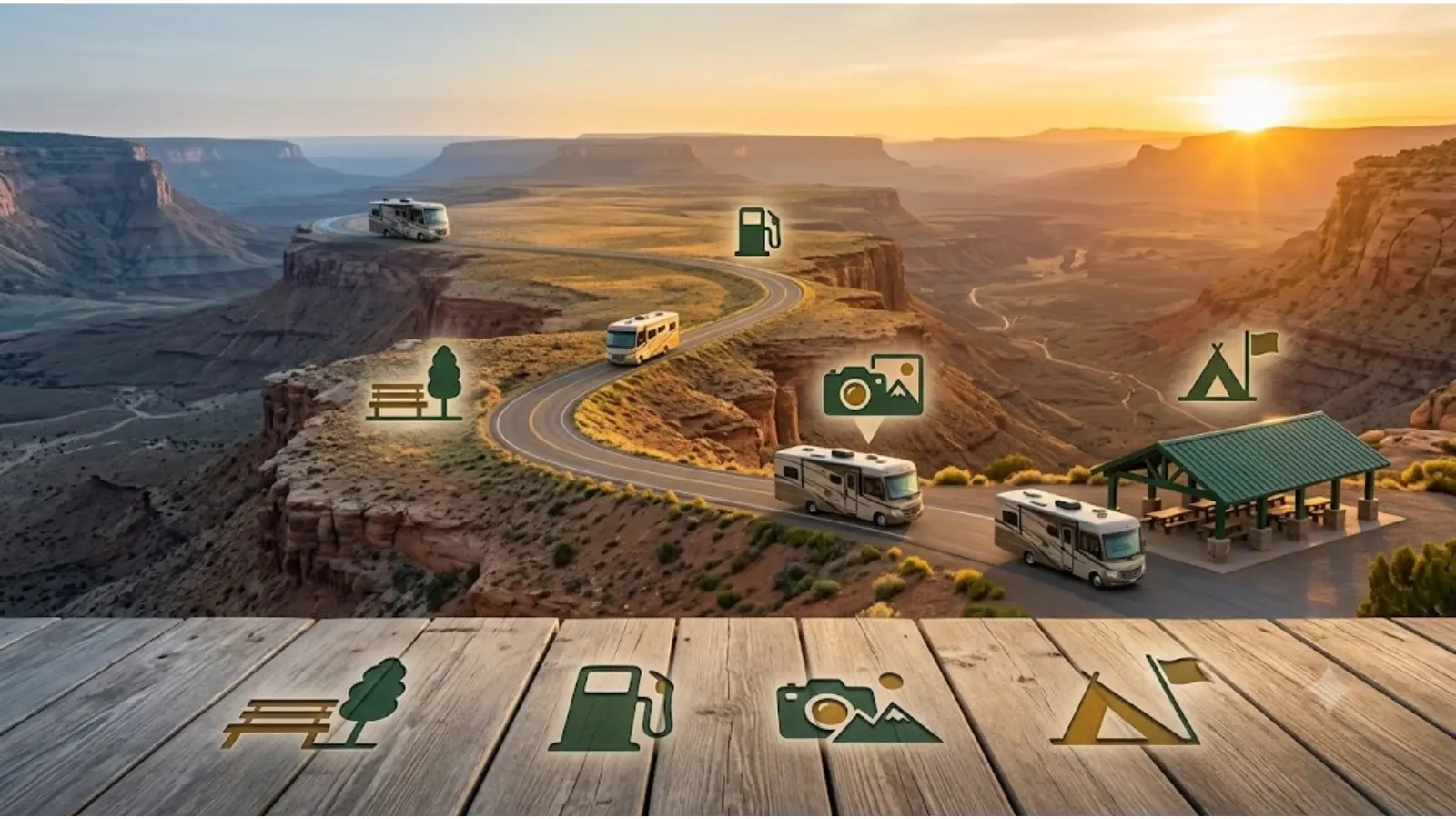
Plan the route before you plan the dream. A good RV road trip starts with rig limits, daily distance, fuel stops, campground access, and budget. The scenery matters, but the trip only feels good when the travel days work.
Planning an RV road trip is different from planning a car trip. A car route can be spontaneous. An RV route needs more respect. Height, weight, propane restrictions, grades, fuel-station space, campground access, and arrival time all matter.
The best RV trips are not overplanned. They are pre-checked. You still leave room for discovery, but you remove the mistakes that turn a travel day into a fight with the map.
Reader shortcut: Use this order: rig limits, destination window, daily mileage, RV-safe route, campground stops, fuel stops, budget, backup plan. If you start with attractions first, you may build a trip that looks good but drives badly.
1. Start With Your RV Limits
Before you choose the route, write down the numbers that affect the route: total length, height, weight, tow setup, fuel range, preferred road type, and how comfortable you are with mountain grades or tight urban roads. These details shape the trip more than most new RVers expect.
If you drive a Class A motorhome or tow a long trailer, do not rely on generic car navigation alone. Use RV-specific planning for the first route draft, then use companion apps for traffic, local search, and final approach checks.
2. Set a Realistic Daily Driving Limit
A 350-mile day in a car is not the same as a 350-mile day in an RV. RV travel includes slower fuel stops, setup time, weather stress, wider turns, longer braking distance, and more mental load. For many travelers, 200 to 300 miles is a more realistic planning range than a car-style road trip pace.
| Planning choice | Good target | Why it helps |
|---|---|---|
| Daily mileage | 200-300 miles for many RV routes | Leaves time for fuel, setup, delays, and safer arrival. |
| Arrival time | Before dark when possible | Makes campground entry, leveling, and hookup easier. |
| Rest days | Every few travel days | Reduces fatigue and lets the trip breathe. |
| Backup stops | At least one per long travel day | Protects you if weather, road work, or fatigue changes the plan. |
3. Build the Route Around Campgrounds, Not Just Attractions
Attractions make the trip exciting. Campgrounds make the trip function. When a campground is too far from the route, has tight access, lacks the hookups you need, or forces a late arrival, the attraction plan becomes less useful.
Start by choosing anchor stops: the first night, the destination nights, and any long-drive recovery nights. Then fill in fuel stops and attractions around those anchors. This creates a trip that feels deliberate instead of stitched together at the end of each day.
4. Plan Fuel Stops Before You Need Them
Fuel planning is not only about price. It is about access. A cheap fuel stop is not helpful if the turn is tight, the exit is awkward, or the station is too small for your rig. Plan fuel stops before the tank is low, especially in unfamiliar regions, mountain routes, or remote corridors.
Use conservative fuel range. If your tank can technically go farther, do not plan every stop at the edge of that range. RV travel has headwinds, detours, grades, closures, and delays.
5. Estimate the Trip Budget Before You Lock the Route
Route choices change cost. More miles mean more fuel. More one-night stops can raise campground costs. Late arrivals can push you toward expensive convenience decisions. Before you finalize the route, calculate fuel, campground nights, food, tolls, parking, propane, and a buffer.
For a detailed framework, use RVGeo’s RV trip cost calculator guide. For insurance planning before long trips, use the RV insurance cost estimator.
RVGeo recommendation: A good RV road trip plan is a route, budget, and campground plan working together. If one piece is missing, the trip may still look good on the map but become stressful on the road.
6. Use the Right Planning Tool
Generic maps are useful, but they are not enough for RV planning. RV LIFE Trip Wizard is a stronger fit when you want to connect route planning, campground decisions, fuel stops, and travel-day structure in one workflow. It is especially useful for longer trips, larger rigs, and travelers who do not want to improvise every stop.
Where This Fits in the RVGeo Cluster
If you are still comparing tools, start with best RV trip planner apps. If route safety is your main concern, read best RV GPS apps. If you want the product breakdown, use the RV LIFE Trip Wizard review.
FAQ
What is the first step in planning an RV road trip?
Start with your RV limits: height, length, weight, fuel range, tow setup, and realistic daily driving distance. Those numbers determine which routes and stops are practical.
How far should you drive in an RV each day?
Many RVers plan around 200 to 300 miles per travel day, depending on rig size, road type, weather, and arrival goals. The best number is the one that lets you arrive safely before fatigue takes over.
Do I need an RV trip planner?
You can plan manually, but an RV trip planner helps connect route safety, campgrounds, fuel stops, and daily distance. That is much harder to manage with a generic map alone.
Sources and Review Notes
- Official product page: RV LIFE Trip Wizard and RV LIFE App
- Review note: route, fuel, and campground details should be checked against current road conditions and campground rules before travel.


Published on July 15, 2026
Mike Dawson
Mike Dawson is RVGeo's lead editor, applying inspection-grade rigor to RV research - verifying manufacturer specs, testing components, and fact-checking pricing and claims before they're published. RVGeo's approach draws on a background in automotive technical inspection, applied specifically to RV electrical, power, and safety systems. Mike oversees RVGeo's foundational guides on power systems, DIY conversions, and van-life setup, with every recommendation checked against real specs and current pricing rather than assumptions.
This post contains affiliate links. If you make a purchase through these links, we may earn a commission at no extra cost to you.