
Author

How we built a complete off-grid solar power system for our 50 amp RV
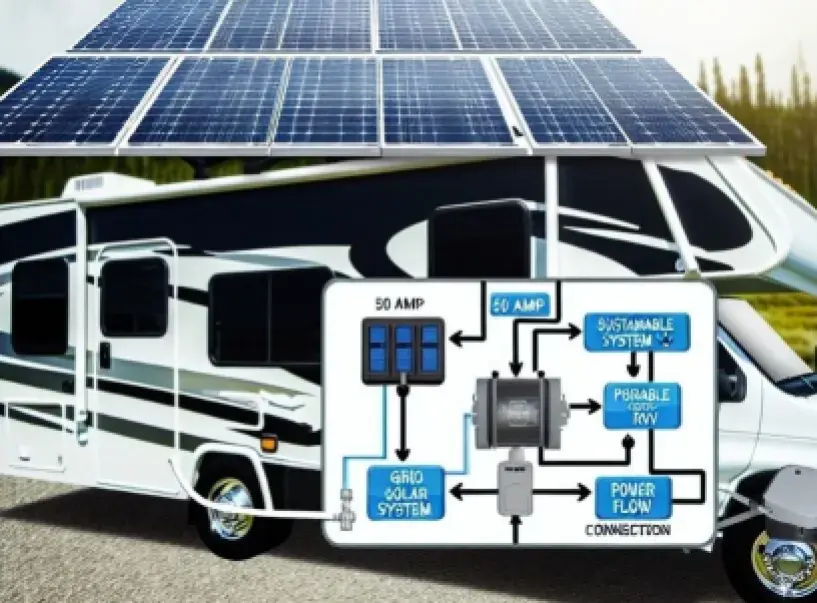
Embarking on the journey to create a complete off-grid solar power system for our 50 amp RV was both exciting and daunting. The goal was to ensure our RV could function normally, whether plugged into shore power or relying entirely on solar energy, all while maintaining the silent operation and independence needed for long trips and remote camping.
First experiment: small RV system
We began with a smaller RV system to understand the basics of solar power. This initial experiment helped us grasp the essentials of solar panel efficiency, battery management, and inverter capabilities. It set the foundation for scaling up to a system that could support a 50 amp RV.
Battery bank design
The heart of any solar power system is its battery bank. For our 50 amp RV, we opted for a configuration of 4× 6V batteries wired to achieve 12V and 450Ah. This setup ensures robust energy storage, allowing us to run appliances like the refrigerator and furnace throughout the night without depleting the battery.
Solar panel system
To harvest solar energy efficiently, we installed 6 × 200W panels, totaling 1200W. These panels charge the batteries during daylight, providing a reliable energy source that supports our off-grid lifestyle. The system was designed to maximize solar exposure and efficiency, even in less sunny conditions.
Inverters: the heart of the system
Inverters are crucial for converting DC power from the batteries into AC power for our appliances. We selected a high-capacity inverter to handle household appliances such as the Instant Pot and coffee maker. This choice ensures that our RV functions with the same convenience as being plugged into shore power.
Monitoring and control
To keep track of our power usage and battery health, we employed the Victron BMV-712 battery monitor and the Victron Color Control GX. These tools provide real-time data on energy consumption and solar panel performance, helping us optimize our system’s efficiency.https://amzn.to/3M7dpr2
Component installation: wiring and cabling
Proper wiring and cabling are essential for the safe and efficient operation of an RV solar power system. We used 4/0 cables for the batteries and inverters, ensuring minimal power loss and increased safety. Carefully selecting the appropriate wire gauge also played a crucial role in maintaining system integrity.
Electrical protection
To safeguard against electrical faults, we installed a 300A main fuse and various circuit breakers. These components protect the system from overloads and short circuits, ensuring a safe and reliable energy supply.
RV electrical system: 30A vs 50A
Understanding the difference between a 30 amp and a 50 amp RV electrical system was vital. A 50 amp system offers significantly more power, allowing us to run multiple appliances simultaneously without overloading. This capability was essential for maintaining comfort and convenience during our travels.
Energy audit
Before finalizing our system, we conducted an energy audit to determine our power needs. This assessment helped us tailor our solar setup to our specific lifestyle, ensuring we could comfortably power essential devices like lights, a refrigerator, and charging stations for devices.
Other charging sources
In addition to solar, our system can charge from a generator or the RV’s alternator while driving. This flexibility ensures a continuous power supply, even during cloudy weather or when solar exposure is limited.
Final result
Our off-grid solar system has transformed our RV experience. We can now camp in remote locations, run the furnace on cold nights, and use kitchen appliances without relying on noisy generators. The system’s capacity and efficiency provide a seamless off-grid lifestyle.
Lessons learned
Throughout this project, we learned the importance of thorough planning, precise installation, and regular system monitoring. Each element, from inverter selection to battery management, plays a crucial role in the overall functionality of our solar power system.