
Author

why your propane furnace is costing you $900 every winter
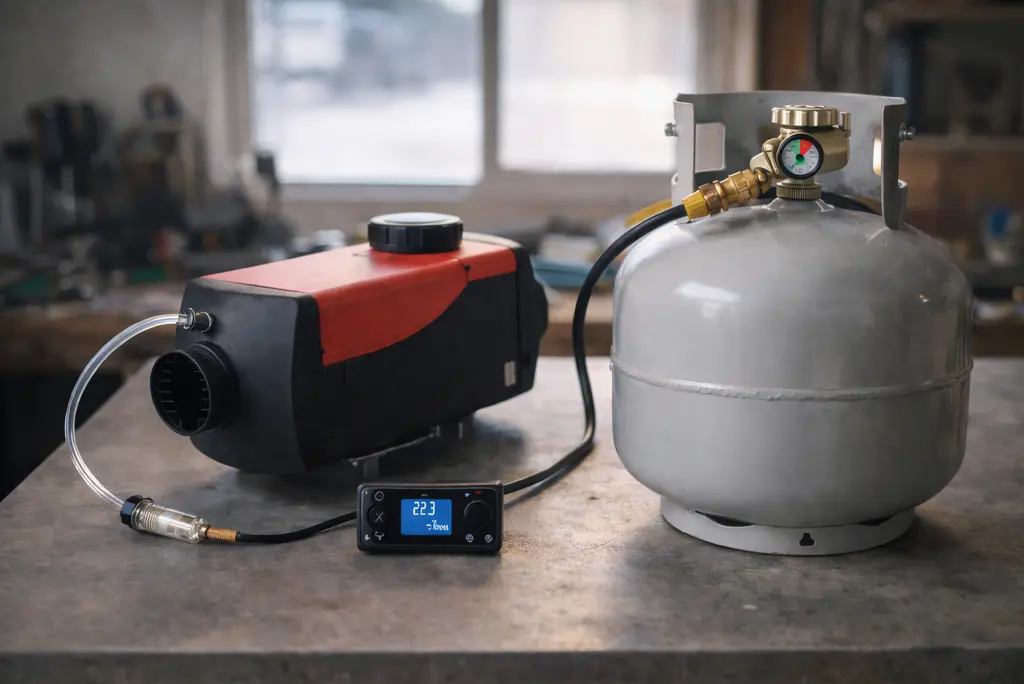
i spent $270 in propane during december 2025 heating my 28-foot travel trailer at caballo lake, new mexico. the next month, i switched to a chinese diesel heater. same rv, same thermostat setting, same exterior temperatures. january propane bill: $45.
that $225 monthly difference is $900 over a four-month winter season. the diesel heater cost $189 installed. it paid for itself in 12 days.
this article breaks down exactly why the math works, what the trade-offs are, and which system fits your situation. for the complete winter preparation picture, our winter boondocking survival guide covers every system your rv needs before temperatures drop.
how propane and diesel heaters actually work
propane furnaces: the efficiency problem
your rv’s built-in propane furnace burns gas in a sealed combustion chamber, vents exhaust outside through a pipe, and distributes heat through ductwork via a blower fan. the fundamental problem: 40-42% of BTU produced during combustion goes out the exhaust as waste heat. a furnace rated at 35,000 BTU/hour delivers only 20,300-21,700 BTU/hour of usable interior heat. efficiency: 58-60%.
what controls consumption: BTU rating (suburban NT-34SP at 35,000 BTU burns 0.38 gallons/hour at full output), duty cycle (at 30°F exterior my furnace ran 67% duty cycle, at 18°F it ran 100% continuously), and rv insulation (my DIY rv skirting reduced duty cycle from 80% to 55% at 25°F, cutting propane use 31%).
diesel heaters: sealed combustion, superior efficiency
diesel heaters draw combustion air from outside the rv, burn diesel in a sealed chamber, vent exhaust outside, and transfer heat through an exchanger to rv interior air. no combustion byproducts ever enter the rv interior. efficiency: 85-92%. almost all BTU stays inside the rv.
the result: diesel heater maintains 67°F interior at 30°F exterior using $1.50/day in fuel. propane furnace maintains 65°F interior at the same conditions using $9.00/day. same result (actually 2°F warmer with diesel) at 85% lower cost.
chinese vs name brand diesel heaters
chinese heaters ($150-250): i’ve tested three models over three winters. current recommendation is the vevor 5KW at $189. after 800+ hours of runtime, zero mechanical failures. one glow plug replacement at 600 hours ($12 part, 20-minute job). most issues rvers encounter are fixable: glow plug failure (most common, $8-15), fuel pump seal failure (less common, $25-40 repair kit).
name brands ($600-1,200): webasto air top 2000 ST and eberspacher airtronic M2 are the standards. quieter (8-10 dB less), longer lifespan (3,000-5,000 hours vs 1,500-2,500 for chinese), reliable cold-start to -40°F versus -22°F for most chinese heaters. at $900 versus $189, you pay $711 premium. justified if you run the heater year-round or in extreme cold below -30°F. for seasonal winter boondocking, the chinese heater is correct.
real cost comparison: 3-month controlled test
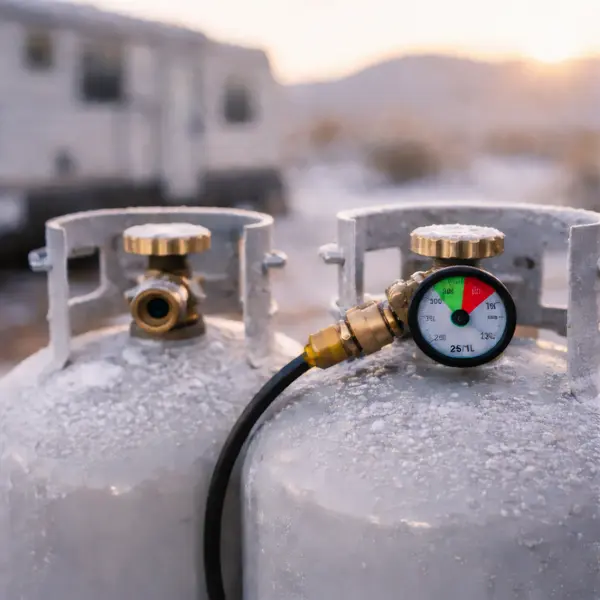
same rv (28-foot keystone passport), same thermostat setpoint (65°F), same exterior temps (18-38°F overnight lows), different heating systems each month.
december 2025: propane furnace
average overnight low: 28°F. furnace runtime: 7 hours/night. consumption: 3 gallons/night. cost: $9/night at $2.98/gallon.
three cold nights (18-22°F): consumption spiked to 3.5 gallons, furnace ran continuously and interior only reached 62°F (furnace overwhelmed).
december heat cost: $230.90. total propane (including cooking, hot water): $341.16.
january 2026: chinese diesel heater
installed vevor 5KW before december but tested propane first. january average overnight low: 31°F. diesel consumption: 0.5 gallons/day on medium setting (3.5KW output). cost: $1.50/day at $3.15/gallon.
interior temp maintained at 67°F (2 degrees warmer than propane despite same thermostat setpoint).
january heat cost: $41.52. total fuel (diesel + propane for cooking): $148.80. savings versus december: $192.36.
february 2026: diesel primary, propane backup
diesel as primary heat, propane furnace as backup for three nights below 15°F. diesel cost: $44.10. propane backup (3 nights): $4.50. total heat: $48.60.
three-month cost summary
| month | system | heat cost | 4-month projection |
|---|---|---|---|
| december | propane | $230.90 | $923.60 |
| january | diesel | $41.52 | $166.08 |
| february | diesel+backup | $48.60 | $194.40 |
switching from propane to diesel saves $757-782 per four-month winter. diesel heater ROI at $189: break-even in 26-29 days.
installation guide: step by step
tools and materials
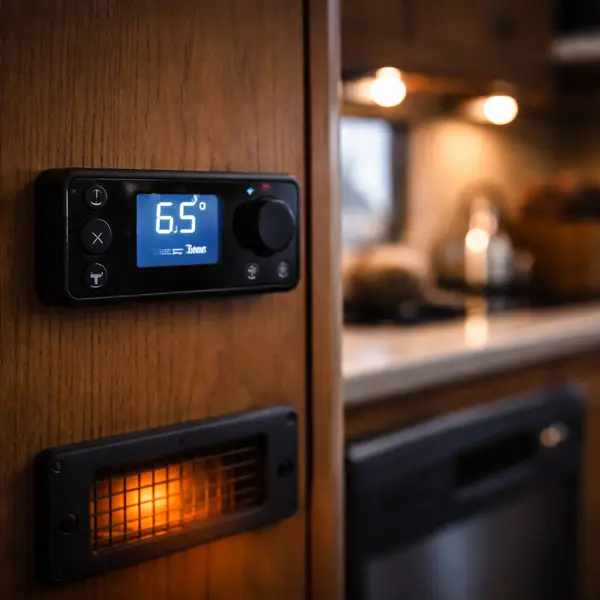
tools required: drill with 60mm hole saw bit, marine epoxy (3M 5200), wire stripper, crimping tool, wrenches (10mm, 12mm). additional materials beyond heater kit: 5-10 feet extra fuel line ($8), heat-resistant tape ($6), zip ties ($4), silicone sealant ($8). total additional cost: $26-36.
step 1: choose location (30 minutes)
ideal placement: inside rv, mounted low (heat rises), floor access for exhaust penetration, within 10 feet of house battery, away from sleeping area and propane lines. common locations: under dinette seat, under passenger seat, in vented storage compartment.
step 2: exhaust installation (1.5 hours)
mark hole location minimum 18 inches from any rv vent, opening, or propane connection. drill pilot hole, inspect under rv for wiring and plumbing, then drill 60mm hole. seal penetration with marine epoxy (prevents moisture and fume intrusion). route exhaust pipe minimum 12 inches from rv surface, terminate pointing downward and away from rv to prevent recirculation.
step 3: fuel system (1 hour)
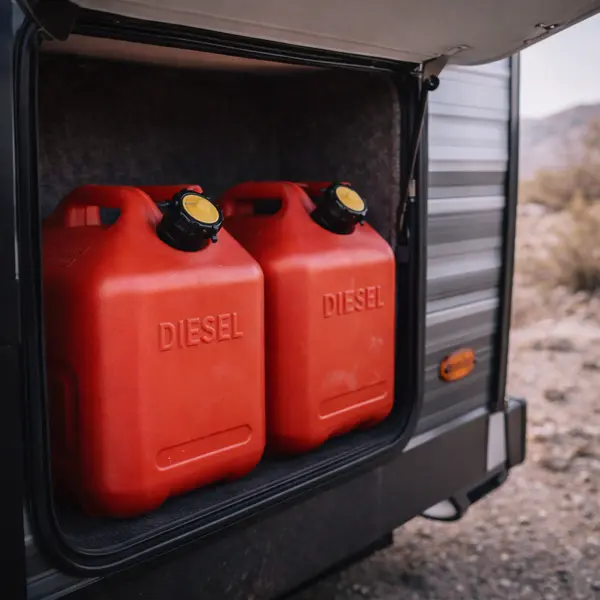
options: 5-gallon jerry can in exterior storage (my setup, refills every 10 days at $15 per fill), tap into diesel generator tank, or tap into vehicle fuel tank on class A/C. run fuel line from source to fuel pump, pump to heater. no sharp bends or kinks. fuel pump mounts near fuel source, wired separately from main heater harness.
step 4: electrical (1 hour)
connect to house battery (not engine starting battery). house batteries are designed for overnight discharge, engine batteries are not – for winter-specific battery sizing and cold-weather charging solutions see our cold weather rv battery guide.
wire: positive to battery positive with 10-amp inline fuse within 18 inches of terminal, negative to battery negative or chassis ground. 12-gauge wire for runs under 6 feet, 10-gauge for longer runs.
step 5: first startup (1 hour)
prime fuel system (controller prime function, 60 seconds) to purge air from fuel line. first startup: set controller to low temp, press power. normal startup takes 3-5 minutes (glow plug heats, fuel ignites, combustion stabilizes). sounds: clicking, then fuel pump ticking, then combustion roar settling to stable hum. if three attempts fail: air in fuel line (run prime again), glow plug failed (test with multimeter), or no fuel reaching pump.
total installation time: 5-6 hours. no special skills required beyond basic electrical comfort.
propane vs diesel: the complete comparison
propane furnace
pros: already installed, zero additional cost, zero installation work, proven 10-15+ year reliability, propane available everywhere, no electricity for combustion, seamless thermostat integration.
cons: 58-60% efficiency (40% of fuel vented as waste), $230/month heat cost, refill needed every 10-13 nights, struggles below 0°F despite continuous operation, blower draws 72-96 watts.
diesel heater
pros: 85-92% efficiency, $41-48/month heat cost, superior performance in extreme cold, sealed combustion (no rv interior combustion air), quieter on low settings (30 watts vs 72-96 watts).
cons: requires installation and rv modification (drilling), 30-45 watts electricity needed (battery-dependent when boondocking), glow plug maintenance every 600 hours, 3-5 minute startup time, limited warranty on chinese models.
troubleshooting quick reference
diesel heater won’t start: most common cause is air in fuel line. run prime function 60 seconds, retry. second most common: failed glow plug ($8-15 replacement, 20-minute job).
diesel heater runs but rv stays cold: check exhaust isn’t recirculating (extend pipe further from rv), check combustion air intake isn’t blocked by snow or debris, verify heater BTU output matches rv size (5KW handles up to 35 feet at moderate cold, 8KW needed for larger rv below 15°F).
propane furnace short-cycling
most common cause is dirty air filter restricting airflow (clean or replace, $8-12). second cause: blocked registers or ductwork. if short-cycling continues after cleaning, high limit switch may be failing ($15-25 part). detailed repair steps are in our emergency winter rv troubleshooting guide.
which system is right for you
under 20 days of winter camping per year: keep propane furnace. diesel heater installation cost doesn’t recover on short trips.
20-30 days: break-even zone. install diesel heater if you camp below 20°F or plan to increase frequency.
over 30 days: install diesel heater immediately. every month delayed costs $225 in excess propane. at 90 days per winter over five rv ownership years, that’s $3,375 in savings from a $189 purchase.
camping below 10°F regularly: diesel heater is mandatory regardless of trip length. propane furnaces are genuinely overwhelmed at extreme cold, consuming 7+ gallons per night while failing to maintain comfortable temperature. diesel heaters maintain setpoint efficiently even at -8°F.
the chinese 5KW diesel heater at $189 is the highest-ROI single upgrade available for winter rv boondocking. i’ve tested three models across three winters and 800+ hours of runtime. the fuel savings alone ($225/month versus propane) pay for the heater in less than one month. pair it with rv skirting and battery warming pads from the winter boondocking survival guide and your rv becomes a legitimate four-season home instead of a seasonal toy.
pair the diesel heater with rv skirting for maximum efficiency – the rv skirting installation guide shows exactly how to cut your heater runtime 30% with $115 of materials.