
Author

Best solar panels for RV in the 200–400 watt range

Author: Mike Dawson
39 years old, RV traveler and gear power specialist.
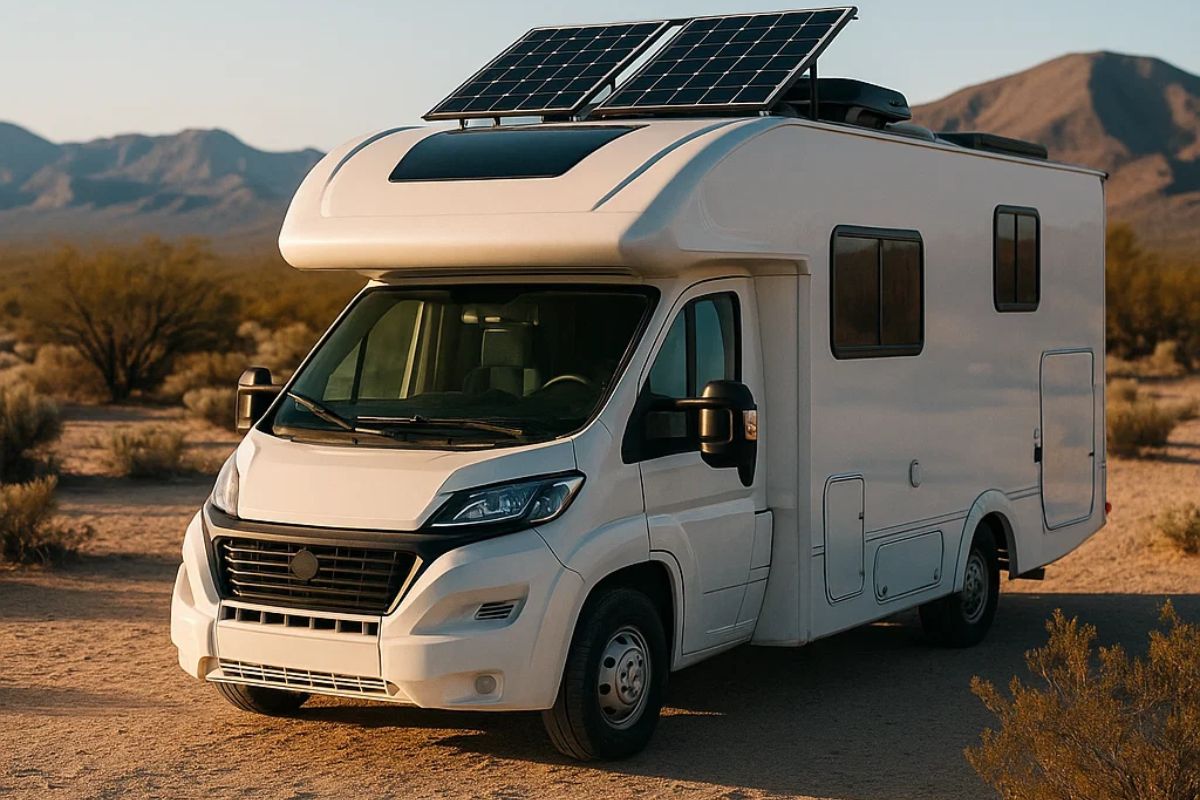
The 200–400 watt range offers a sweet spot for most RV travelers. It delivers enough solar production to cover daily needs without turning the setup into something heavy or complicated. It only really makes sense when you connect actual solar output with the way you travel and the climates you cross. That is the same logic used in the complete gear power guide, which explains how to size your solar system according to your lifestyle on the road.
Over the years I have used everything from a single 100 W panel to a full 600 W roof. After long routes across Arizona, Colorado and Washington, one pattern kept repeating: the 200–400 W range stays the most consistent choice for nomadic travel. It charges fast enough to keep batteries healthy and remains easy to manage and maintain.
Why the 200–400 W range became the reference
Most RV travelers consume somewhere between 700 and 1400 Wh per day. A 12 V fridge, fan, lighting and a few phone chargers already create a solid base load. Remote workers add a laptop and sometimes a router on top of that.
In this context, 100 W is rarely enough, and anything far above 400 W becomes unnecessary unless the battery bank is large. The 200–400 W zone covers the majority of usage patterns and leaves a bit of resilience for cloudy days or partial shade.
Real-world output of 200 W and 400 W panels
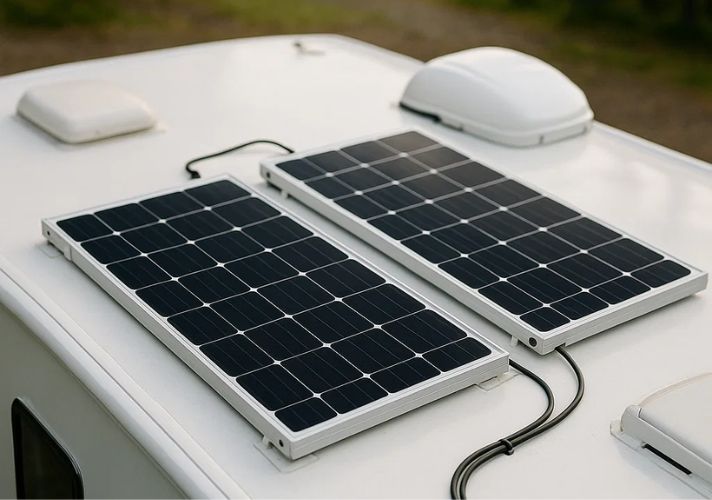
On paper ratings look comforting, but panels seldom reach their full wattage. A 200 W panel typically delivers 120 to 160 W in good sun. Over a full day, that often means 500 to 800 Wh harvested. A 400 W setup can comfortably pass 1000 Wh per day.
I have seen these numbers repeatedly in Utah and Nevada. Southern states offer strong production and predictable sunshine. Northern, humid regions deliver much less. In those conditions, 400 W setups absorb the geographic variations more smoothly and preserve autonomy longer.
Matching solar capacity to U.S. climates
The United States is a patchwork of very different sunlight conditions. Arizona and California offer premium exposure with many clear days. Oregon and Washington reduce output dramatically with clouds, mist and tree cover.
That is why many RV travelers move toward 300 or 400 W even when their electrical needs appear modest on paper. The extra headroom protects day-to-day autonomy during cloudy stretches, shoulder seasons and shaded campsites.
During one summer in New Mexico, my 400 W array fully recharged my power station every day. A few months later in Montana, the exact same setup produced almost 40 percent less. That gap is the reason margin matters.
Balancing battery size with solar power
Solar panels only help if the battery can store what they produce. A small battery fills too quickly and sheds potential energy. An oversized battery charges too slowly if the panels are weak.
A practical ratio sits between 1.5 and 2 Wh of battery per watt of solar. In real terms, 300 W pairs nicely with a 500–900 Wh battery bank. This keeps the system efficient, reduces waste and avoids undercharging.
Everyday advantages of the 200–400 W range
Several concrete benefits explain why this range works so well in practice:
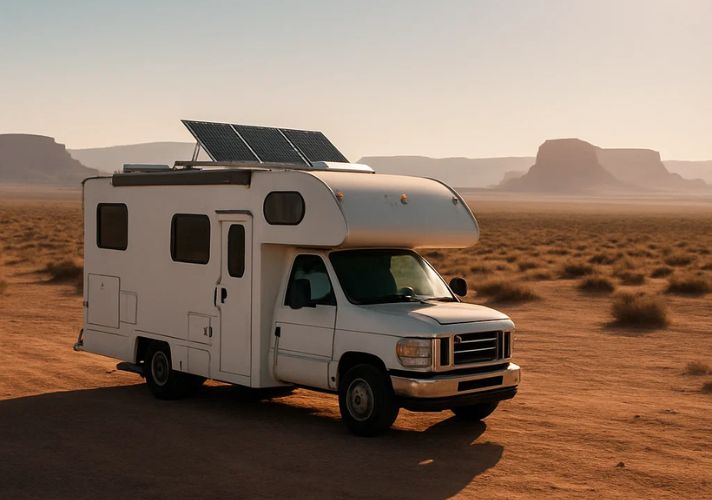
- Panels stay relatively light and fit easily on most RV roofs.
- Charging remains consistent in medium sunlight, not only on perfect days.
- Daily essentials such as cooling, lighting and device charging stay covered.
- The system is simple to monitor, maintain and upgrade over time.
In short, this range delivers autonomy without overbuilding the system or overloading the roof.
The 200–400 watt range stands out as a balanced choice for RV travelers. It supports most lifestyles and adapts to a wide variety of U.S. climates. Once this range is clear, fine-tuning charging options becomes much easier. The RV charging methods page is the natural next step to explore how to combine solar, alternator charging and shore power into a single coherent setup.