
Author
One of the most common mistakes new RV owners make: assuming their existing car insurance covers their motorhome or trailer. It doesn’t — not completely. And the gaps can be expensive.
Here’s exactly what’s different between RV insurance and auto insurance, and why it matters.
The Core Difference
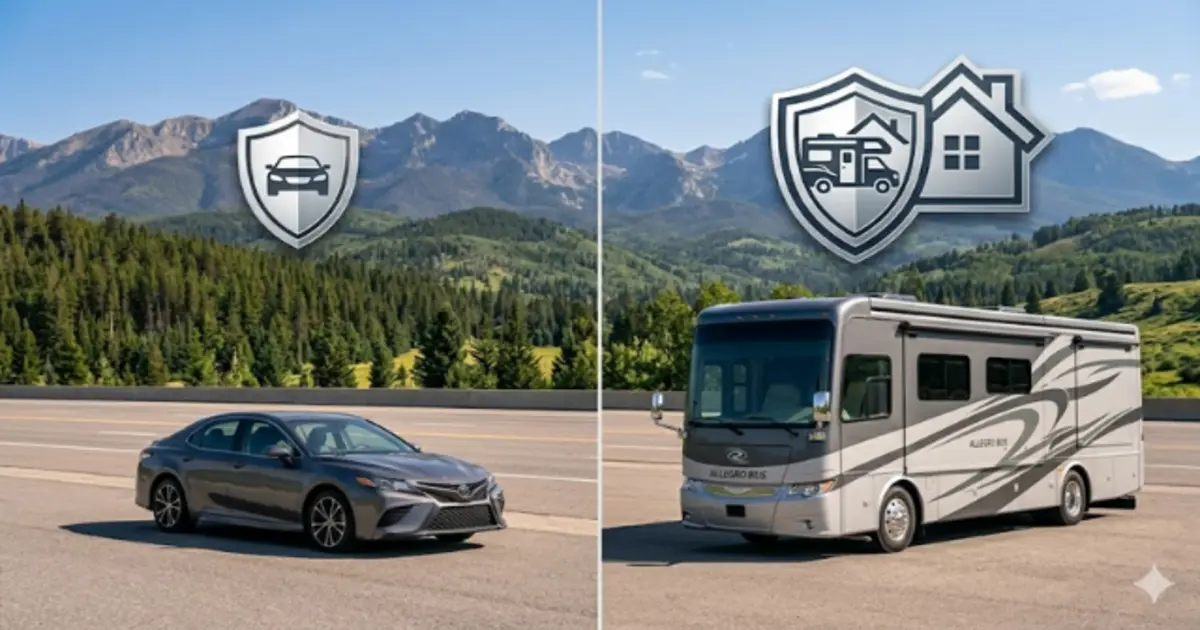
Auto insurance is designed for daily commuter vehicles. RV insurance combines driving protection with living-space coverage — because your RV is also a home.
RV insurance and auto insurance differ fundamentally in scope. Auto insurance covers driving liability, collision, and comprehensive damage for a vehicle used primarily for transportation. RV insurance adds coverage for the living quarters — personal belongings, vacation liability (injuries at a parked campsite), emergency expense reimbursement, and personal property up to $40,000 or more. A standard auto policy does not cover slip-and-fall accidents at your campsite, belongings stored inside your RV, or loss of use when your RV is being repaired. For travel trailers, the towing vehicle’s auto liability extends while the trailer is attached, but stops entirely when unhitched.
Side-by-Side Comparison
| Coverage | Auto Insurance | RV Insurance |
|---|---|---|
| Driving liability | ✅ Yes | ✅ Yes |
| Collision damage | ✅ Yes | ✅ Yes |
| Comprehensive (theft, weather) | ✅ Yes | ✅ Yes |
| Personal belongings inside vehicle | ❌ No | ✅ Yes |
| Vacation / campsite liability | ❌ No | ✅ Yes |
| Emergency living expense | ❌ No | ✅ Yes |
| Roadside assistance (large vehicles) | ❌ Limited | ✅ RV-specific |
| Full-timer personal liability | ❌ No | ✅ Yes (endorsement) |
| Attached awnings & slideouts | ❌ No | ✅ Yes |
| Agreed / stated value | ❌ Rarely | ✅ Yes |
What Your Auto Insurance Actually Covers for an RV
For Motorhomes (Class A, B, C)
Your auto policy provides zero coverage for a motorhome. Motorhomes require their own dedicated RV insurance policy for both driving and living coverage.
For Travel Trailers and 5th Wheels
Your tow vehicle’s liability coverage extends to the trailer while it’s being towed. If you cause an accident while towing, your auto policy covers the other driver’s damages.
However, your auto policy does NOT cover:
– The trailer itself if it’s damaged in a collision
– Contents inside the trailer
– The trailer when it’s parked and unhitched
– Liability while the trailer is set up at a campsite
The 3 Biggest Gaps Auto Insurance Leaves
Gap 1: Vacation Liability
Someone trips over your awning rope at a campsite and breaks their wrist. Your auto insurance won’t touch it. RV insurance vacation liability covers exactly this scenario — injuries and property damage that occur around your parked RV.
Gap 2: Personal Belongings
You leave $3,000 of camera gear, bikes, and outdoor equipment in your trailer. It gets broken into. Your auto policy covers the vehicle — not the stuff inside. RV insurance personal property coverage fills this gap.
Gap 3: Roadside Assistance
Standard auto roadside assistance isn’t designed for 40-foot diesel pushers or 5th wheels. RV-specific roadside assistance includes large vehicle towing (which can cost $500–$2,000 without coverage), tire service for oversized tires, and RV-specific labor.
When Does Auto Insurance Cross Over?
| Situation | Covered by Auto? |
|---|---|
| Towing a trailer — liability to others | ✅ Yes (via tow vehicle) |
| Towing a trailer — trailer physical damage | ❌ No |
| Dinghy car behind Class A — liability | ✅ Usually (verify with insurer) |
| Driving a rented motorhome | ❌ Usually no — check your policy |
| Using RV for business | ❌ No — needs commercial endorsement |
Do You Need Both Auto and RV Insurance?
If you own a motorhome: Yes — your motorhome needs its own RV policy. Your car insurance stays separate.
If you own a travel trailer: Yes — you keep your auto insurance for the tow vehicle and add a separate trailer insurance policy. Some auto insurers let you add a trailer endorsement, but a standalone policy typically offers better coverage.
Estimate Your RV Insurance Cost
Use our free RV Insurance Cost Estimator to get a personalized estimate based on your RV type, state, and usage in under 2 minutes.
Frequently Asked Questions
Will my auto insurance cover my RV if I only use it a few times a year?
No — recreational use doesn’t eliminate the coverage gaps. Vacation liability, personal belongings, and parked-trailer coverage require a dedicated RV policy regardless of how often you use it.
My lender says I need “full coverage” — does that mean auto coverage is enough?
No. When lenders require full coverage, they mean comprehensive and collision specifically for the RV — not your auto policy. You need a dedicated RV insurance policy that includes comp and collision.
Can I insure my RV under my homeowners policy?
Some homeowners policies include limited coverage for small trailers stored on your property, but this is not adequate coverage for an RV used for camping.
For a complete breakdown of everything RV insurance covers, read our Complete RV Insurance Guide. To compare top providers, see Best RV Insurance Companies of 2026.

Published on June 10, 2026
Elena Brooks
Elena Brooks covers RV insurance for RVGeo, researching policy types, state requirements, and provider comparisons in depth before publishing. Her guides follow RVGeo's editorial standard of verifying every coverage detail, price, and policy term directly against insurer documentation rather than repeating marketing claims - so RV owners can compare real options, not sales pitches.
This post contains affiliate links. If you make a purchase through these links, we may earn a commission at no extra cost to you.