
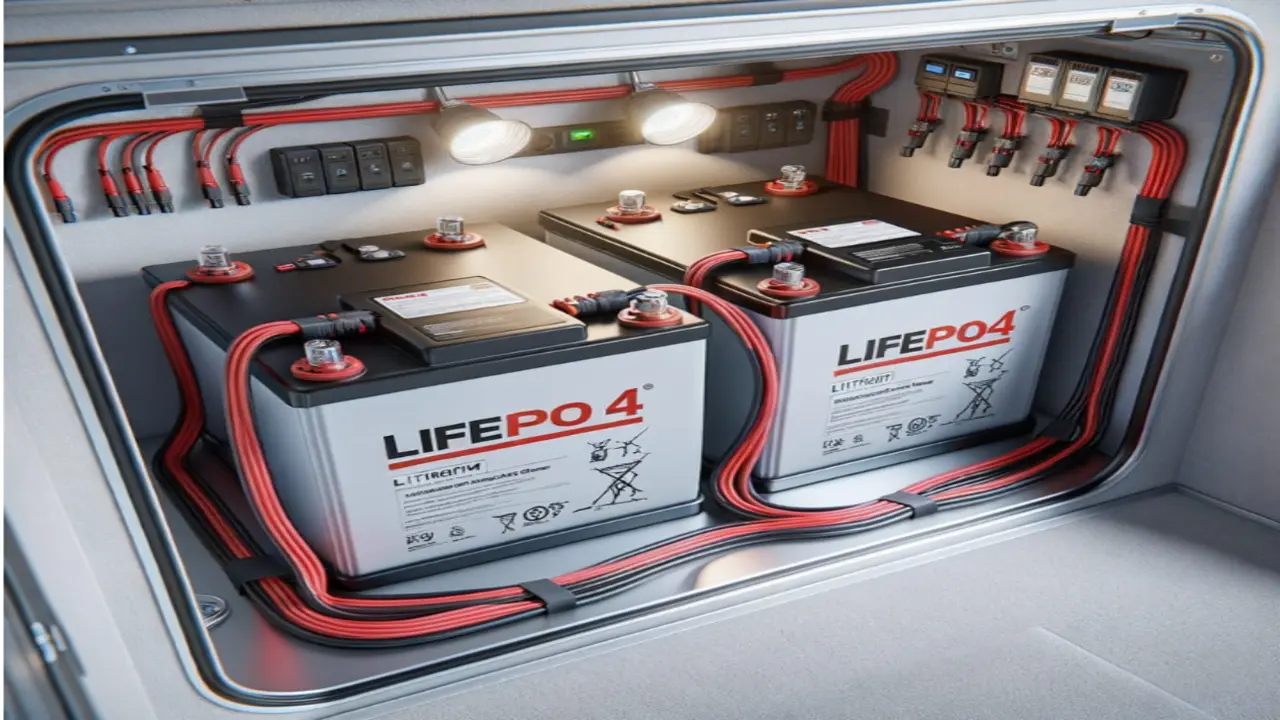
Author
Lithium vs AGM RV Battery: Which Is Right for Your Setup?
Ask any RV forum and you’ll get passionate opinions on both sides. AGM defenders cite lower upfront costs. Lithium advocates point to lifespan and weight savings. The truth is that both are correct — for different use cases. The mistake is picking a side before you understand the math.
This comparison covers every metric that matters for RV use: real cost over time, usable capacity, weight, charge behavior, temperature performance, and the one scenario where each battery type genuinely wins.
Quick Comparison: Lithium vs AGM RV Battery
| Metric | AGM | LiFePO4 Lithium |
|---|---|---|
| Upfront cost (100 Ah) | $150–$250 | $300–$550 |
| Usable capacity | 50% DoD | 80% DoD |
| Cycle life | 400–600 cycles | 3,000–5,000 cycles |
| Weight (100 Ah) | 25–30 kg | 10–14 kg |
| Charge efficiency | 85% | 99% |
| Cold weather performance | Poor below 0°C | Poor charging below 0°C (BMS protected) |
| Self-discharge/month | 3–5% | 1–2% |
| Maintenance | Check water (flooded) / none (AGM) | None |
| 10-year cost | $1,500–$2,500 | $600–$1,100 |
What Is an AGM RV Battery?
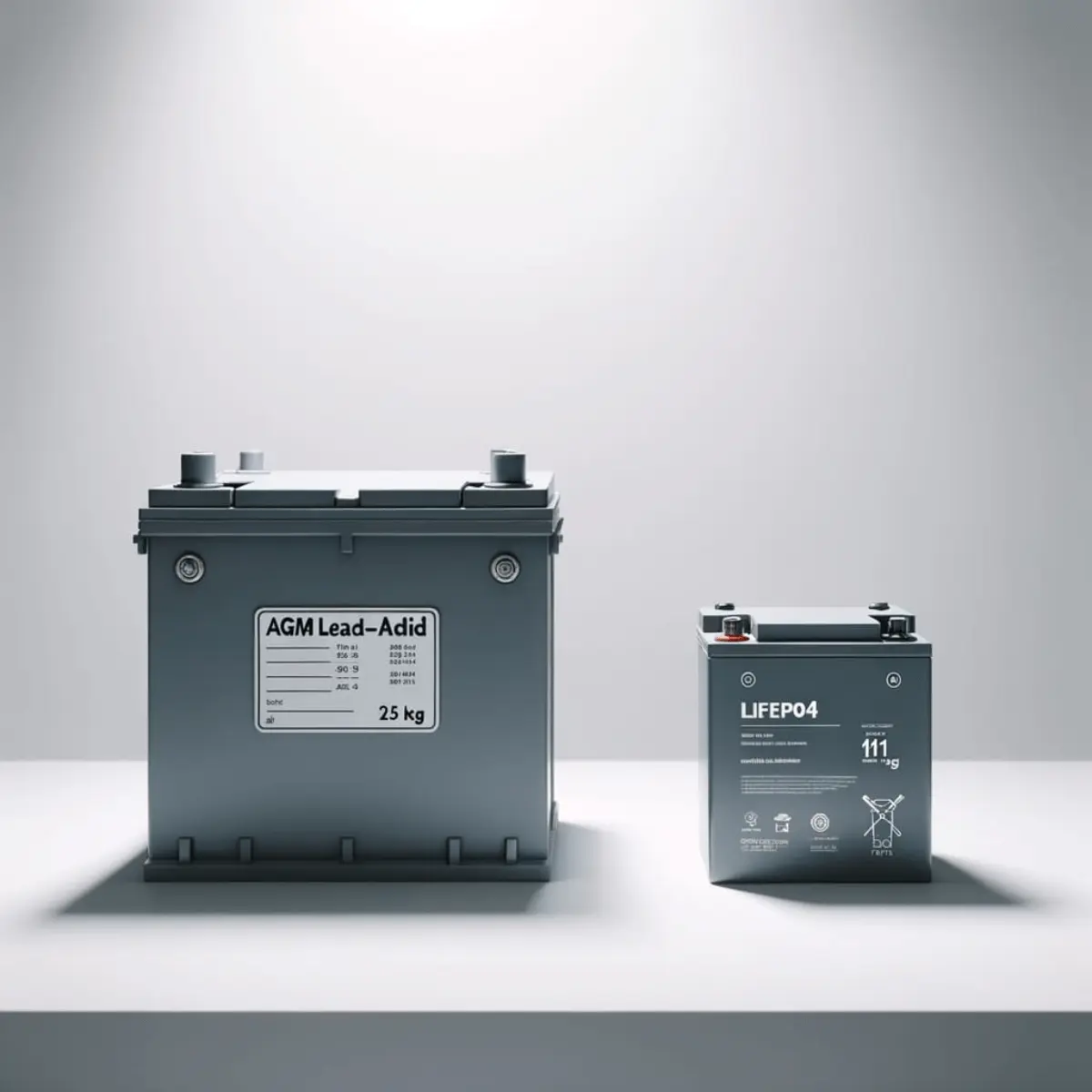
AGM (Absorbed Glass Mat) is a type of sealed lead-acid battery where the electrolyte is absorbed into fiberglass mats between the plates. Unlike flooded lead-acid, it requires no water top-up and can be mounted in any orientation.
AGM batteries have been the RV standard for decades. They’re reliable, widely available, and every RV charging system is already designed to work with them. A 100 Ah AGM battery typically costs $150–$250 and delivers around 50 Ah of usable capacity before you risk sulfation damage.
What Is a LiFePO4 RV Battery?
LiFePO4 (lithium iron phosphate) is the chemistry used in virtually all quality RV lithium batteries. Unlike the NMC lithium in laptops and phones, LiFePO4 is thermally stable — it doesn’t catch fire or undergo thermal runaway under normal use conditions.
A 100 Ah LiFePO4 battery delivers 80 Ah of usable capacity, weighs half as much as its AGM equivalent, and lasts 5–10 times as many charge cycles. The upfront cost is higher ($300–$550 per 100 Ah), but the total cost of ownership is significantly lower over 5–10 years.
Real Cost Comparison Over 10 Years
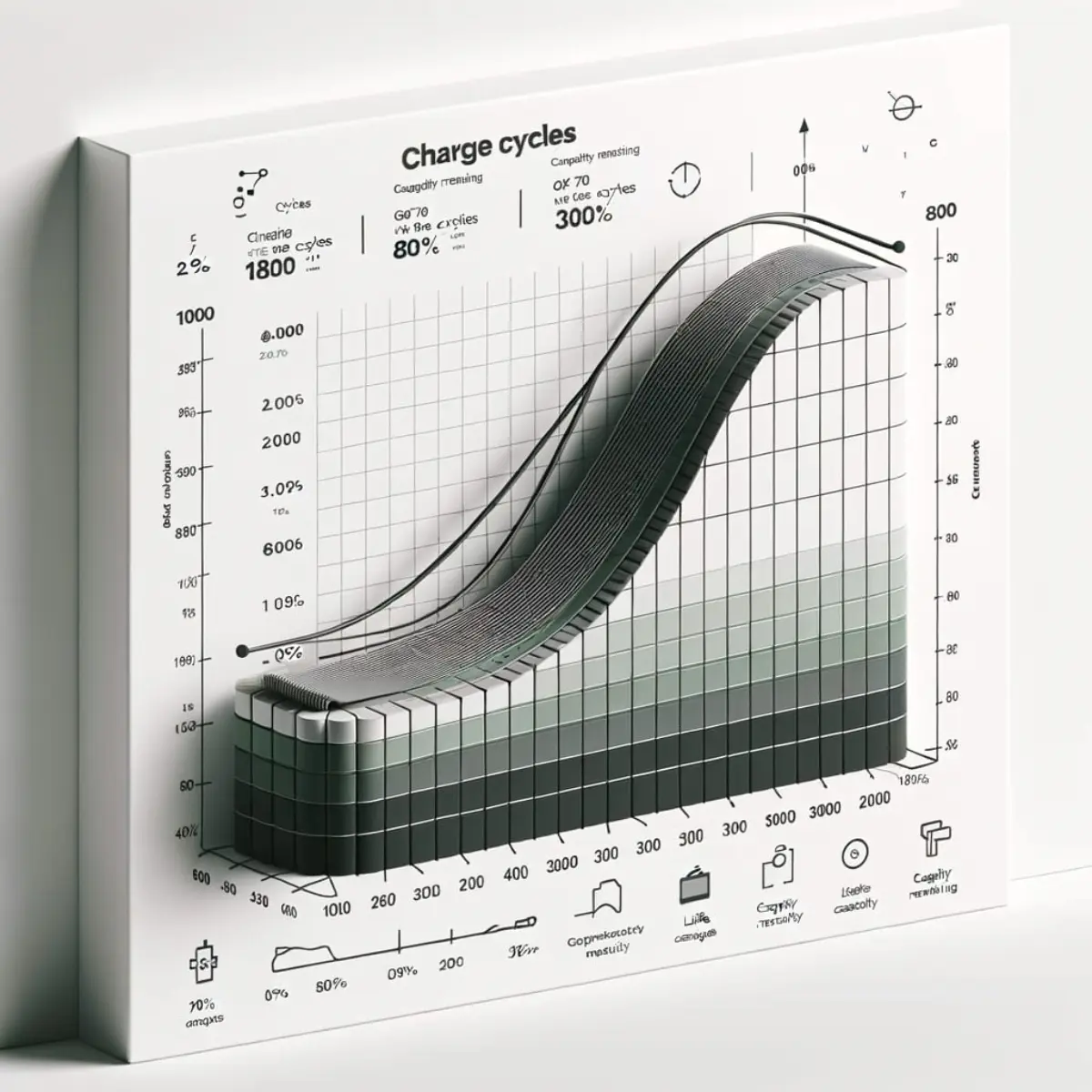
The upfront price difference disappears quickly when you factor in replacement cycles.
AGM scenario (200 Ah bank, 50% DoD = 100 Ah usable):
- Two 100 Ah AGM batteries: ~$400
- Lifespan: ~400–600 full cycles (2–3 years for frequent campers)
- Replacements over 10 years: 3–4 sets
- 10-year cost: $1,200–$1,600
LiFePO4 scenario (200 Ah bank, 80% DoD = 160 Ah usable):
- Two 100 Ah LiFePO4 batteries: ~$800
- Lifespan: 3,000–5,000 cycles (15–20 years for typical use)
- Replacements over 10 years: 0
- 10-year cost: $800
For boondockers cycling their batteries daily, LiFePO4 is the clear winner on total cost. For occasional campers making 10–15 trips per year, the calculation is closer — but LiFePO4 still wins on usable capacity per dollar after year 3.
Usable Capacity: The Number That Actually Matters
This is where the comparison shifts decisively. When you buy a 100 Ah battery, you don’t get 100 Ah to use.
- AGM: Discharge beyond 50% and you accelerate sulfation, shortening lifespan dramatically. Effective usable capacity: 50 Ah per 100 Ah rated.
- LiFePO4: The BMS (battery management system) protects the cells, allowing safe discharge to 20% remaining. Effective usable capacity: 80 Ah per 100 Ah rated.
To get 200 Ah of usable overnight power:
- AGM: You need 400 Ah rated capacity (4 × 100 Ah batteries)
- LiFePO4: You need 250 Ah rated capacity (3 × 100 Ah, or 1 × 200 Ah + 1 × 50 Ah)
Less battery, less weight, more power. This is why experienced boondockers almost universally choose LiFePO4.
For help calculating exactly how much capacity your setup requires, use the Free RV Power Calculator.
Weight: A Real Advantage for Smaller Rigs
A 100 Ah AGM battery weighs 25–30 kg. A 100 Ah LiFePO4 weighs 10–14 kg.
For a 400 Ah AGM bank: 100–120 kg of batteries
For a 250 Ah LiFePO4 bank (same usable capacity): 25–35 kg of batteries
That’s 65–95 kg of weight savings — critical for smaller rigs, truck campers, and anyone near their payload limit.
Charge Behavior: LiFePO4 Wins for Solar Systems
LiFePO4 batteries accept charge at a much higher rate than AGM. A quality 100 Ah LiFePO4 can accept up to 100A of charge current — a full recharge in about 1–1.5 hours from a large solar array. AGM batteries typically max out at 20–30A charge rate to avoid damage.
This means your solar array recharges LiFePO4 batteries significantly faster — important when you have limited sun hours or back-to-back cloudy days.
Cold Weather: The AGM Advantage
Below 0°C, LiFePO4 batteries must not be charged — the BMS will cut off charging to protect the cells. Discharging in cold is fine, but charging requires temperatures above freezing.
AGM batteries charge normally in cold conditions (though capacity drops). If you winter camp frequently in sub-zero temperatures without battery heating, AGM is actually the safer choice — or choose heated LiFePO4 batteries (Battle Born, Renogy Smart, etc.) which include self-heating capability.
Which Battery Is Right for Your RV?
Choose AGM if:
- You camp mostly with shore power (fewer than 50 deep cycles per year)
- You’re on a tight budget and replacing an existing AGM system
- You winter camp in consistently sub-zero temperatures
- You need a drop-in replacement without changing your charging system
Choose LiFePO4 if:
- You boondock regularly (more than 20–30 nights per year)
- Weight matters (smaller rig, near payload limit)
- You’re building or upgrading to a solar charging system
- You want the best long-term value
For detailed guidance on sizing the right capacity for your setup, see our RV battery bank sizing guide.
Top Picks for Each Chemistry
Best AGM for RV: Renogy Deep Cycle AGM (reliable, widely available, good warranty)
Best LiFePO4 for RV:
- Budget: Renogy Core Mini 100Ah DuoHeat — $307.99, solid entry-level LiFePO4
- Mid-range: Renogy Core 200Ah w/ Bluetooth — $769.99, app monitoring, double the capacity
- Premium (cold climate): Renogy Pro S1 120Ah/240Ah — from $712.99, semi-solid-state cells with self-heating
- Premium (USA-made): Battle Born 100Ah — $799 on sale ($949 regular), 10-year warranty, assembled & tested in the U.S.
Not sure which brand fits your budget? See our full Battle Born vs Renogy comparison.
For a full ranked comparison across five brands, see our Best LiFePO4 RV Batteries guide.
Frequently Asked Questions
Can I replace my AGM batteries with lithium without changing anything else?
Usually yes for drop-in 12V replacements, but check your charger settings. Many RV converters and solar charge controllers have a lithium charging profile — enable it for optimal performance and longevity.
Do LiFePO4 batteries require a special charger?
They benefit from a lithium charging profile (constant current to 14.4–14.6V, no float stage). Most modern RV chargers, solar charge controllers, and alternator-to-battery chargers support this. Using an AGM profile won’t damage a LiFePO4 battery but slightly reduces capacity and charge speed.
Are lithium RV batteries safe?
LiFePO4 specifically is the safest lithium chemistry available. It does not undergo thermal runaway under normal use. Quality batteries include a BMS that protects against overcharge, over-discharge, short circuit, and temperature extremes.
Key Takeaways
- LiFePO4 costs more upfront but less over 5–10 years — the break-even point is typically 2–3 years for regular boondockers
- Usable capacity is the real number — 50% for AGM vs 80% for LiFePO4
- LiFePO4 is 50–60% lighter — significant for weight-sensitive builds
- AGM wins in sub-zero charging scenarios — unless you choose heated LiFePO4
- Both work — the right choice depends on how often and how you camp
For a complete overview of RV power systems including inverters, solar, and off-grid setups, read the RV Gear & Power Complete Guide.
Renogy offers both lithium LiFePO4 and AGM batteries — browse both to compare specs and pricing directly.
Renogy Lithium Batteries → |
Renogy AGM Batteries →
Affiliate links — we earn a small commission at no extra cost to you.

Published on May 3, 2026
Mike Dawson
Mike Dawson is RVGeo's lead editor, applying inspection-grade rigor to RV research - verifying manufacturer specs, testing components, and fact-checking pricing and claims before they're published. RVGeo's approach draws on a background in automotive technical inspection, applied specifically to RV electrical, power, and safety systems. Mike oversees RVGeo's foundational guides on power systems, DIY conversions, and van-life setup, with every recommendation checked against real specs and current pricing rather than assumptions.
This post contains affiliate links. If you make a purchase through these links, we may earn a commission at no extra cost to you.