
Author
Quick answer
Most RV power problems do not start with a bad battery or weak solar panel. They start much earlier, when people buy equipment before they know how much energy they actually use in a normal day.
That is why daily energy math matters so much.
If you do not know your real power usage, it becomes very easy to overspend on the wrong battery bank, expect too much from solar, or install an inverter that sounds impressive but does not match the way you travel. Your own pillar already points readers in the same direction: start with consumption, convert it into watt-hours, then size the system around reality instead of marketing claims.
Want a quick and accurate estimate? Use this RV energy calculator to instantly calculate your daily power needs based on your setup.
Understanding RV power usage per day is the first step to building a reliable mobile energy system.
Typical RV daily usage ranges:
- Light setup: 300–800Wh/day
- Moderate setup: 800–1500Wh/day
- Full comfort setup: 1500–3000Wh/day
How Much Power Does an RV Use Per Day?
The honest answer is simple: it depends on what you run, how long you run it, and whether you are talking about light travel use or full-time comfort with heavy AC loads.
A smaller setup used for lights, charging, a fan, a router, and an efficient fridge can stay far below the energy needs of a larger RV running air conditioning, cooking appliances, or multiple work devices for long hours. Recent RV energy guides show just how wide that gap can be, from modest daily demand in lighter setups to much higher consumption in larger or more comfort-driven rigs.
A practical way to think about it:
Light use
Phone charging, lights, fan, a few electronics, limited AC needs
Moderate use
Fridge, lights, laptops, fan, pump, router, charging, some inverter use
Heavier use
More devices, longer work sessions, more comfort appliances, or high-draw items
That is why asking “How much power does an RV use per day?” is useful, but not enough. The better question is:
How much power does your RV use in a real travel day?
The Simple Formula That Actually Helps
The most useful starting point is simple:
Watts × Hours = Watt-hours per day
Quick math example
Example
Lights: 10W × 5h = 50WhLaptop: 60W × 3h = 180WhFan: 25W × 6h = 150Wh
Daily total: 380Wh
What to List Before You Size Anything
Do not build your system around assumptions. Start with the devices you actually use during a normal day on the road.
The goal is not to list everything you own. The goal is to list what really consumes energy in daily travel life.
Fridge
Lights
Roof fan
Laptop
Router or Starlink
Water pump
Phone charging
Coffee maker
Small kitchen devices
This is where most people either overestimate their needs or forget the devices that quietly add up across the day.
A smart system starts with the loads you really use, not with random assumptions or someone else’s setup.
A Real RV Power Usage Example
Here is a simple moderate-use example that shows how daily energy demand adds up faster than most people expect.
If you don’t want to calculate everything manually, try this interactive RV power calculator and instantly get your exact daily energy needs based on your real usage., try this interactive RV power calculator and get your exact energy usage in seconds.
| Efficient fridge | 8h | 480Wh |
| Lights | 5H | 50Wh |
| Laptop | 3H | 180Wh |
| Fan | 6H | 150Wh |
| Water pump | 0.3H | 15Wh |
| Phone charging | 2H | 30Wh |
| Router | 8H | 96Wh |
Calculate Your Real RV Power Needs
Use this interactive tool to estimate your exact daily energy consumption based on your real usage.
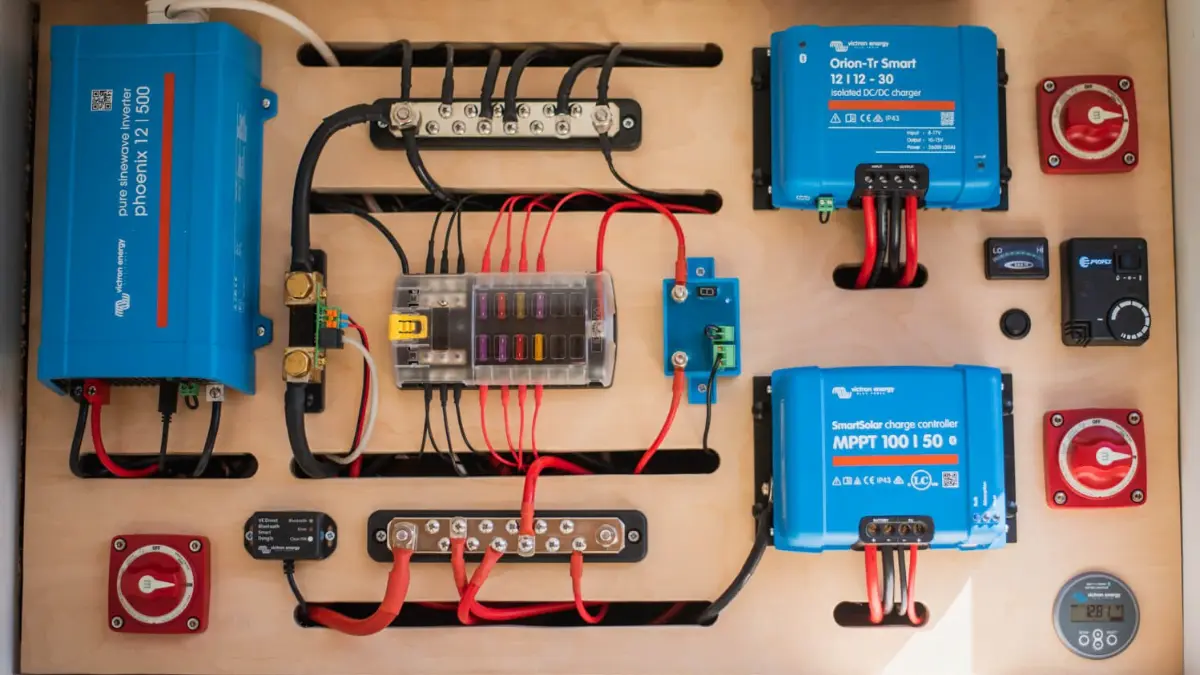
Estimated daily total: 1,001Wh
Common RV Power Planning Mistakes
Guessing Instead of Measuring
Buying gear before estimating real daily energy use often leads to an unbalanced setup.
Ignoring Inverter Losses
Real systems lose energy. Raw math alone is not enough when planning a usable setup.
Copying Someone Else’s Setup
Their travel style, climate, and device use may be very different from yours.
Underestimating the Fridge
Fridge consumption is often one of the most important daily loads in a van or RV setup.
Trusting Ideal Solar Output
Rated panel wattage does not reflect real-world daily production in changing conditions.
Oversizing Without a Plan
Adding more equipment does not automatically create a smarter or more efficient system.
What Your Daily Energy Number Helps You Size
Battery
Estimate usable storage more realistically based on your real daily demand.
Solar
Understand how much solar recovery you may need during a normal day.
Inverter
Match AC power needs to actual device use instea
Charging Methods
Decide how solar, alternator, and shore power should work together.
Want a clearer way to plan your full van or RV power setup?
What to Do After You Know Your Daily Energy Needs
Choose Battery Capacity
Use your daily demand to estimate realistic usable storage.
Estimate Solar Needs
Turn your daily energy target into a smarter solar sizing decision.
Size Your Inverter Correctly
Focus on real AC use, not random oversized equipment.
Build a Smarter Mobile Power System With More Confidence
Start with the complete guide if you want the full picture. Move to the Smart Method if you want a clearer decision path before choosing battery, solar, and inverter components.
If you are not sure how much power you really need, you risk oversizing your system, wasting money, or ending up with something that does not match your travel style.
Start with the full guide to understand the fundamentals, or jump straight to the Smart Method to calculate your real energy needs.
Choose your starting point:
Most readers start with the calculator.

Published on March 29, 2026
Mike Dawson
Mike Dawson is RVGeo's lead editor, applying inspection-grade rigor to RV research - verifying manufacturer specs, testing components, and fact-checking pricing and claims before they're published. RVGeo's approach draws on a background in automotive technical inspection, applied specifically to RV electrical, power, and safety systems. Mike oversees RVGeo's foundational guides on power systems, DIY conversions, and van-life setup, with every recommendation checked against real specs and current pricing rather than assumptions.
This post contains affiliate links. If you make a purchase through these links, we may earn a commission at no extra cost to you.