
Author

Quick answer
Setting up an RV power system can feel overwhelming if you don’t understand how each component works together. In this guide, you’ll learn how to build a reliable RV power system setup step by step.
A typical RV power system setup includes batteries, solar panels, an inverter, a charge controller, and multiple charging sources working together to supply reliable energy on the road.
Mobile energy in a van or RV is the complete system that produces, stores, converts, and distributes electricity while you travel. In most setups, it includes a battery bank, solar panels, a charge controller, an inverter, and one or more charging sources such as shore power or alternator charging.
A reliable RV power system is not built by choosing the biggest components. It is built by matching your real daily consumption to the right storage and charging capacity.
Key takeaways
Real-world numbers and travel habits matter more than ideal theoretical specs.
- A good system is based on energy balance, not oversized equipment.
- Battery choice affects autonomy, charging speed, weight, and budget.
- Solar panels help, but they cannot fix bad consumption planning.
- Inverter sizing should be based on peak load, not guesswork.
- Most failures come from poor matching between usage, storage, and charging.
- A simple and well-designed system usually performs better than a complex one.
What is a mobile energy system in a van or RV?
A mobile energy system is the electrical backbone of your travel setup. It powers lights, chargers, water pumps, fans, routers, laptops, small kitchen appliances, and sometimes high-demand equipment such as microwaves or air conditioning units.
Unlike a house, a van or RV runs on limited space, limited battery capacity, changing weather, and movement. That changes everything. You are not just consuming electricity. You are constantly managing production, storage, and recharge cycles.
A strong setup must answer three basic questions:
- How much energy do you use every day
- How much energy can you store
- How fast can you recharge it
If one of these three parts is weak, the whole system becomes frustrating. You may have a large battery but not enough charging input. You may have plenty of solar but not enough storage. Or you may have a powerful inverter but a battery bank that cannot support it correctly.
Why this balance matters
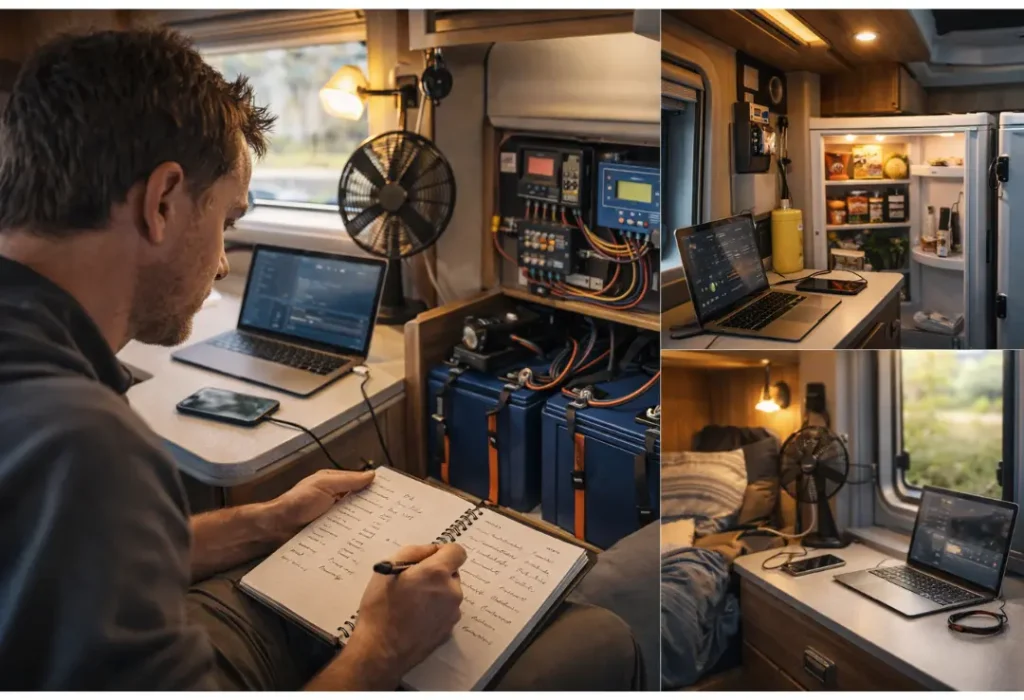
A balanced setup is not built by choosing the biggest components. It works when energy use, storage, and recharge capacity support each other in real conditions.
Before choosing batteries, solar panels, or an inverter, you need a realistic estimate of your daily consumption. This RV power usage calculator guide will help you estimate your daily energy needs more accurately.
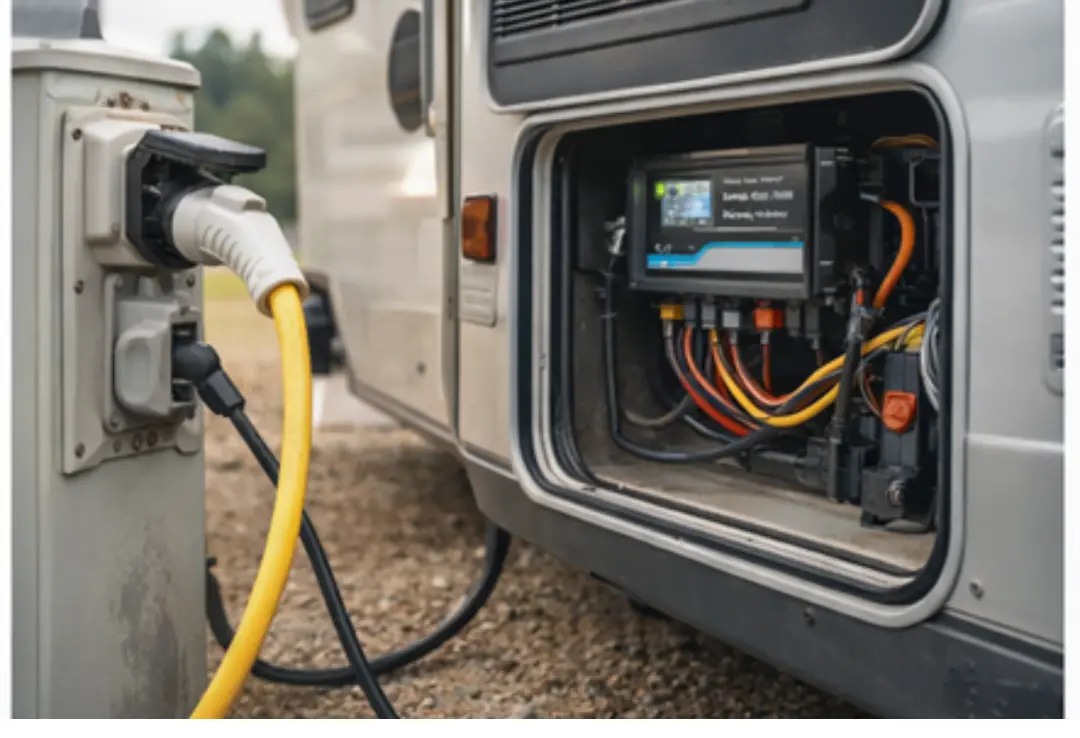
What components make the system work?
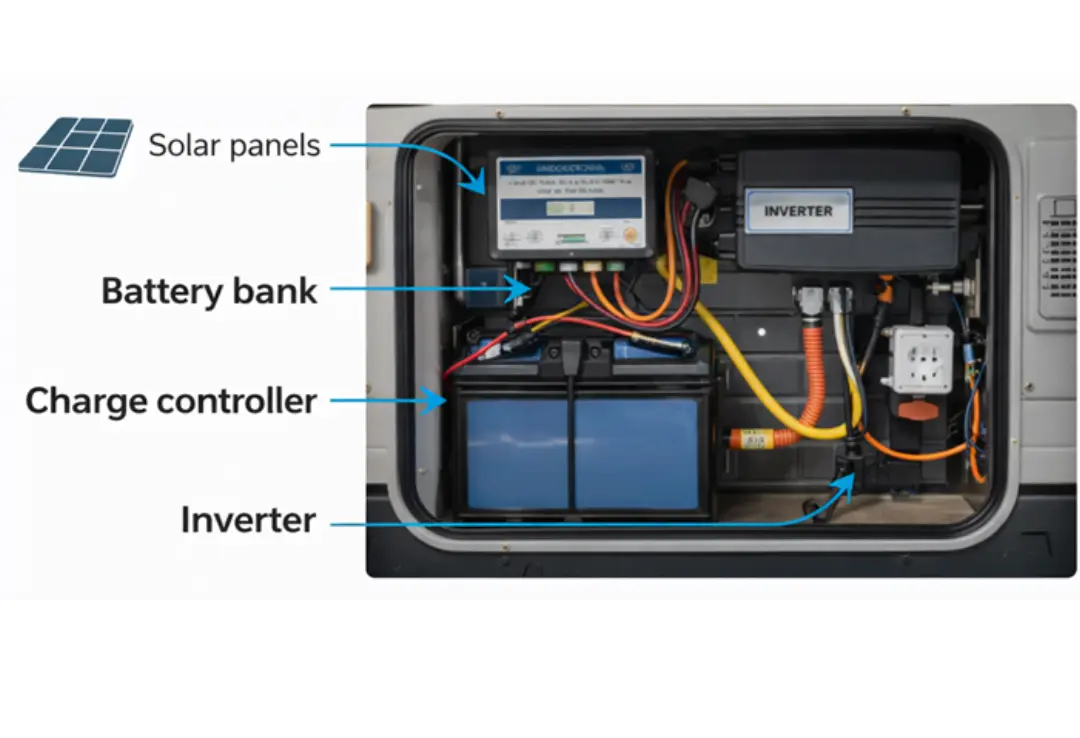
Battery bank
Stores energy for later use and supports off-grid autonomy.
Charge controller
Regulates charging flow from the solar array to the battery.
Solar panels
Generate energy during daylight when conditions are favorable.
Inverter
Converts battery power into household AC electricity.
Other charging sources
Shore power and alternator charging add stability to the system.
If you are not sure how much storage you really need, use this RV battery size calculator guide to estimate the right battery capacity for your setup.
Why component balance matters
A strong setup is not built by choosing the biggest parts. It works when storage, charging, and daily energy demand stay aligned in real-world use.
How much electricity do you really need each day?
This is the most important step, and many people skip it. They buy equipment first, then try to make it work later. That is backward.
You should begin with consumption.
The practical way is to list your devices and estimate how long each one runs per day. Then convert that into watt-hours.
Simple method
Use this formula:
Watts × hours used per day = watt-hours per day
Examples:
- Laptop: 60W × 4 hours = 240Wh
- Fridge: if the average draw is closer to 25W to 35W over a day, consumption may land around 600Wh to 800Wh per day depending on model and climate
- LED lights: 10W × 5 hours = 50Wh
- Fan: 25W × 8 hours = 200Wh
- Phone charging: around 15Wh to 25Wh each
Once you add everything, you get your daily energy need
Decision logic
Start with real daily loads before choosing batteries, solar panels, or inverter size.
If you are not sure how much storage you really need, use this RV battery size calculator guide to estimate the right battery capacity for your setup.
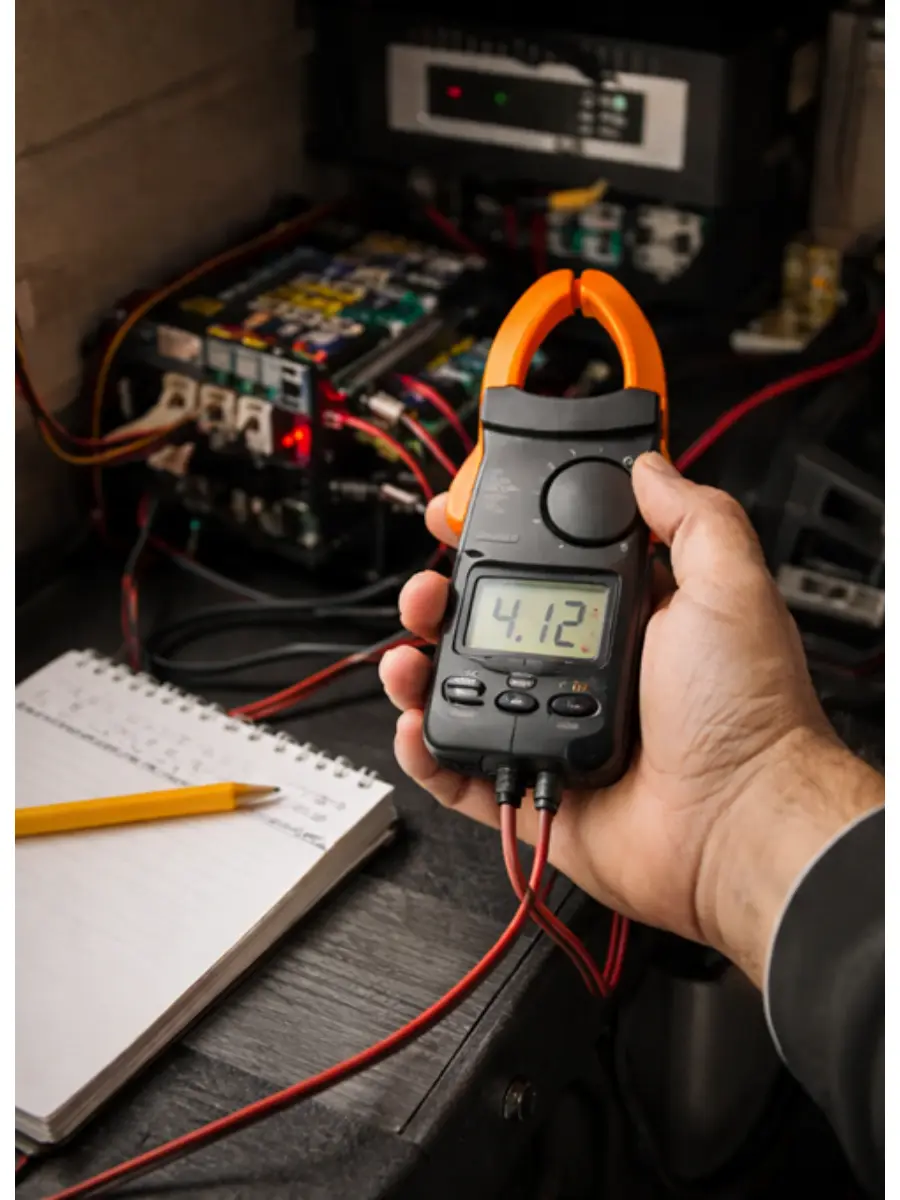

Which battery type makes the most sense?
For most van and RV owners, the real comparison is usually Lithium vs AGM.
Short answer
Lithium is usually the better long-term choice for performance, usable capacity, weight, and charging speed. AGM can still make sense for simpler setups, tighter budgets, or occasional use.
Lithium batteries
Lithium batteries are lighter, charge faster, and allow deeper discharge without as much damage. That means more usable energy from the same nominal capacity.
Strengths:
- more usable capacity
- faster charging
- lighter weight
- longer cycle life
- strong off-grid performance
Limitations:
- higher upfront cost
- may require better charge compatibility
cold-weather charging needs more attention
AGM batteries
AGM batteries are more affordable at the start and often simpler for basic setups. But they are heavier and offer less practical usable energy.
Strengths:
- lower initial cost
- simpler for some entry-level systems
- widely available
Limitations:
- heavier
- less usable capacity
- slower charging
- shorter lifespan in demanding use
Practical decision logic
Choose lithium if:
- you travel often
- you want better autonomy
- you use solar seriously
- weight matters
- you want long-term efficiency
Choose AGM if:
- budget is the main limit
- your use is lighter or occasional
- your setup is simple
- you accept lower performance
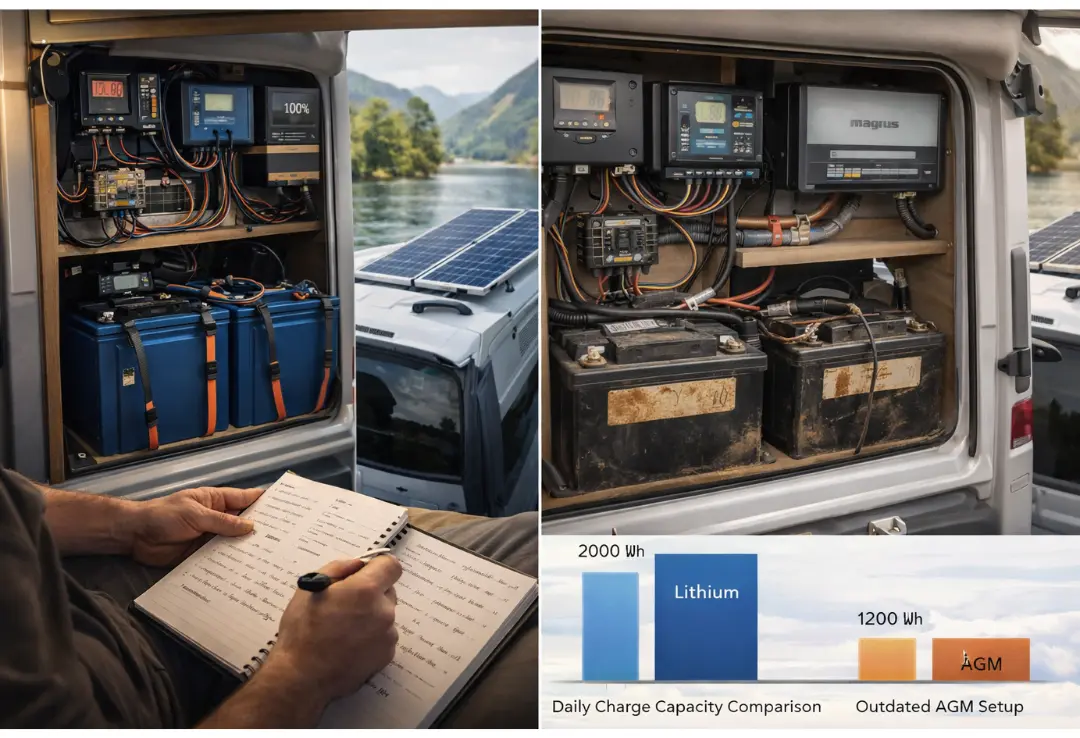
Once you know your daily energy use, the next step is choosing the right storage capacity. This RV battery size calculator guide can help you figure out how much battery capacity you really need.
How many solar panels are enough?
There is no universal number because solar output depends on conditions, not just rated watts.
Short answer
You need enough solar to recover a meaningful share of your daily consumption under realistic conditions. For many practical van and RV systems, a setup between 300W and 600W is a common working range, but the right size depends on usage, climate, roof space, and backup charging options.
What affects solar output
Solar panel rating is measured under ideal conditions. Real-world performance is usually lower because of:
- cloud cover
- panel angle
- heat
- partial shade
- dirt
- winter sun
- short daylight periods
Good sizing logic
Instead of asking, “How many panels can I fit,” ask:
- How much energy do I use daily
- How often do I stay off-grid
- Do I also charge while driving
- What happens during bad weather for two or three days
That leads to much better decisions
Important reality check
Solar is a production tool, not a guarantee. If your consumption is too high, more panels alone may not solve the problem. You may need to improve efficiency, reduce AC loads, or expand battery capacity as well.
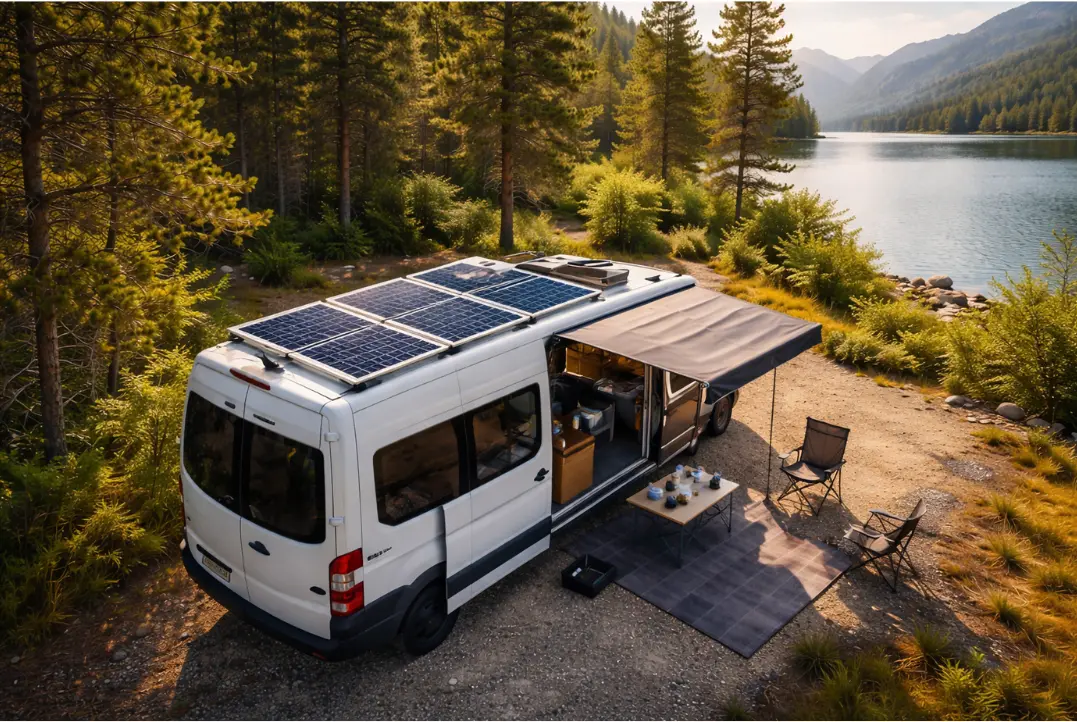
Main factors to check
Main factors
Liste :
Daily energy useRoof spaceWeather and seasonBattery sizeTravel styleBackup charging
Real-world reference
Panel count depends on sunlight, roof layout, battery capacity, and how you actually travel. A balanced setup is usually more useful than just adding more panels.

Solar production depends on your travel habits, weather conditions, and daily energy demand. If you want to size your system more accurately, check this RV solar panel sizing guide.
To avoid overspending or underpowering your appliances, see our guide on RV inverter size.
What inverter size should you choose?
Inverter sizing is one of the most misunderstood parts of a mobile power system.
Short answer
The right inverter size depends on the highest AC load you want to run at one time, plus startup surge for certain devices. It should match your actual needs, not your fear of being underpowered.
What people get wrong
Many people choose the biggest inverter they can afford. That often creates three problems:
higher costunnecessary
idle consumption
more strain on the battery system
A large inverter is only useful if your appliances actually need it and your battery bank can support it properly.
Think in real usage
Ask:
- What AC appliances will I run
- Which ones may run at the same time
- Do any of them have startup surge
- Is my battery and cable setup sized for that load
For basic travel use, the needs are often lower than expected. Laptops, chargers, routers, and efficient appliances may not require a huge inverter. But heating appliances, kettles, microwaves, hair dryers, and air conditioning change the equation fast.
Practical principle
Choose the smallest inverter that comfortably supports your real peak use. That usually leads to a more efficient and more stable system.
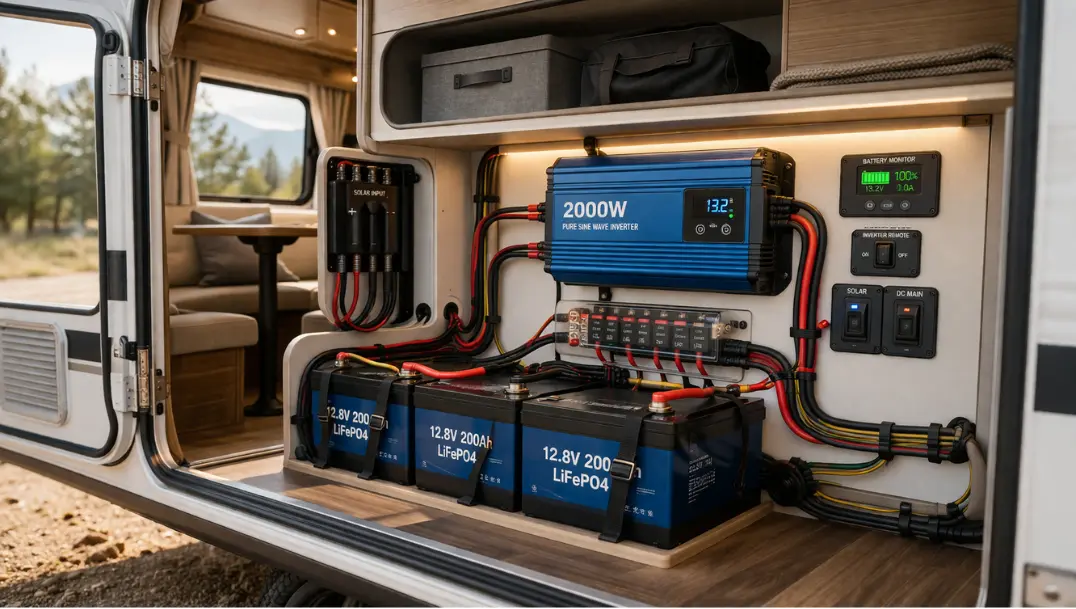
How can you recharge your batteries efficiently?
A strong system is not only about storage. It is also about recovery. If your battery drains faster than it recharges, the system fails in practice.
Main charging methods
Solar charging
Solar is quiet, renewable, and ideal for daytime recovery. It works best when your setup is well-sized and you get decent sunlight.
Best for:
- off-grid camping
- regular daytime parking
- reducing shore power dependence
Shore power charging
This is one of the most stable ways to recharge batteries. When plugged into external power, your battery charger can restore capacity reliably.
Best for:
- campgrounds
- home charging
- recovery after several cloudy days
Alternator charging while driving
Charging while driving is powerful because it uses travel time efficiently. It can be especially useful for people who move often and do not stay parked for many days.
Best for:
- road trip travel style
- mixed-use systems
- supporting solar during weak weather
The smartest strategy
The best real-world systems usually combine sources. For example:
- solar for daily daytime recovery
- alternator charging during travel
- shore power when available
If you plan to recharge while traveling, this guide on charging RV batteries while driving explains what actually works.
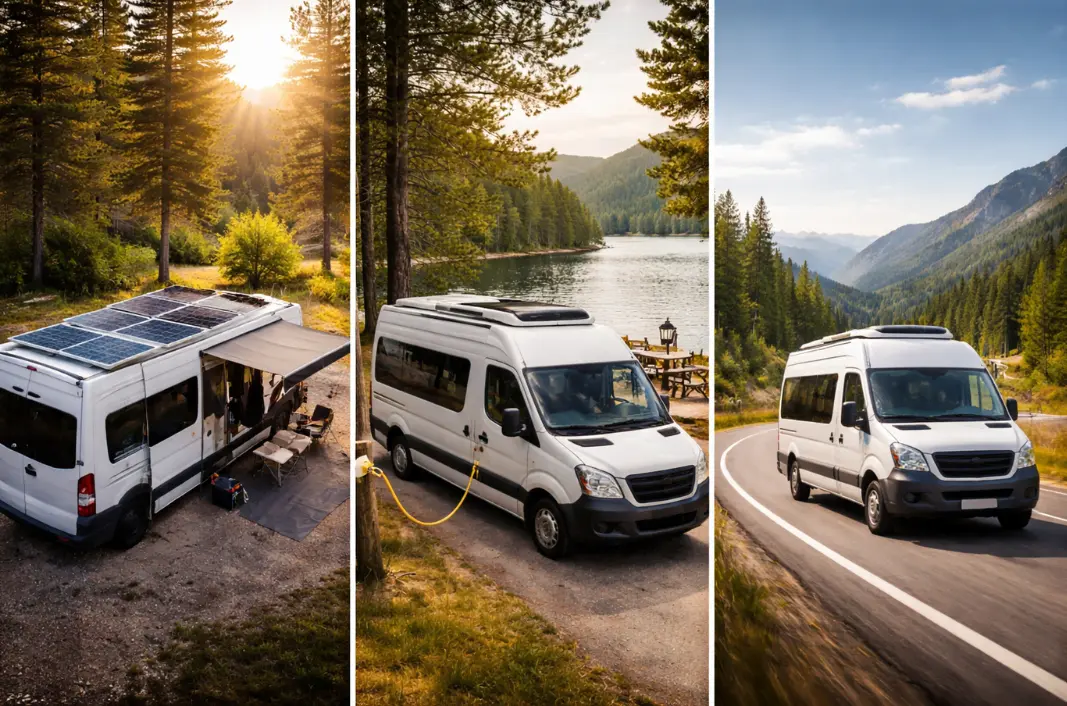
This gives flexibility and reduces stress.
What mistakes should you avoid?
Most energy problems are not caused by bad products. They come from bad system design.
Mistake 1: buying equipment before calculating usage
This creates imbalance from the start.
Mistake 2: overestimating solar production
Rated watts are not the same as daily real-world output.
Mistake 3: underestimating battery needs
A battery bank that looks good on paper may feel weak after one normal evening.
Mistake 4: oversizing the inverter without need
Bigger is not always better. Often it is just less efficient.
Mistake 5: ignoring charging recovery
A system must recover energy reliably, not just store it.
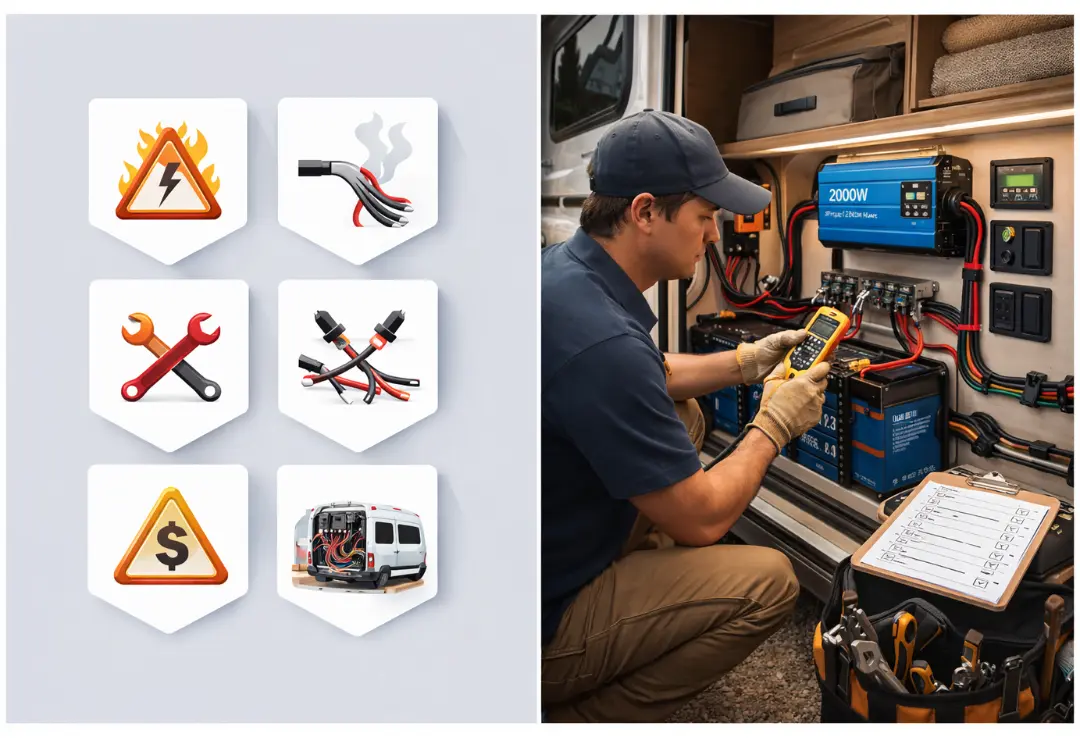
Mistake 6: poor cable sizing and weak installation quality
Even good components can underperform or become unsafe if installation quality is poor.
Mistake 7: designing for ideal conditions only
A serious setup should still work in cloudy weather, partial shade, or colder seasons.
To understand what your system is really doing in real time, read our guide on RV energy monitoring.
What does a balanced setup look like?
A balanced setup is one where production, storage, and usage support each other logically.
Example of a moderate-use setup
This kind of setup may support:
- lights
- device charging
- water pump
- fan
- router
- laptop
- efficient fridge
Possible structure:
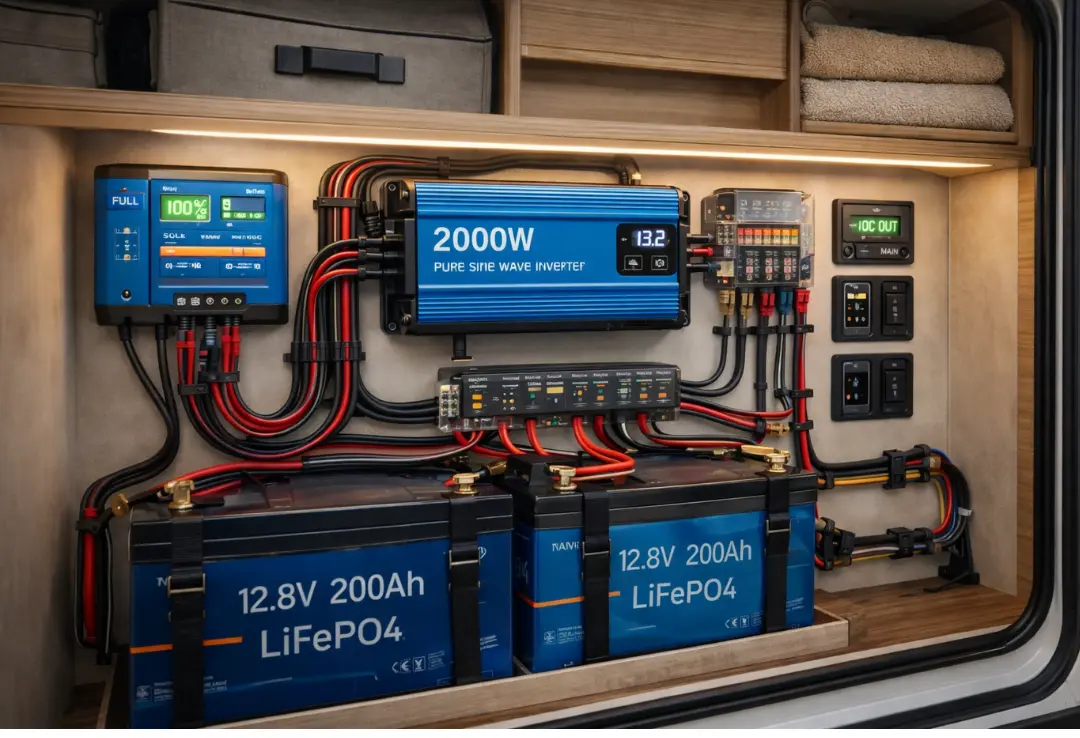
- mid-size lithium battery bank
- solar array sized for regular daytime recovery
- alternator charging support
- inverter sized only for real AC needs
Why it works:
- battery is not isolated from charging reality
- solar is not asked to do everything alone
- inverter is matched to real use
- the user understands daily consumption
This is the difference between a setup that feels professional and one that feels random.
A simple 4-step framework before you buy anything
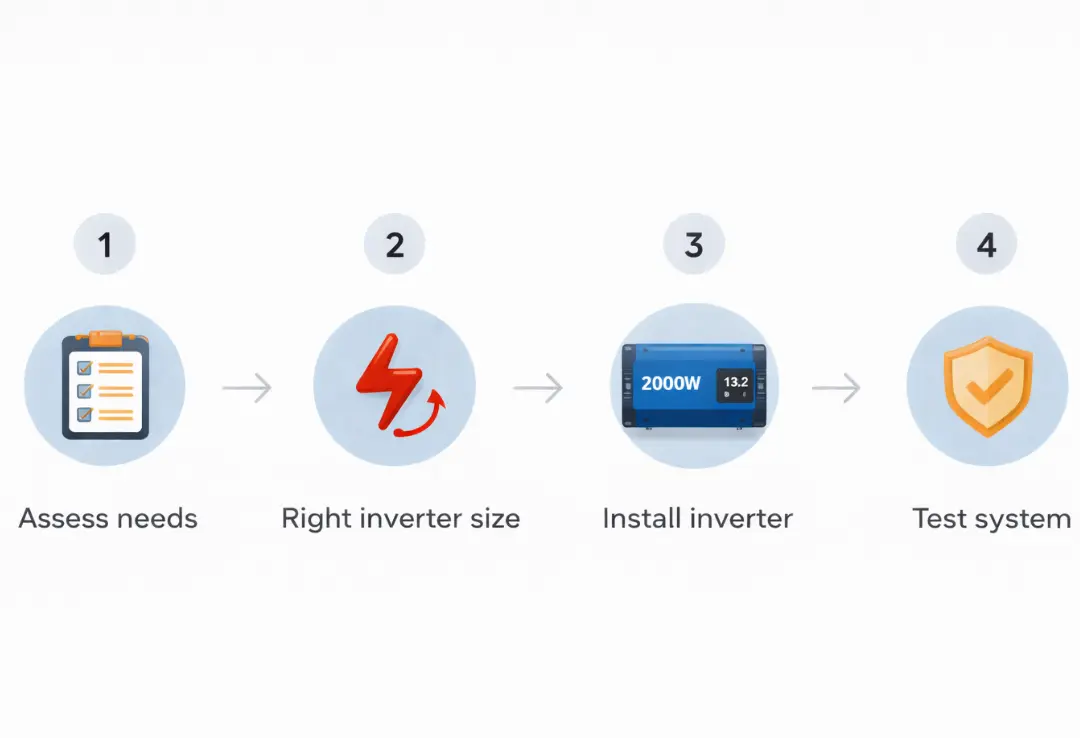
Step 1: List your real devices
Write down what you actually use, not what you might use one day.
Step 2: Estimate daily energy demand
Convert use into watt-hours per day.
Step 3: Define your travel style
Do you move often or stay parked for days. Do you rely on campgrounds or prefer off-grid autonomy.
Step 4: Match storage and recharge to reality
Choose battery, solar, inverter, and recharge methods based on actual behavior.
This framework avoids most beginner mistakes and many expensive upgrades later.
You should also avoid the most common design problems covered in our article on RV solar setup mistakes.
FAQ
Can solar alone power an RV full time?
Sometimes, but it depends on usage, battery size, climate, and recharge consistency.
Is lithium always better than AGM?
Not always, but it is often the stronger long-term choice for frequent off-grid use.
Do I need a large inverter for van life?
No. You need the right inverter for your real peak AC demand.