
Author


Understanding solar panel types for RVs
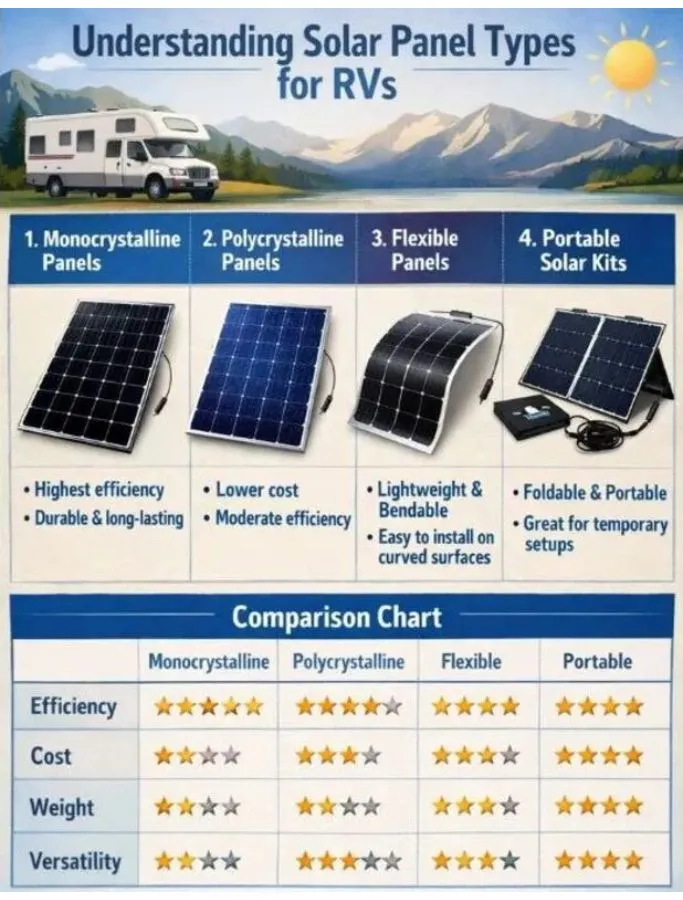
Choosing the right type of solar panel for your RV can significantly impact your energy efficiency and sustainability on the road. Different types of solar panels offer unique benefits and limitations, which can affect your RV’s performance throughout the seasons. In this guide, we will explore the various types of solar panels available for RVs, including monocrystalline, polycrystalline, and flexible panels, as well as the factors to consider when selecting the best option for your needs.
Monocrystalline solar panels
Monocrystalline panels are known for their high efficiency and sleek design. These panels are made from single-crystal silicon, which allows them to convert more sunlight into electricity compared to other types. This efficiency makes them an excellent choice for RV owners who need to maximize their energy output in limited space.
One of the key benefits of monocrystalline panels is their performance in low-light conditions. This can be particularly advantageous during the winter months or in regions with less sunlight. However, they tend to be more expensive than other types, which is an important consideration for budget-conscious travelers.
For those looking to harness the full potential of solar energy during summer, monocrystalline panels can be especially effective. Learn more about optimizing your RV’s solar energy in warmer months by visiting our guide on maximizing summer solar energy in your RV.
Polycrystalline solar panels
Polycrystalline panels are made from multiple silicon crystals, making them less efficient than monocrystalline panels but also more affordable. These panels have a distinct blue hue due to the way light reflects off the silicon fragments.
While they may not offer the same level of efficiency, polycrystalline panels are often preferred for their cost-effectiveness. They are a great option for RV owners who are new to solar energy and want to experiment without a significant financial commitment.
Despite their lower efficiency, polycrystalline panels still provide reliable energy output, especially during winter months when sunlight is less intense. Their affordability makes them a popular choice for many RV enthusiasts who prioritize budget over performance.
Flexible solar panels
Flexible solar panels are made from thin-film solar cells, allowing them to bend and conform to the shape of your RV’s roof or other surfaces. Their lightweight and adaptable nature make them an excellent choice for RVs with curved surfaces or limited space.
These panels are particularly useful for RV owners who frequently travel and need a portable solution that can easily be repositioned. However, it’s important to note that flexible panels typically have lower efficiency rates compared to crystalline panels.
Despite their lower efficiency, flexible panels offer a versatile solution for RV solar installations. They can be an ideal option for those looking to maintain and clean their panels with ease, ensuring optimal performance throughout the year.
Factors to consider when choosing solar panels
When selecting solar panels for your RV, several factors should be taken into account:
- Space availability: Consider the amount of roof space available on your RV and choose panels that fit comfortably without compromising other installations.
- Budget: Determine your budget and decide whether the higher efficiency of monocrystalline panels justifies the additional cost.
- Energy needs: Assess your typical energy consumption and ensure the panels can provide sufficient power for your appliances and devices.
- Climate conditions: Consider the typical climate and sunlight exposure in areas you plan to travel. Some panels perform better in specific weather conditions.
By carefully evaluating these factors, you can make an informed decision that aligns with your travel goals and energy requirements. For further insights on optimizing solar performance year-round, check out our comprehensive guide on optimizing RV solar performance throughout the seasons.
Integrating solar panels with your RV system
Once you’ve selected the right solar panels, integrating them into your RV’s electrical system is crucial for maximizing energy efficiency. This involves using appropriate solar charge controllers, which regulate the power flowing from the panels to your batteries, preventing overcharging and ensuring a longer battery life.
Understanding the role of solar charge controllers can help you enhance your RV’s solar system. For more details, explore our article on the role of solar charge controllers in RVs.
Ultimately, choosing the right solar panel type for your RV means balancing efficiency, cost, and adaptability to your travel lifestyle. By considering the unique benefits of each panel type and how they fit into your energy strategy, you can enjoy a more sustainable and comfortable RV experience.