
Author

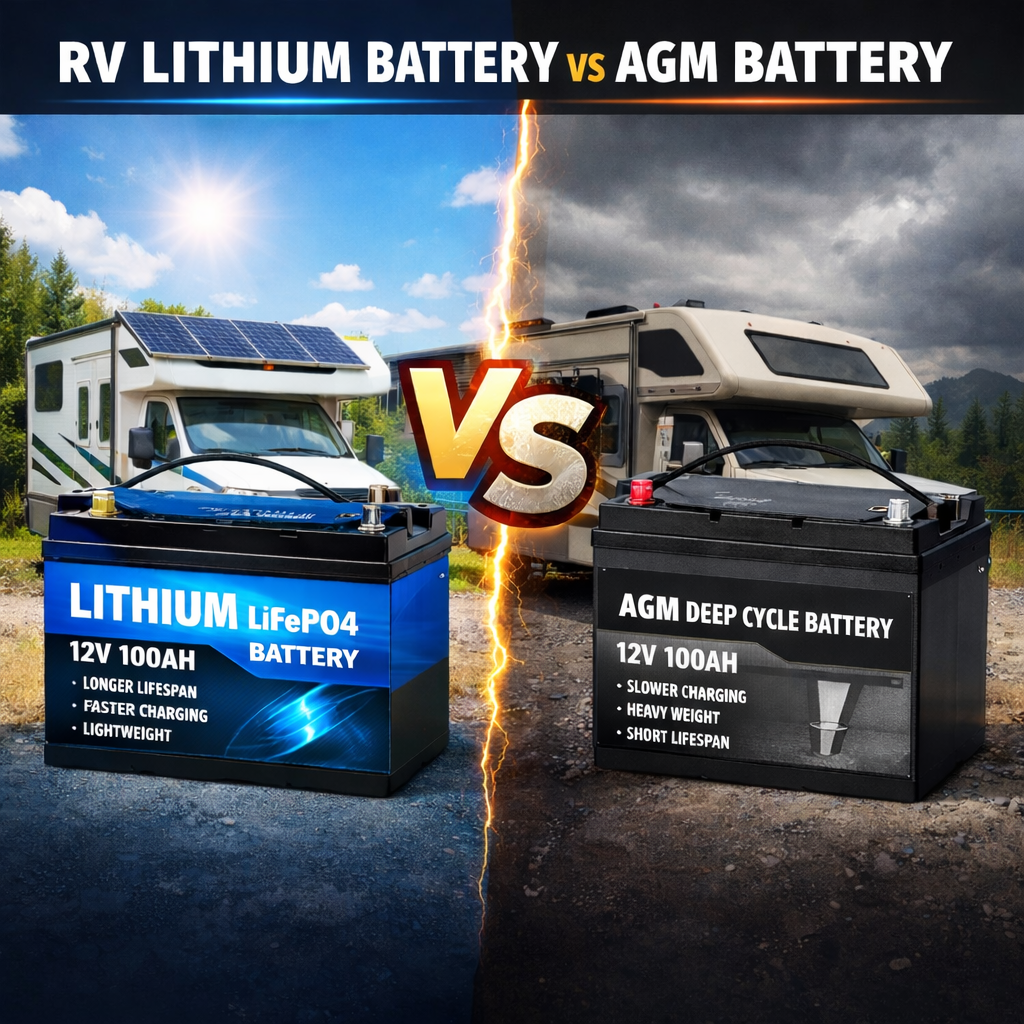
The $800 price difference between lithium and AGM batteries stops many RVers from upgrading, but that initial cost tells only part of the story. Over a decade of ownership, lithium’s 3,000+ cycle lifespan versus AGM’s 500 cycles dramatically shifts the value equation. We’ve tracked total ownership costs including replacement frequency, weight savings on fuel, and usable capacity differences. For anyone planning extended boondocking or building a modern RV energy system, understanding these long-term economics changes the decision completely.
The Numbers That Actually Matter
I bought my first pair of AGM batteries in 2016 for $340 each – $680 total for 200Ah of rated capacity. They lasted 28 months before capacity dropped below 70%, forcing replacement. Second set lasted 31 months. Third set made it 26 months before showing the same voltage sag and shortened runtime.
Total spent on AGM batteries over seven years: $2,040 for three sets, plus $180 in battery box modifications and heavier cables to handle the weight. That’s $2,220 total.
In 2023, I switched to a single 200Ah Battle Born lithium battery for $1,600. After two years and roughly 600 cycles, it still tests at 97% capacity. Based on manufacturer data and user reports, I expect this battery to deliver 3,000-5,000 cycles, meaning 10-15 years of service.
The math flips completely when you account for replacement frequency. That “expensive” lithium battery costs less per year than constantly replacing AGM batteries. But the financial equation goes deeper than purchase price alone.
Weight: The Hidden Cost Nobody Calculates
My old AGM setup weighed 127 pounds two 6-volt golf cart batteries at 63.5 pounds each. My lithium replacement weighs 53 pounds. That’s 74 pounds of permanent weight savings.
Seems trivial until you calculate fuel economy impact. RVs get terrible mileage my truck pulling my fifth wheel averages 8.5 MPG. Every 100 pounds of weight reduces fuel economy by approximately 1-2%. Seventy-four pounds saves roughly 0.7% on fuel.
Over 15,000 miles annually, that’s 100 gallons at $4/gallon = $400 yearly in fuel savings. Across 10 years, that’s $4,000 in fuel costs avoided just from reduced weight. Suddenly that lithium premium looks like an investment, not an expense.
The weight savings also means I can carry more fresh water, food, and gear without exceeding my RV’s cargo capacity rating. That flexibility has real value when you’re planning extended trips away from resupply points.
Usable Capacity: Why 200Ah Isn’t Really 200Ah
AGM batteries shouldn’t discharge below 50% regularly without significantly shortening their lifespan. My 200Ah AGM setup delivered maybe 100Ah usable capacity if I wanted the batteries to last more than a year.
Lithium batteries safely discharge to 20% or even 10% without damage. That same 200Ah rating delivers 160-180Ah usable capacity-nearly double what AGM provides in practice.
This means you either need twice the AGM capacity to match lithium runtime, or you accept running your generator more frequently. Neither option is appealing when you’re trying to camp off-grid for a week.
The capacity difference becomes painfully obvious during real camping. With AGM, I watched my battery monitor obsessively, running the generator whenever we hit 50% to avoid damage. With lithium, I comfortably drop to 30-40% and recharge next day via solar without worry. The stress reduction alone is worth money.
Charging Speed: Time Is Boondocking Freedom
AGM batteries charge slowly due to their chemistry requiring multi-stage absorption charging. My old AGM setup took 6-8 hours to recharge from 50% to 100% even with 400 watts of solar in perfect conditions. The final 20% took almost as long as the first 60% because AGM batteries taper acceptance rate dramatically as they approach full charge.
Lithium batteries accept charge at full current until nearly 100% capacity. My 200Ah lithium recharges from 30% to 100% in under 4 hours with the same 400W solar array. That’s twice as fast, which means I recover from cloudy days faster and can handle deeper discharge events without falling behind.
The charging speed advantage compounds when you have limited solar production. During winter camping in Colorado, I get maybe 3-4 peak sun hours. With AGM, I could never fully recharge between days, slowly depleting capacity until I needed generator time. With lithium, those 3-4 hours provide enough charge to keep up with daily consumption indefinitely as part of a comprehensive power infrastructure.
This single factor enables extended boondocking that AGM makes nearly impossible. I regularly camp 10-14 days between generator use now. With AGM, three days was my maximum before needing significant generator runtime.
Cold Weather Performance: The Winter Reality Check
AGM batteries lose 20-30% capacity below freezing and charge acceptance drops significantly. My old batteries struggled badly during winter trips-capacity dropped, charging slowed to a crawl, and I needed generator runtime just to maintain charge.
Standard lithium batteries can’t charge below 32°F without risk of permanent damage, which sounds like a disadvantage. But quality lithium batteries include low-temperature charge protection in their BMS that simply stops charging when too cold. They still discharge normally in freezing temps without damage or capacity loss.
Premium lithium batteries like Battle Born include internal heating that automatically warms the cells when charging voltage is detected below 32°F. This means I can charge from solar even on cold mornings-the battery heats itself using incoming solar power, then switches to normal charging once warm enough.
This self-heating capability makes winter camping genuinely practical. My batteries work flawlessly down to 10°F ambient temperature without external heaters or manual intervention. AGM batteries at those temps barely functioned, making winter desert camping frustrating.
The Real 10-Year Total Cost of Ownership
Let’s calculate true ownership costs over 10 years for equivalent usable capacity:
AGM Route (400Ah rated for 200Ah usable):
- Initial purchase: $680 (4× 6V golf cart batteries)
- Replacement every 2.5 years: $680 × 3 = $2,040
- Extra fuel cost (weight penalty): $4,000
- Larger battery box and cables: $200
- Total: $6,920
Lithium Route (200Ah rated for 170Ah usable):
- Initial purchase: $1,600 (1× 200Ah lithium)
- Replacement after 10+ years: $0 in this period
- Fuel savings: Included in AGM cost
- Total: $1,600
The lithium setup costs $5,320 less over 10 years while providing better performance, less maintenance, and superior reliability. That ‘expensive’ lithium battery is actually the economical choice with honest accounting. For complete system cost breakdowns including installation and all components, explore different system sizes and configurations
Maintenance: The Time Tax Nobody Mentions
AGM batteries are “maintenance-free” compared to flooded lead-acid, but they still require attention. I checked water levels monthly (sealed AGM don’t need this, but golf cart batteries do), monitored voltage regularly, and performed equalization charges quarterly to maintain capacity.
More critically, AGM batteries required careful charge management. Undercharging leads to sulfation and capacity loss. overcharging causes gassing and damage. I constantly monitored my charge controller settings and battery voltage to optimize charging profiles.
Lithium batteries just work. The BMS handles everything automatically. I check my battery monitor occasionally out of curiosity, not necessity. Charging is simple-dump in power until full, done. No multi-stage absorption, no equalization cycles, no sulfation prevention strategies.
The time savings ovrr 10 years is substantial. Even if battery management only takes 30 minutes monthly, that’s 60 hours saved with lithium-hours better spent actually enjoying camping instead of managing equipment
When AGM Actually Makes Sense
I’m clearly pro-lithium after my experience, but AGM isn’t always the wrong choice. There are legitimate scenarios where AGM makes more sense:
Budget constraints are real
If you need batteries today and only have $400 available, AGM gets you camping now. Lithium’s long-term savings don’t help if you can’t afford the initial investment. Buy AGM, start camping, and save for lithium later.
Very occasional use
If you camp 10 nights per year and primarily use hookups, you might never wear out AGM batteries. At 20 cycles annually, even 500-cycle AGM batteries last 25 years. The lithium advantages vanish when you’re barely using the system.
Extreme cold without heating
If you regularly camp below 0°F and don’t have lithium batteries with internal heating, AGM avoids the charging limitation issue. Though honestly, at those temperatures, you’re probably running a generator anyway for heat.
Short-term ownership
Planning to sell your RV in 2-3 years? AGM might make sense since you won’t realize lithium’s longevity benefits. Though quality lithium batteries do increase RV resale value significantly
Making Your Decision
The lithium versus AGM decision ultimately depends on your camping style and budget reality. If you’re serious about boondocking more than 30 nights annually, lithium is the mathematically correct choice despite higher upfront cost. The performance advantages and long-term savings justify the investment.
Weekend warriors who primarily camp with hookups can stick with AGM without regret. You won’t use enough cycles to wear them out quickly, and the initial savings let you invest in other upgrades that matter more for occasional use.
For anyone in between-regular boondocking but tight budget-consider buying one lithium battery now rather than multiple AGM batteries. A single 100Ah lithium ($700-900) delivers similar usable capacity to 200Ah of AGM while providing the charging speed and weight advantages that enable better off-grid experiences.
I wish I’d made the lithium switch in 2016 instead of 2023. The seven years of dealing with AGM limitations, constant monitoring, and generator dependency taught me the value of quality components. That initial price shock masks the fact that premium batteries are actually the economical choice when you account for total ownership costs.
Once you’ve decided on lithium and properly sized your battery bank, the final critical piece is selecting quality MPPT charge controllers that maximize your solar charging efficiency-because even the best batteries underperform with inadequate charging infrastructure.
3 thoughts on “RV Lithium Battery vs AGM: Which Should You Buy in 2026?”