
Author

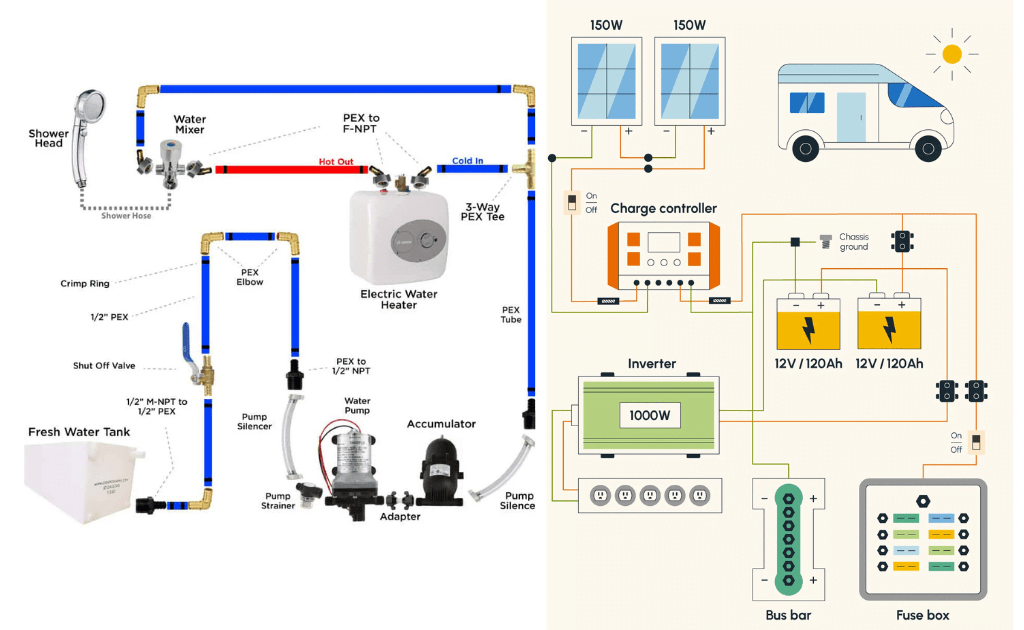
Electricity is the backbone of a functional van. From lighting and charging devices to running appliances, a reliable system makes life on the road convenient and safe. Proper planning prevents shortages, equipment damage, or safety hazards.
Assess Your Power Needs
Start by listing all devices you plan to use:
- LED lighting
- Fridge or cooler
- Laptop or work devices
- Fans or heaters
- Water pumps for sinks or showers
Estimate wattage and expected usage hours to calculate daily energy consumption. This determines the size of your battery bank and the solar panel system needed. Accurate planning avoids running out of power during trips.
Choosing the Right Battery
Battery type affects efficiency, longevity, and space usage:
- Lead-Acid: Affordable, but heavy and require maintenance
- AGM (Absorbent Glass Mat): Maintenance-free and safer than lead-acid
- Lithium-Ion: Lightweight, efficient, long-lasting, and ideal for deep cycles
Most van lifers prefer lithium batteries because they provide more usable energy, charge faster, and last longer than other types.
Solar Power Integration
Solar panels reduce reliance on external power sources and extend off-grid capabilities. A 200–400 watt system typically covers basic lighting, device charging, and small appliances.
Key components include:
- Solar panels mounted on the roof
- Charge controller to safely manage battery charging
- Battery bank to store excess energy
Placement is crucial—panels need unobstructed sunlight, and tilt adjustments can maximize efficiency.
Wiring and Safety
Proper wiring is critical to prevent hazards. Consider:
- Correctly rated cables, fuses, and circuit breakers
- Clear labeling of wires and circuits
- Keeping wires away from heat, moisture, and moving parts
A safe setup reduces the risk of shorts, fires, and damage to devices.
Essential Components
A typical van electrical system includes:
- Battery bank
- Inverter for AC appliances
- Solar charge controller
- Fuse box
- Optional shore power hookup
Additional features like USB outlets, 12V sockets, and dedicated circuits enhance convenience and usability.
Energy-Efficient Practices
Efficient energy use reduces battery and solar requirements:
- Use LED lighting instead of incandescent bulbs
- Choose low-power appliances designed for van life
- Turn off devices when not in use
Efficiency ensures a smaller system can still support all essential functions.
Planning for Expansion
Design the system to allow future upgrades. Leave space for additional batteries, solar panels, or appliances. Modular wiring simplifies expansion and reduces the need for major rewiring.
Conclusion
A reliable electrical system powers everything from lights to appliances, enhancing comfort and independence. Proper planning, battery choice, solar integration, and safety measures ensure a smooth and functional van life experience.