
Author

Best Inverter Size for Van Life and RV Travel
The best inverter size is not the biggest one you can afford. It is the one that safely powers your real devices, matches your battery setup, and avoids wasted money, poor efficiency, and unnecessary complexity.
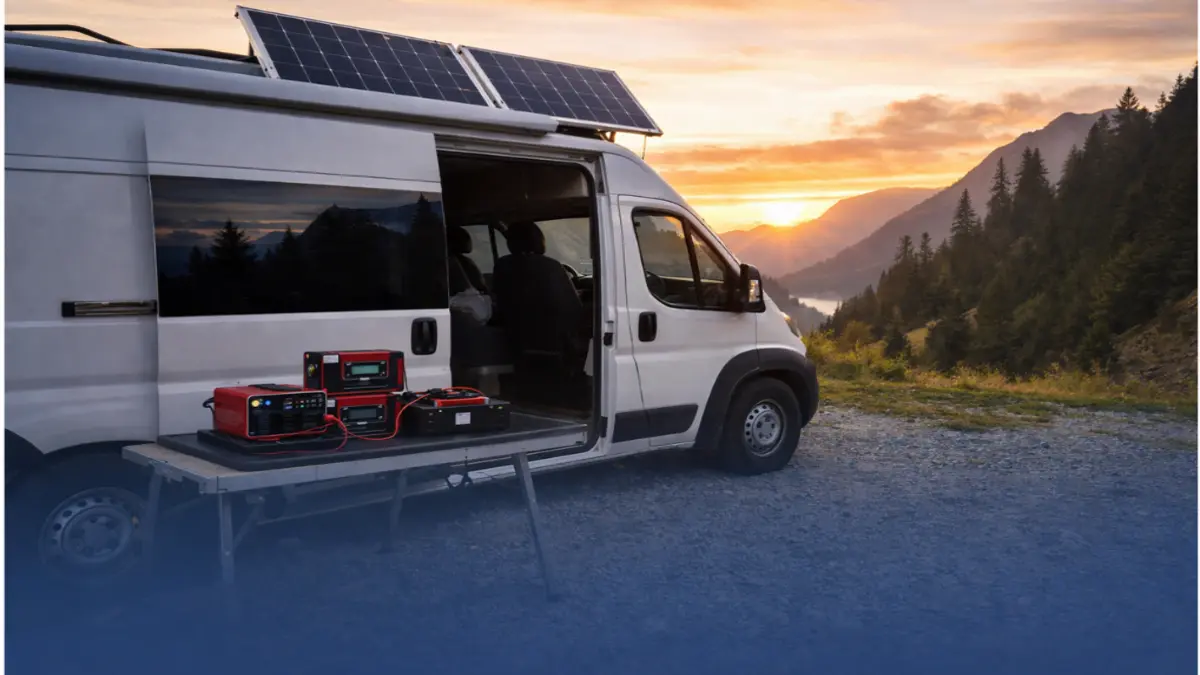
Quick answer
Most van life and RV travelers do not need an oversized inverter. If you only run laptops, chargers, lights, routers, fans, and occasional small appliances, a modest inverter is often enough. If you want to run a microwave, coffee maker, induction cooktop, hair dryer, or other high-draw appliances, you need more inverter capacity and a battery system that can actually support it.
The right approach is simple: list what you want to power at the same time, add the running wattage, allow margin for startup surges when needed, and then check whether your batteries, wiring, and charging sources make that inverter realistic.
Choosing the right RV inverter size is one of the most important steps when planning a van life or RV electrical system. Many travelers search for what size inverter they need for an RV, but the answer depends on real usage, not guesswork. This guide simplifies RV inverter sizing using practical scenarios.
What an inverter actually does
An inverter converts DC battery power into AC power so you can run household-style devices inside a van or RV. That sounds simple, but inverter sizing affects almost everything else in your electrical setup. The larger the inverter, the more current it can pull from the batteries, the heavier the wiring needs to be, and the more expensive mistakes become.
Many beginners choose inverter size by emotion. They imagine future appliances, pick a large unit, and assume bigger means safer. In practice, that often creates a less efficient and more expensive system.
Why inverter sizing matters
- It affects battery current draw.
- It affects cable size and fuse requirements.
- It affects idle power losses.
- It affects whether your battery bank can support your loads.
- It affects total system cost and installation complexity.
In other words, inverter size is not an isolated number. It is one of the decisions that shapes the entire power system.
If you are wondering what size inverter for RV travel is enough, the key is to match inverter wattage with your real energy usage. Oversized inverters increase cost and inefficiency, while undersized ones limit your system.
How do you choose the right inverter size for a van or RV?
Choose the right inverter size by identifying which AC appliances you will run, checking their running watts and surge demands, adding the loads that may operate at the same time, and selecting an inverter with enough headroom without oversizing the system. Then confirm your batteries, fuse protection, and cable sizing can safely support that inverter.
Low-demand setup
Ideal for travelers who mainly charge electronics, run a laptop, router, camera gear, small fan, or TV. In these cases, the inverter requirement is often lower than people think.
Moderate-use setup
Better for users who add kitchen convenience or occasional appliance use, such as a blender, compact coffee machine, or short microwave sessions.
High-demand setup
Needed only when you expect to run serious AC loads. At that point, inverter size is no longer the only issue. Battery chemistry, bank capacity, alternator charging, and solar input become equally important.
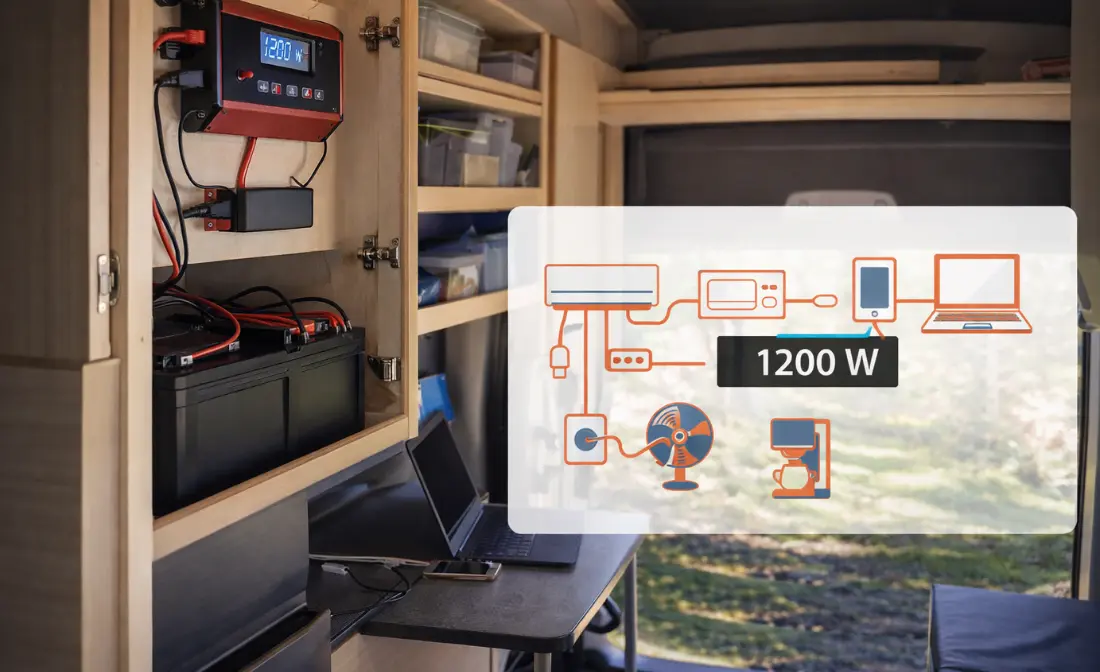
A realistic inverter setup only works well when inverter size, battery capacity, wiring, and daily usage are planned together.
Start with what you will run at the same time
This is the most important step. Do not size your inverter based on every appliance you own. Size it based on what may run at the same time in real life. That is the number that matters.
For example, a traveler charging a laptop while using a small fan and a monitor has a very different requirement from someone trying to run a microwave and coffee maker in the morning. The second case pushes inverter size much faster than the first.
Running watts and surge watts are not the same
Some devices need a higher burst of power at startup than they need during normal operation. This is common with certain motors, compressors, and appliances. If your inverter only matches the running number and ignores startup demand, you can still have shutdowns or failures.
That is why smart sizing includes both normal use and temporary surge behavior when relevant.
How to choose the right RV inverter size
To choose the best inverter size for van life or RV travel, calculate your total wattage, include surge requirements, and ensure your battery system can handle the load. Many RV owners overestimate their needs, leading to unnecessary costs.
A practical RV inverter guide always starts with real appliances, realistic travel habits, and a battery bank that can safely support the chosen inverter wattage. That is the difference between a setup that looks good on paper and one that works well on the road.
Common inverter sizing mistakes
Choosing an inverter before defining your loads
This reverses the logic. The load should define the inverter, not the other way around.
Assuming bigger is always better
A larger inverter often means more cost, more idle loss, thicker cables, and more battery stress.
Ignoring battery limits
A powerful inverter is useless if the battery bank cannot deliver the required current safely.
Forgetting efficiency losses
Inverters are not perfect. Power conversion always comes with some loss, so your battery drain will be higher than the AC load alone suggests.
Planning for unrealistic appliance use
Some van and RV travelers imagine they will use home-style appliances daily, but real travel habits are often much simpler.
Skipping wire and fuse planning
Inverter size affects safety. The electrical protection around the inverter matters just as much as the inverter itself.
Frequently asked questions
What size inverter do most RV owners need?
Many RV owners need less than they first expect. A practical answer depends on the appliances used at the same time, not on the total number of devices in the vehicle.
Is a larger inverter bad?
Not automatically, but unnecessary oversizing often adds cost, idle draw, and installation complexity without delivering real benefit.
Can I run a microwave with a small inverter?
That depends on the microwave and the battery system. High-draw appliances push inverter sizing much faster than normal electronics do.
Do I need pure sine wave?
For most modern electronics and a cleaner, safer user experience, pure sine wave is generally the better choice.
What to read next
The right inverter size is the one your full system can support
Good inverter sizing is not about chasing the biggest number. It is about matching your real electrical habits with a battery bank, charging setup, and wiring plan that work together. When that logic is clear, your entire mobile energy system becomes easier to build, easier to trust, and easier to improve over time.
If you came here searching for the best inverter size for van life, the best inverter size for RV travel, or even a practical RV inverter calculator alternative, the same rule applies: define real usage first, then choose equipment that fits your full system.