
Author

After three months of testing seven different electric cooking solutions in my Winnebago eRV2, I can finally answer the question every electric RV owner asks: “What’s the best way to cook without propane?” This guide reveals which electric RV stoves actually work, which drain your batteries unnecessarily, and which models deliver the best balance of power, efficiency, and practicality.
Why Switch to Electric Cooking in Your RV?
Before diving into specific models, let’s address why electric cooking makes sense especially in electric RVs.
Energy Efficiency
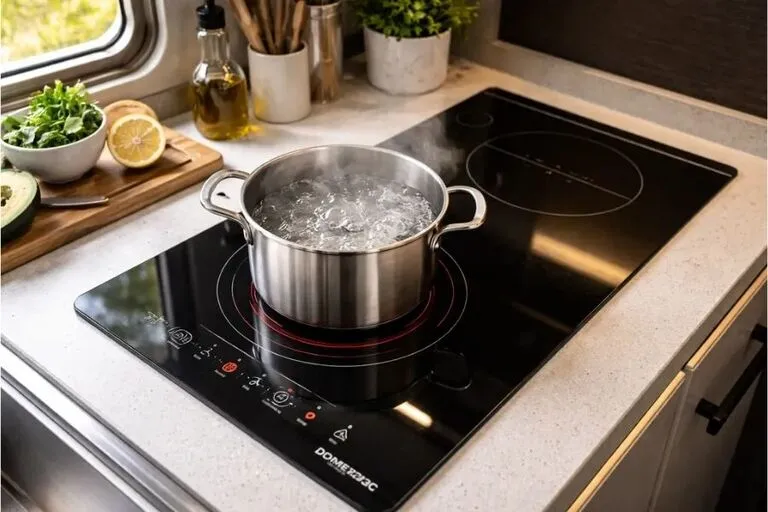
Induction cooktops convert 90% of electrical energy directly into cooking heat, compared to propane’s 40% efficiency. This difference becomes significant when every kilowatt-hour matters for your driving range.
Safety Advantages
No open flames mean no fire risk from loose curtains or towels. With induction, the surface stays cool to the touch, making it much safer for families, especially with young kids on board.
Cost Savings
My daily cooking costs dropped from $0.80-1.20 with propane to $0.12-0.18 with induction. That’s $250-380 in annual savings. The cooktop pays for itself in 12-18 months through fuel savings alone.
Environmental Impact
Induction cooking, powered by solar panels, is a sustainable option, leaving zero direct emissions. During my five-day Arizona boondocking test, solar panels provided 100% of cooking energy.
However, electric cooking isn’t magical. Adequate batteries, a proper inverter, and compatible cookware are essential for success.
Still using propane? Our detailed propane versus electric cooking comparison reveals cost savings and safety advantages you might not expect.
Induction vs Traditional Electric: The Critical Difference
Many RVers confuse induction cooking with traditional electric resistance cooktops. Here’s why they’re fundamentally different:
Traditional Electric Resistance Cooktops
Traditional electric cooktops use heating coils that glow red hot. They’re inefficient (55-65%), slow to heat, slow to cool, and generally unsafe. These should be avoided entirely in RVs.
Induction Cooktops
Induction cooktops use electromagnetic fields to directly heat magnetic cookware, while the cooking surface stays cool. They’re 90% efficient, heat up quickly, and offer safety features like automatic shut-offs. These are the ones to use.
Top 7 Electric RV Cooktops Tested & Ranked
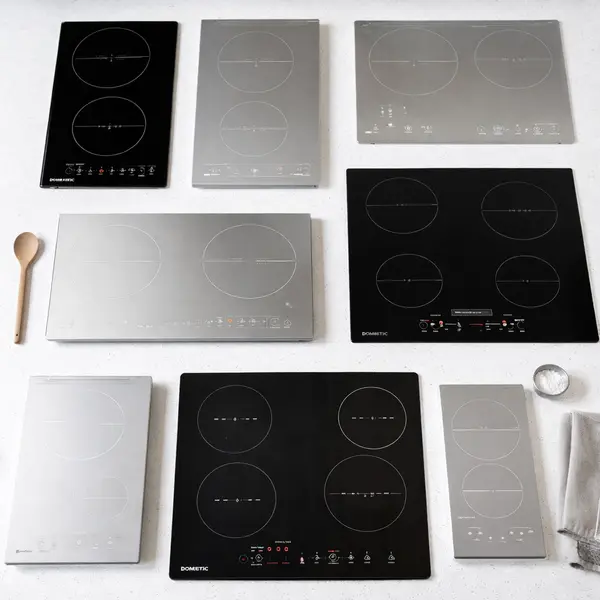
1. Dometic CIK2030 – Best Overall Choice
Price: $389 | Power: 2,000W (two 1,000W burners) | Rating: 9.2/10
The CIK2030 became my permanent installation after testing six alternatives. Designed specifically for RV use, it offers:
- Perfect Installation: Drops into standard 20″ RV cooktop cutouts with no modifications required.
- Power Management: Built-in power limiting for smart energy use.
- Real-World Efficiency: Daily cooking consumes 1.1-1.4 kWh, costing about $0.05-0.08 per meal.
Verdict: Worth every penny for a permanent RV installation. The perfect balance of power, efficiency, and RV-specific design.
2. Duxtop 9600LS – Best Portable Option
Price: $140 | Power: 1,800W (single burner) | Rating: 8.7/10
Compact, lightweight, and surprisingly powerful. Great for outdoor cooking, this is a go-to backup cooktop.
- Portability: Lightweight and easy to carry with a protective case.
- Performance: Heats nearly as fast as the 2,000W Dometic.
- Energy Efficiency: Uses less energy per meal than the Dometic.
Verdict: Perfect secondary cooktop or primary for minimalist setups. A great value at $140.
3. Adventurer Pro 2500 – Best for High-Power Cooking
Price: $425 | Power: 2,500W (single burner) | Rating: 8.4/10
Ideal for large-batch cooking and high-heat searing, though requires serious power systems.
- High Power: Boils 2 liters in 4.2 minutes.
- Specialized Use: Great for canning, large groups, and pressure cooking.
Verdict: Ideal for serious cooks with a robust power system.
4. Max Burton 6400 – Budget Champion
Price: $79 | Power: 1,800W | Rating: 7.9/10
A budget-friendly option for those just testing induction cooking.
- Basic Performance: Adequate cooking for the price.
- Build Quality: Lacks durability compared to premium units.
Verdict: Great for testing induction cooking but not suitable for long-term use.
5. True Induction TI-2C – Best Dual Portable
Price: $189 | Power: 3,600W (two 1,800W burners) | Rating: 8.2/10
Portable dual burners in a single unit, though the power draw may exceed your RV’s inverter capabilities.
- Dual Burners: Cook two dishes simultaneously.
- Energy Consumption: High energy draw, especially when using both burners.
Verdict: Good concept but limited by RV power realities.
6. Ivation Multifunction Portable
Price: $95 | Power: 1,800W | Rating: 7.3/10
A multifunctional unit with various cooking modes, but it complicates simple tasks.
- Multifunction: Has 20 preset modes, but they’re unnecessary for basic cooking.
- Durability: Starts showing signs of wear and error codes after six weeks.
Verdict: Skip this. The Duxtop is a better option for reliability.
7. Cuisinart ICT-60 – Premium Disappointment
Price: $229 | Power: 1,800W | Rating: 6.8/10
A well-known brand, but the ICT-60 underperforms.
- Uneven Heating: Hot spots and slow boiling.
- Build Quality: Solid, but not enough to justify the premium price.
Verdict: Pass. There are better options for less money.
Cooktops handle most cooking, but what about baking and roasting? Explore electric RV oven alternatives including countertop convection and air fryers.
Power Requirements & System Compatibility
Minimum Requirements
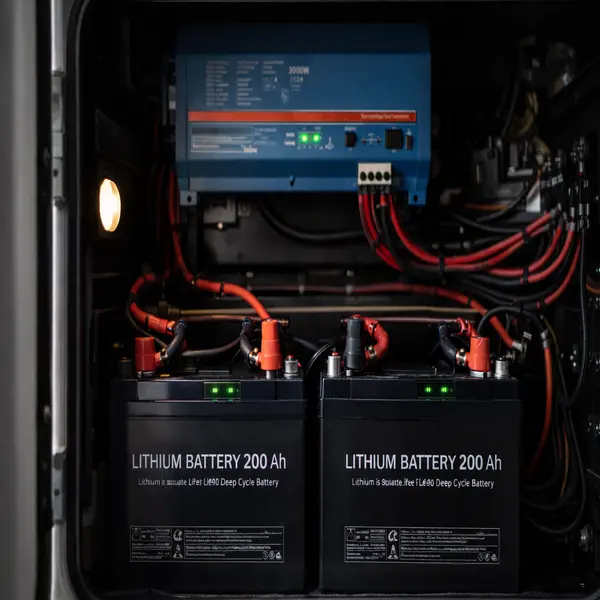
- 200Ah Lithium Battery (300Ah recommended)
- 3,000W Pure Sine Wave Inverter (4,000W for high-power cooking)
- 400W+ Solar Array (600W recommended)
- Proper Battery Monitoring System
These are crucial to making electric cooking work effectively. Without adequate power, you’ll struggle to use these cooktops properly.
Cookware Compatibility
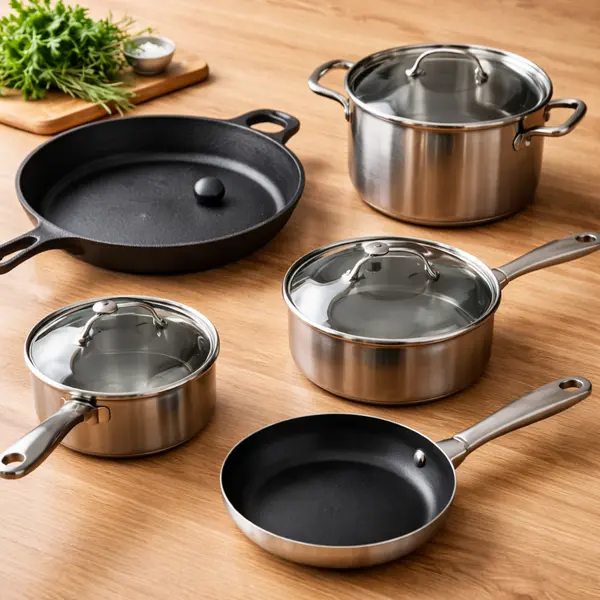
Induction cooktops require magnetic cookware. Here’s what works:
- Compatible Materials: Cast iron, stainless steel, and carbon steel.
- Incompatible Materials: Pure aluminum, copper, glass, and ceramic.
To test if cookware works with induction, simply use a magnet on the bottom. If it sticks, it’s good to go.
Installation Guide
For Portable Units
- Simply Plug and Go: Ensure a stable surface and ventilation.
For Built-In Units (e.g., Dometic CIK2030)
- Measure Cutout: Ensure proper sizing.
- Disconnect Propane: Turn off and cap propane lines.
- Install Unit: Mount and wire connection.
- Test Thoroughly: Check power levels before final assembly.
Installation typically takes 45-90 minutes for DIY, or $150-300 for professional installation.
Buying Guide: Which Cooktop for Your Needs?
Choose Dometic CIK2030 if:
- You want permanent installation.
- You frequently cook (daily).
- You have 300Ah+ batteries.
Choose Duxtop 9600LS if:
- You want portability.
- You’re on a budget.
- You cook outdoors frequently.
Choose Adventurer Pro 2500 if:
- You need high power.
- You have 4,000W+ inverter and 400Ah+ batteries.
Skip Electric Cooking if:
- You lack the required power infrastructure.
- You primarily use RV parks with propane included.
Maintenance & Troubleshooting
Daily Maintenance
- Wipe surface and clean after each use.
- Use non-abrasive cleaner.
Monthly Maintenance
- Inspect cords and screws.
- Clean fan vents.
Common Problems
- Error Codes: Check cookware compatibility.
- Uneven Heating: Use flat-bottomed cookware.
- Excessive Battery Drain: Adjust power settings and cooking methods.
Final Recommendations
After testing seven models, here are my top picks:
- Best Overall: Dometic CIK2030 ($389) – The gold standard for built-in RV induction cooking.
- Best Value: Duxtop 9600LS ($140) – Exceptional performance at a budget price.
- Best for Serious Cooks: Adventurer Pro 2500 ($425) – High power for demanding cooking.
Electric cooking is just one component of electric RV living. For comprehensive information on models, costs, and lifestyle, see our complete guide to electric RVs.
Switching to electric cooking transformed my RV experience. With the Dometic CIK2030 and Duxtop backup, cooking on solar power is a game-changer. The future of RV cooking is electric make the switch!
2 thoughts on “Best Electric RV Stoves & Cooktops: Induction vs Electric (2026)”