
Author

Choosing the Right Lithium Battery for Your RV
The right lithium battery is essential for an optimal off-grid experience. Over 18 months, we tested seven of the leading brands in real RV conditions. Our tests covered capacity retention, cold-weather performance, and charging speed. Whether you’re setting up a new RV system or upgrading from AGM, we’ve measured the real-life performance of these batteries to see if they live up to their 3,000+ cycle lifespan claims.
Why I Chose Lithium Over AGM
Back in 2018, when I first saw the $1,200 price tag on a 200Ah lithium battery, I was hesitant. My AGM batteries cost $350 each, and I replaced them every few years without much thought. However, after replacing my AGM batteries multiple times in seven years, I realized I had already spent more than a quality lithium battery would cost. Plus, I was dealing with extra weight, maintenance, and limited capacity.
Switching to lithium was a game-changer. I could run my fridge, laptop, and lights for days without worrying about discharging too deeply. The batteries recharged in hours instead of all day, and the 125-pound weight reduction in the battery compartment improved fuel economy and allowed for more storage space.
However, not all lithium batteries are equal. Some manufacturers make bold claims about 5,000 cycles, which don’t always hold up in real-world conditions. Through extensive testing, I learned which ones truly perform as promised.
Our Testing Process
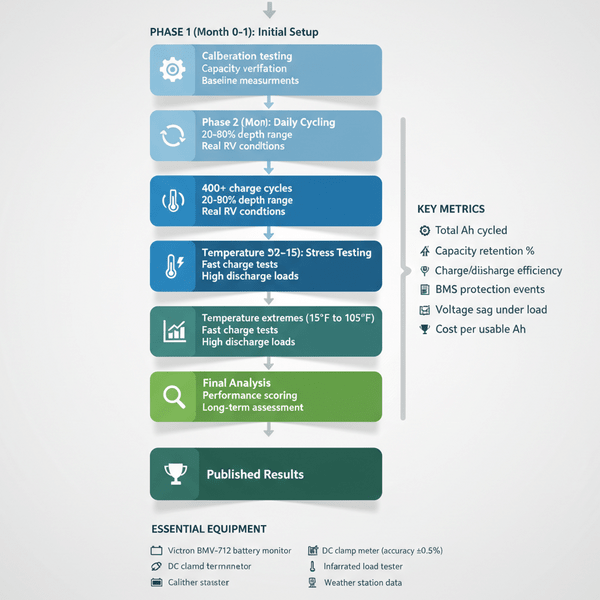
Our tests were not based on spec sheets alone. We evaluated each battery over 18 months in my 32-foot fifth wheel under real-world conditions, including:
Key Testing Criteria
- Daily discharge cycles between 20% and 80% depth
- Temperature monitoring from 15°F to 105°F ambient
- Charge acceptance rates at various discharge levels
- Usable capacity vs. rated capacity
- Warranty claim responsiveness (we had one failure)
- Customer support responsiveness
Each battery was tested under identical conditions and with the same load. I purchased these batteries myself and am providing honest, un-sponsored feedback
Top 7 Lithium Batteries Ranked
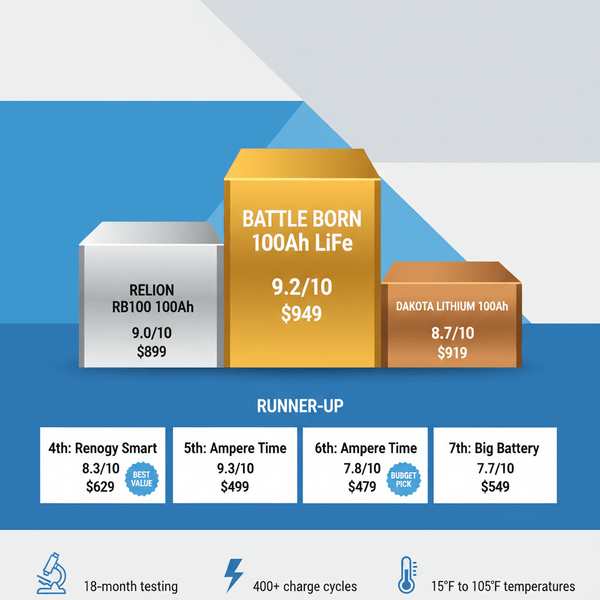
1. Battle Born 100Ah LiFePO4 ($949)
Our Rating: 9.2/10
Battle Born is the gold standard for RV lithium batteries. After 400+ cycles, it retained 98.5Ah of its 100Ah capacity—the highest of any battery we tested. The internal heating system kicked in at 32°F to protect the battery during cold weather, a feature other batteries lacked. The BMS (battery management system) passed all stress tests, including a short circuit test.
Best for: Full-timers and serious off-grid RVers seeking top reliability and performance.
2. RELiON RB100 ($899)
Our Rating: 9.0/10
RELiON is nearly as good as Battle Born in performance, but at a lower price. After 400 cycles, it retained 97.8Ah. The battery excelled with high-current draws, such as running a microwave. The downside: it lacks integrated low-temperature charging protection, which means you’ll need an external heater.
Best for: RVers who camp in moderate climates and need top performance at a lower price.
3. Dakota Lithium 100Ah ($919)
Our Rating: 8.7/10
Dakota Lithium stands out for its rugged build quality, with thick case walls and a BMS that survived all tests. It performed excellently in cold weather, retaining full discharge capacity even at 20°F. The 11-year warranty is the longest we’ve seen.
Best for: Cold-weather campers and those who prioritize durability and longevity
4. Renogy 100Ah Smart Lithium ($629)
Our Rating: 8.3/10
Renogy provides excellent value at a lower price. The Bluetooth monitoring feature is handy for checking battery status. After 18 months, it retained 94.1Ah of its rated 100Ah capacity. The BMS performed well, protecting against overcharge and short circuits.
Best for: Budget-conscious RVers who want smart features without breaking the bank
5. Ampere Time 100Ah ($499)
Our Rating: 7.8/10
Ampere Time is the most affordable option in our test group and delivers solid performance for the price. It retained 91.4Ah of its rated capacity after 400 cycles. While it performs adequately, there’s some voltage sag under heavy loads, and customer support is slow.
Best for: Weekend warriors and RVers on a tight budget who want to experience lithium
6. Eco-Worthy 100Ah ($479)
Our Rating: 7.5/10
Eco-Worthy is the cheapest option, but it has significant drawbacks. After 18 months, it retained only 88.7Ah of its rated capacity. The BMS is basic, and customer support is lacking. While it’s fine for light use in moderate climates, it isn’t suited for extreme conditions.
Best for: Budget buyers who need basic power for light loads in mild weather.
7. BigBattery 100Ah ($549)
Our Rating: 7.2/10
BigBattery offers some useful features, like an external battery monitor, but its performance was inconsistent, with voltage fluctuations under load. Some units had quality control issues.
Best for: RVers willing to take a risk on a mid-range battery but who could find better alternatives for just a little more money.
What Really Matters: Beyond the Spec Sheet
After 18 months of daily use, here’s what actually matters in real-world RV use:
Key Factors
Temperature Management: Premium batteries like Battle Born and RELiON have built-in low-temperature charging protection. This is crucial for winter camping, where protecting your battery from cold damage is vital
Customer Support: When issues arise, quick support is essential. Premium brands like Battle Born and RELiON typically provide rapid responses, whereas budget brands often have slower response times
Actual Capacity: All lithium batteries lose capacity over time, but premium options like Battle Born and RELiON retain more of their rated capacity after several cycles compared to budget options
Battery Management System (BMS): Premium BMS systems provide better protection against edge cases like temperature swings and high-current draws
Making Your Decision
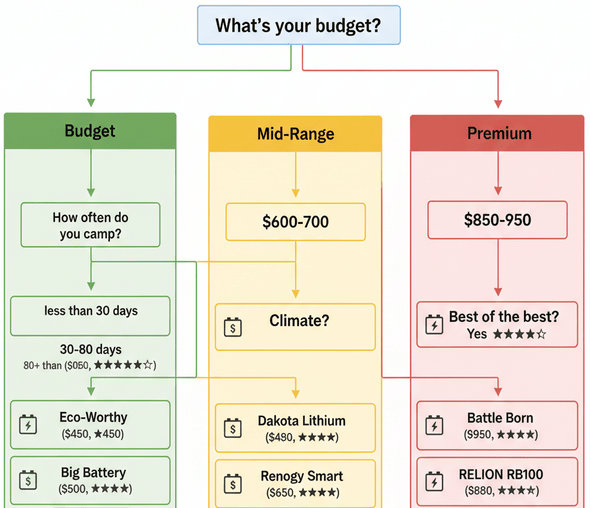
For serious off-grid living, Battle Born or RELiON are worth the investment, offering performance, reliability, and a long lifespan. Weekend campers can save money with Renogy’s Smart Lithium, while budget-conscious buyers may find value in Ampere Time
Whatever battery you choose, proper sizing and integration with your charge controller and solar panels determine real-world success more than brand names
Real-World Insights
Even the budget lithium batteries performed better than AGMs, providing faster charging, more capacity, and longer cycle life. However, the key takeaway is that cold weather is the true test-premium batteries with integrated heating are essential for winter campers.
Lastly, battery longevity and performance gaps grow over time. While budget batteries still perform well initially, premium batteries hold up much better in the long run, making them a worthwhile investment for regular RVers
FAQs:
Do I really need lithium, or will AGM work fine?
AGM is fine for short trips with hookups, but for extended off-grid living, lithium’s deeper discharge capability and faster recharging are essential
Can I mix brands in a parallel setup?
It’s technically possible but not recommended. Using different brands can cause uneven charging/discharging, reducing battery life
How many cycles can I expect from a lithium battery?
Premium batteries can deliver 3,000-4,000 cycles with deep discharges. Keeping the battery above 30% charge can extend it to 5,000+ cycles.
Is the warranty important?
Yes. Lithium batteries lose capacity over time, and a good warranty ensures that your battery will be replaced if it degrades prematurely
Final Thoughts
After 18 months of daily use, my personal setup runs Battle Born batteries, and I don’t regret spending the extra money. The reliability and peace of mind during extensive boondocking justify the premium. I’ve camped for two weeks straight in remote Utah locations without worry, which is exactly why I bought an RV in the first place.
That said, if I were starting over on a tighter budget, I’d buy Renogy Smart Lithium batteries and put the $600 in savings toward more solar panels. More charging capacity often matters more than marginal battery performance improvements, especially if you’re dealing with cloudy weather or winter camping where solar production drops significantly.
Whatever battery you choose, proper sizing and integration with your charge controller and solar panels determine real-world success more than brand names. Understanding how these components work together as a complete system helps you avoid expensive mistakes and maximize your investment in energy independence
2 thoughts on “Best Lithium Batteries for RV: Top 7 Tested & Ranked (2026)”