
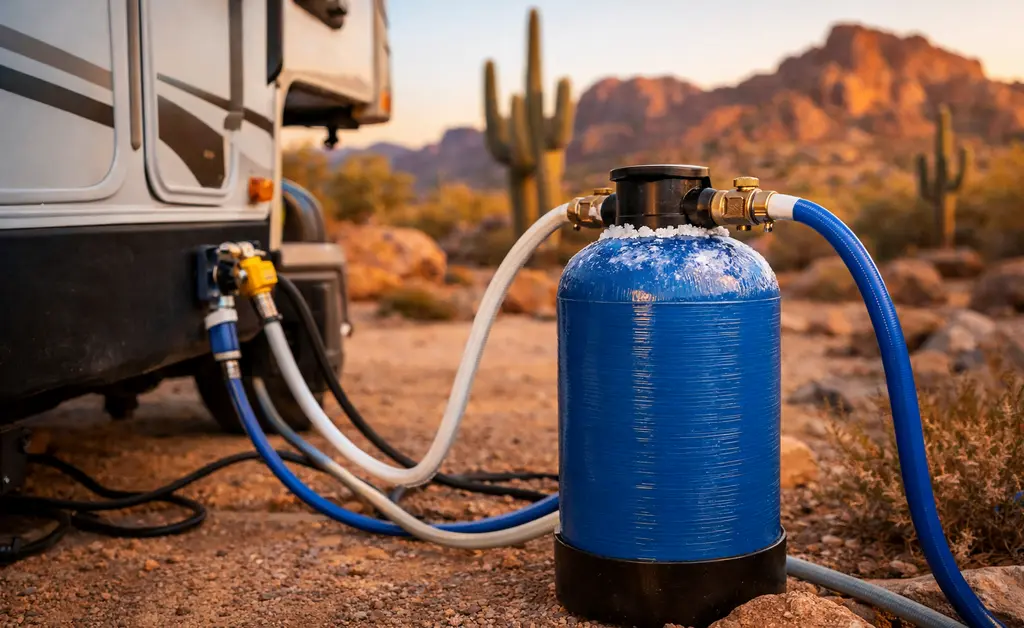
Author

When filters aren’t enough
My first extended trip through arizona and new mexico taught me an expensive lesson about hard water. Within three months, my rv water heater efficiency dropped 40%. white crusty buildup appeared on every faucet. my hair felt like straw. soap wouldn’t lather no matter how much I used.
Standard carbon filters remove sediment, chlorine, and chemicals, but they don’t touch dissolved minerals. for that, you need a water softener.
After two years testing portable rv water softeners across the southwest, I’ve learned which systems work, which are overpriced, and whether softeners are worth the investment for your travel style.
In this guide, you’ll learn how hard water damages your rv, how softeners work, which portable systems perform best, and exactly when you need one versus when you can skip it.
Water softeners work alongside filters, not instead of them. understand the complete system in our complete rv water filtration guide
Understanding hard water and why it matters
What is hard water?
Hard water contains high levels of dissolved minerals, primarily:
- calcium carbonate
- magnesium
- sometimes iron
These minerals aren’t harmful to drink but cause expensive damage over time.
Hardness levels (measured in parts per million):
- 0-60 ppm: soft water
- 61-120 ppm: moderately hard
- 121-180 ppm: hard
- 181+ ppm: very hard
Geographic hard water regions
Worst areas (300+ ppm typical):
- arizona (phoenix: 350 ppm average)
- new mexico (albuquerque: 320 ppm)
- nevada (las vegas: 280 ppm)
- texas hill country (san antonio: 300 ppm)
- florida (limestone aquifers: 250-350 ppm)
- rural midwest with well water
Moderate areas (120-250 ppm):
- southern california
- kansas
- parts of utah
- nebraska
Soft water areas (under 120 ppm):
- pacific northwest
- most of northeast
- many mountain regions
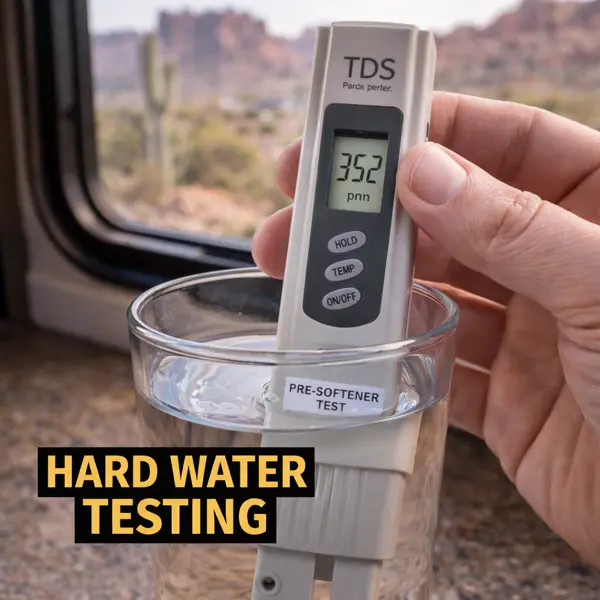
I carry a tds meter ($20) and test water at every new campground. anything over 200 ppm gets the softener treatment.
Damage hard water causes
To your rv:
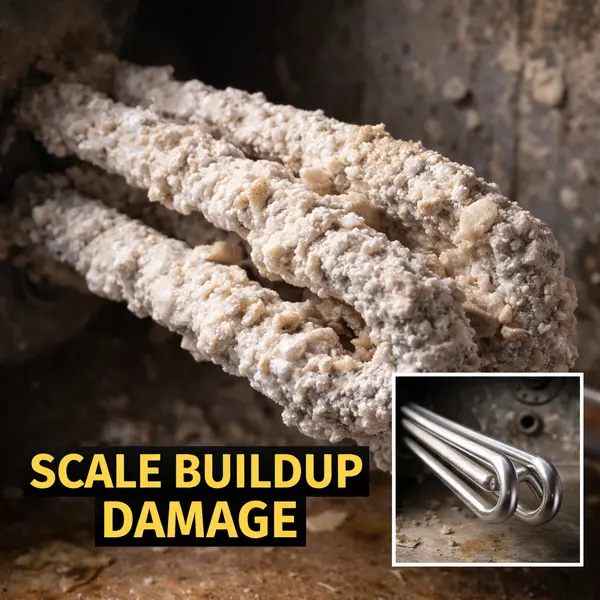
- scale buildup in water heater (reduces efficiency 30-50%)
- shortened water heater lifespan (6-8 years reduced to 3-4 years)
- clogged faucet aerators and showerheads
- stained sinks, tubs, toilets
- reduced water pressure from mineral buildup
To you:
- dry skin and scalp
- dull, brittle hair
- soap and shampoo don’t lather (use 2-3× more product)
- clothes feel stiff after washing
- dishes have water spots
My water heater disaster: I ignored hard water for two years full-timing in the southwest. my suburban water heater failed at year 4 (should last 8-10 years). repair tech showed me interior completely coated with 1/4 inch scale. replacement cost: $1,200. a $280 water softener would have prevented this.
How rv water softeners work
Unlike home softeners (which are permanent installations), rv softeners are portable units using salt-based ion exchange.
The process:
- hard water enters softener tank filled with resin beads
- resin beads are coated with sodium ions (from salt)
- calcium and magnesium ions stick to beads (ion exchange)
- sodium ions release into water (softening it)
- softened water exits to rv
When beads saturate:
- resin beads become coated with calcium/magnesium
- softening stops (water passes through unchanged)
- time to regenerate (recharge with salt)
Regeneration process:
- pour salt solution into tank
- let sit 2-4 hours
- salt displaces calcium/magnesium on beads
- flush tank with fresh water
- beads recharged and ready
Regeneration frequency depends on water hardness and usage (typically every 2-4 weeks).
Portable rv water softener options
On-the-go portable water softener
We test softeners using same rigorous process as filters. see our brand comparison methodology for testing standards.
Specs:
- capacity: 16,000 grain
- softens: 640-1,280 gallons between regenerations
- dimensions: 9.5″ diameter × 21″ tall
- weight: 12 lbs empty, 52 lbs when filled
- price: $280-320
- regeneration salt: $5 every 2-4 weeks
What I like:
- most popular rv softener for good reason
- proven reliability over years
- easy regeneration process
- excellent customer service
- clear instructions
What could be better:
- heavy when filled (need help lifting into storage)
- large footprint (9.5″ diameter takes space)
- regeneration takes 2-4 hours
My experience: I’ve used on-the-go for 18 months across arizona, new mexico, texas. regenerated probably 20 times. zero failures. water heater still running great. this is the softener I recommend 95% of time.
Abc waters built portable softener
Specs:
- capacity: 16,000 grain
- dimensions: 10″ diameter × 20″ tall
- weight: similar to on-the-go
- price: $220-260
Comparison to on-the-go:
- slightly cheaper ($40-60 less)
- similar performance in testing
- less proven track record (newer company)
- adequate customer service
My take: good budget alternative if price matters. on-the-go worth extra $50 for peace of mind.
Aquasana whole house water softener (adapted for rv)
Specs:
- designed for homes but some rvers adapt it
- capacity: 40,000+ grain
- price: $450-600
Pros:
- massive capacity
- regenerates less frequently
Cons:
- huge and heavy (not truly portable)
- overkill for rv use
- expensive
My take: unless you’re permanent rving in one spot, stick with portable options.
Installation and setup
What you need:
- portable water softener unit
- water softener salt (pellets or crystals)
- inlet/outlet hoses (usually included)
- space to store 50+ lb unit
Setup steps:
- fill softener tank with water to indicated line
- add water softener salt (amount per instructions)
- let sit 2-4 hours for initial saturation
- rinse tank with fresh water until clear
- connect inlet hose to campground spigot
- connect outlet hose to rv city water inlet
- turn on water slowly
- check for leaks
Usage order:
- campground spigot
- pressure regulator (recommended)
- water softener
- inline carbon filter (optional but good idea)
- rv city water inlet
Pro tip: I run softener first, then carbon filter. this protects carbon filter from hard water damage and both systems work better.
Regeneration: how and when
When to regenerate
Signs softener needs regeneration:
- water feels “hard” again (soap doesn’t lather)
- white spots returning on dishes
- feeling film on skin after shower
Tracking usage:
- on-the-go softens 640-1,280 gallons per regeneration
- estimate usage: 30-50 gallons daily full-timing
- regenerate every 2-3 weeks typical
I mark regeneration dates on calendar. every 3 weeks, I regenerate regardless of water feel. prevents surprise hard water.
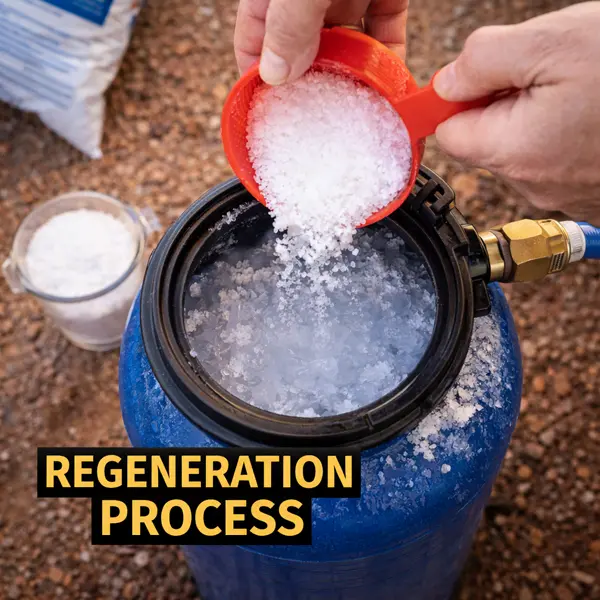
Regeneration process
Time required: 2-4 hours (mostly waiting)
Steps:
- disconnect softener from water connections
- drain water from tank
- prepare salt brine (2 cups water softener salt + 3 gallons warm water)
- pour brine into tank
- let sit 2-4 hours (I do overnight)
- flush tank thoroughly with fresh water (5-10 minutes continuous flow)
- water should run clear when finished
- reconnect to system
Salt cost: approximately $5 per regeneration using standard water softener salt from hardware store.
Do you actually need a water softener?
You definitely need softener if:
- traveling southwest/florida regularly (250+ ppm water common)
- full-timing in hard water regions
- staying 3+ months in very hard water area
- already had water heater problems from scale
- family has sensitive skin/hair
Softeners require different maintenance than filters. coordinate schedules using our filter maintenance schedule to stay organized
You probably don’t need softener if:
- traveling pacific northwest/northeast only
- weekend warrior (30-50 nights/year)
- staying mostly at modern rv resorts (often pre-softened water)
- on tight budget (filters more important than softeners)
My recommendation: test water with tds meter at campgrounds. if consistently under 150 ppm, skip softener. if regularly over 250 ppm, invest in softener.
Alternatives to portable softeners
Shower head softener filters
What they are: small filters that attach to shower head, use kdf media to reduce scale
Price: $25-50
effectiveness: moderate (maybe 30-40% hardness reduction)
Pros:
- cheap
- easy to install
- helps with hair/skin issues
Cons:
- doesn’t protect rv plumbing
- limited capacity
- doesn’t soften drinking/dish water
My take: better than nothing if you can’t afford full softener, but not substitute for whole-rv solution.
Inline descaling systems
What they are: electronic or magnetic devices claiming to prevent scale without salt
Price: $80-300
effectiveness: debatable (studies show mixed results)
My testing: I tried two different brands for 3 months each in arizona. saw minimal difference. water heater still accumulated scale.
My take: save your money. salt-based softeners proven to work.
Bottled water for drinking/cooking
What it is: use softener only for showers/dishes, buy bottled for consumption
Cost: $20-30/week for family of four
Pros:
- guaranteed safe drinking water
- lighter rv weight (versus full softener)
Cons:
- expensive long-term
- environmental waste (plastic bottles)
- doesn’t protect rv plumbing
My take: I do this occasionally when passing through hard water region for 1-2 weeks. not sustainable long-term.
Cost analysis: is softener worth it?
Initial investment:
- on-the-go softener: $300
- salt (first year): $60
- total year 1: $360
Annual costs:
- salt for regeneration: $60/year
- no other ongoing costs
Water heater lifespan comparison:
- without softener in hard water: 3-4 years ($1,200 replacement)
- with softener: 8-10 years ($1,200 replacement)
Calculation:
- without softener: $1,200 every 4 years = $300/year
- with softener: $1,200 every 9 years = $133/year + $60 salt = $193/year
Annual savings: $107
Softener pays for itself in 3.3 years through water heater protection alone. this doesn’t count:
- reduced soap/shampoo usage (save $50-100/year)
- less damage to fixtures and plumbing
- improved quality of life (softer hair/skin)
My conclusion: if you’re in hard water regions regularly, softener absolutely worth investment.
Frequently asked questions
Can I use water softener with inline filter?
Softener first, then filter. for optimal filter selection to pair with softeners, check our best inline filters for combo systems testing.
How much salt do I need?
One 40-lb bag of water softener salt lasts approximately 6-8 regenerations (3-6 months typical use).
Can I use table salt?
No. use only water softener salt (pellets or crystals) from hardware store. table salt has additives that damage resin beads.
Does softened water taste salty?
Slightly, but barely noticeable. sodium content increases minimally (usually under 50 ppm added).
Where do I store 50-lb softener when traveling?
I keep mine in wet bay when not in use. some rvers use truck bed or tow vehicle. it’s heavy and awkward.
Water softeners aren’t sexy. they’re expensive, heavy, require maintenance, and take storage space. but if you travel in hard water regions, they’re one of the best investments you can make.

Published on January 28, 2026
Emma STONNE
This post contains affiliate links. If you make a purchase through these links, we may earn a commission at no extra cost to you.