
Author

Common RV Solar Setup Mistakes
Most RV solar problems do not start with bad equipment. They start with poor planning, incorrect sizing, messy wiring, weak protection, or unrealistic expectations. A few avoidable mistakes can turn an off-grid setup into an expensive and unreliable system.
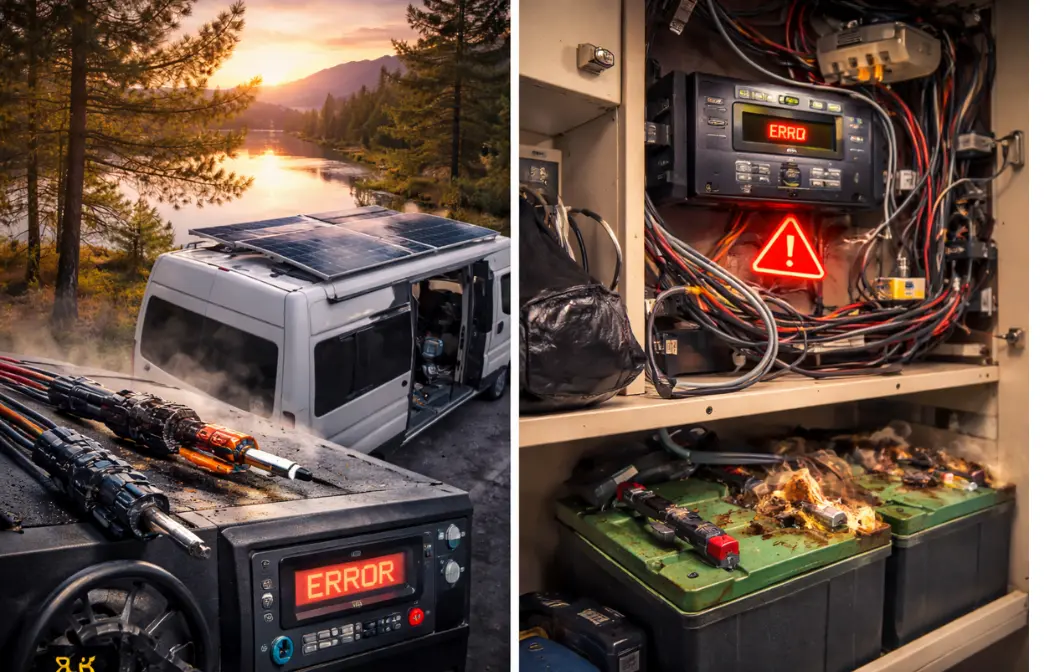
Quick answer
The most common RV solar setup mistakes include undersizing the battery bank, oversizing or misusing the inverter, poor wiring layout, weak fuse protection, incorrect charge controller selection, unrealistic appliance expectations, and bad ventilation around electrical components. These mistakes often reduce performance long before anything actually fails.
A good RV solar system is not just a collection of panels, batteries, and wires. It is a balanced system where solar input, storage, inverter demand, protection, and daily habits all work together. If one part is poorly planned, the whole setup feels unreliable.
Many RV owners search for common RV solar setup mistakes after something already feels wrong. The smarter approach is to understand these mistakes before buying equipment, so the system is easier to size, safer to install, and more dependable on the road.
Why RV solar mistakes happen so often
RV solar systems look simple from the outside. A few panels on the roof, a battery bank, an inverter, and a charge controller can seem easy to combine. But in reality, solar setups fail when people focus too much on a single part of the system and ignore the rest.
One person buys too much inverter capacity without enough battery storage. Another buys large batteries but has too little solar input. Someone else uses poor cable routing, weak fuse placement, or installs sensitive electronics without enough airflow. These are not rare edge cases. They are common solar setup mistakes that appear in both DIY van life builds and RV upgrades.
What poor solar planning usually looks like
- Panels that cannot recharge the battery bank fast enough.
- Batteries that are too small for actual daily usage.
- An inverter that is too large or too small for real loads.
- Messy wiring that makes troubleshooting harder and riskier.
- Weak or missing electrical protection.
- System designs based on ideal weather instead of real travel conditions.
If your RV solar setup feels inconsistent, underpowered, or difficult to trust, the cause is often not the panel itself. It is usually a mismatch between production, storage, and usage.
What are the most common RV solar setup mistakes?
The most common RV solar setup mistakes are poor system sizing, weak wiring practices, inadequate fuse protection, unrealistic inverter choices, battery banks that do not match energy use, and poor ventilation around critical components. These errors reduce efficiency, create safety problems, and make the whole system harder to manage.
1. Building the system around one number
A very common mistake is building the entire RV solar setup around a single number, such as panel wattage or battery capacity. Real off-grid performance does not come from one component. It comes from balance.
Large solar panels do not solve weak battery storage. A big battery bank does not solve an undersized charging system. A large inverter does not solve poor daily planning. The system works only when all parts support each other.
This is why smart RV solar planning always starts with energy use first. Once daily needs are clear, solar production, battery capacity, and inverter size become much easier to choose with confidence.
Undersized battery bank
Many setups look good during the day but fail at night because the battery bank cannot support the real load long enough. This creates a system that feels unstable even when solar input is decent.
Oversized inverter
Bigger is not always better. A large inverter often adds cost, wiring demands, idle losses, and battery stress without helping daily travel needs.
Too little solar input
A battery bank that takes too long to recharge forces dependence on alternator charging, shore power, or generator backup more often than expected.
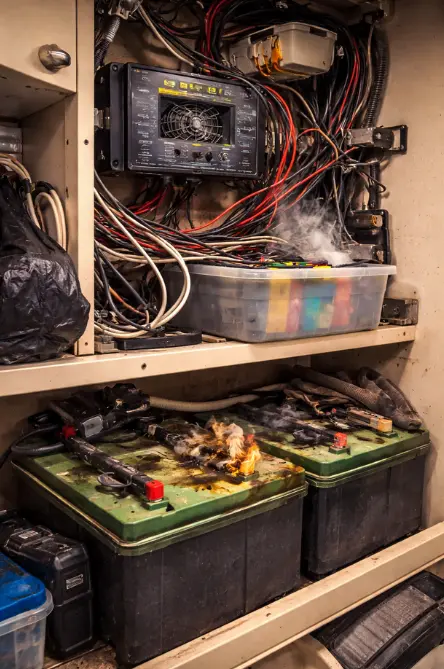
A poor electrical layout is not just messy. It makes maintenance harder, hides problems, reduces airflow, and increases safety risks.
2. Ignoring wiring quality and protection
Messy cable routing
Tangled cables are not only ugly. They make fault tracing harder, increase confusion during repairs, and often reveal deeper planning issues. A clean wiring layout is easier to inspect, safer to service, and more reliable over time.
Wrong cable size
Electrical current must move through cables safely. When wire gauge does not match the current demand, voltage drop and heat become real problems.
Bad fuse strategy
Some DIY systems have too little protection. Others place fuses poorly. Proper fuse placement matters because solar systems carry real current and real fault risk.
Poor ventilation
Heat is one of the most ignored parts of RV solar planning. Inverters, charge controllers, and batteries all need suitable conditions. Cramped or closed spaces without airflow reduce performance and can shorten equipment life.
Unsafe battery area
A battery compartment should never feel improvised. Loose items, poorly secured hardware, and weak separation between components are all warning signs.
No clear labeling
A system becomes harder to maintain when cables, breakers, and components are not clearly identified. That slows every future fix.
How to avoid RV solar setup mistakes
The best way to avoid RV solar setup mistakes is to plan the system in the right order: define your daily energy usage, choose a battery bank that fits realistic needs, size the solar input so recovery is practical, and only then choose inverter capacity. After that, focus on wiring layout, fuse protection, airflow, and serviceability.
Many RV owners do the opposite. They start by buying equipment that looks powerful, then try to make the rest of the system fit. That is why common RV solar mistakes often begin long before installation day.
3. Expecting home-style comfort from a weak off-grid system
Another common RV solar mistake is expecting a small or moderate off-grid system to support heavy household-style habits without compromise. Microwaves, induction cooktops, air conditioners, and hair dryers push systems much harder than normal electronics do.
If your usage expectations are unrealistic, no amount of wishful planning will make the setup feel reliable.
4. Ignoring weather, shade, and real travel conditions
Roof solar looks very strong in perfect conditions, but travel rarely happens in perfect conditions every day. Trees, clouds, roof obstructions, seasonal angle changes, and parking direction all affect production.
A system built around ideal conditions often feels disappointing in real life.
Simple checklist before you trust your RV solar design
- Do you know your real daily energy usage?
- Can your battery bank support overnight loads comfortably?
- Can your solar input recover that energy in realistic conditions?
- Does your inverter match real simultaneous AC demand?
- Are cables sized properly for current and length?
- Are fuses and breakers placed logically?
- Do components have enough ventilation?
- Can the system be inspected and serviced easily later?
Frequently asked questions
What is the biggest mistake in an RV solar setup?
The biggest mistake is usually system imbalance. That means solar input, battery storage, and inverter demand do not match real usage.
Can bad wiring ruin an RV solar system?
Yes. Poor wiring can reduce efficiency, complicate troubleshooting, create heat, and increase safety risk.
Why does my RV solar setup feel weak even with large panels?
Large panels alone are not enough. Weak storage, high-demand appliances, poor weather, or bad system balance can still make the setup feel underpowered.
Should I oversize my inverter just in case?
Usually no. Oversizing often creates extra cost and inefficiency. It is better to size the inverter around realistic usage.
What to read next
The best RV solar setup is the one that stays balanced and serviceable
A reliable RV solar system does not come from chasing the biggest panel number or the biggest battery bank. It comes from matching production, storage, protection, and daily habits in a way that still works on real travel days. That is how you avoid the most common RV solar setup mistakes and build a system you can trust.
If your goal is long-term reliability, the smartest move is not just buying better parts. It is building a system that makes sense before the first wire is installed.