
Author

why inline filters are the most popular choice
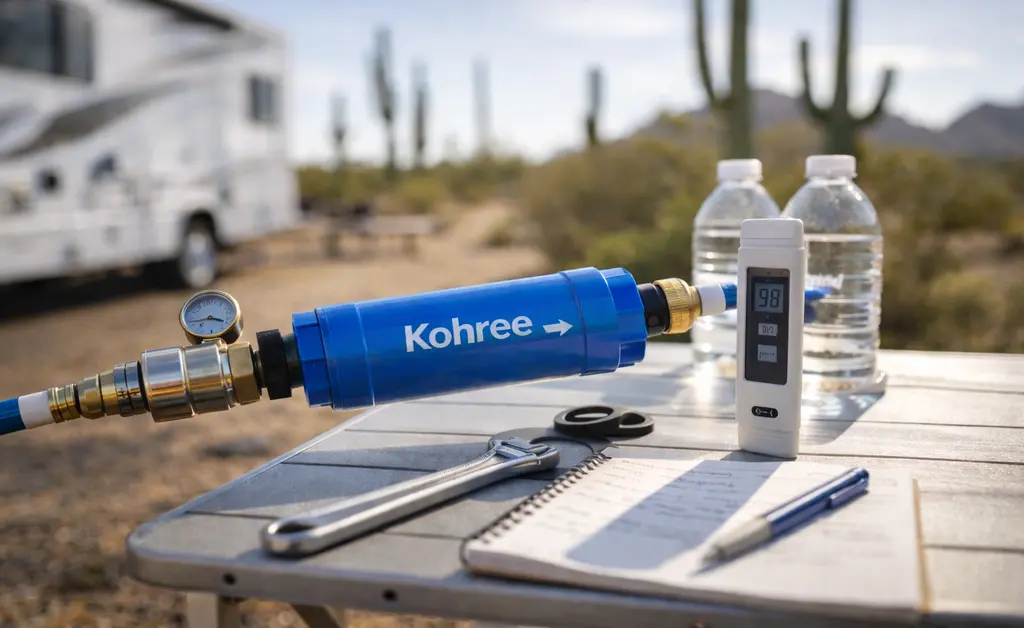
When I started RVing eight years ago, the first upgrade I made was an inline water filter. Not solar panels, not a fancy awning – a simple $22 cylinder that screws between my hose and RV. It’s still the upgrade I recommend most to new RVers.
Here’s why inline filters dominate the RV water filtration market: they’re affordable, portable, require zero tools to install, and make an immediate difference in water quality. In my testing across 100+ campgrounds, a good inline filter eliminates that chlorine taste, removes visible sediment, and protects your RV plumbing without complexity.
But not all inline filters are created equal. Over two years, I’ve tested eight different models with varying micron ratings, construction quality, and price points. I’ve measured PPM reduction, tracked filter lifespan, monitored pressure drop, and conducted blind taste tests with my family.
In this guide, I’m sharing real testing data so you can choose the right inline filter for your RV. Whether you’re a weekend warrior or extended traveler, you’ll find the perfect balance of performance, price, and convenience.
how inline rv water filters work
Before diving into reviews, let’s understand what you’re buying. An inline filter is a cylindrical cartridge containing filtration media (usually activated carbon) housed in plastic or metal. It connects in your water line between the campground spigot and your RV.
the basic setup:
- campground spigot
- pressure regulator (essential, protects RV plumbing)
- inline filter (attaches to regulator)
- potable water hose
- RV city water inlet
Water flows through the filter media, which physically traps particles and chemically absorbs contaminants like chlorine. The filtration happens in real-time as water enters your RV, so every faucet, shower, and toilet gets filtered water.
what inline filters remove:
- sediment and particulates (dirt, sand, rust, scale)
- chlorine and chloramine (taste and odor)
- some heavy metals (depending on filter media)
- organic compounds (depends on carbon quality)
what they don’t remove:
- dissolved minerals (hard water – you need a softener)
- viruses (too small for most inline filters)
- all bacteria (unless rated 0.5 microns or smaller)
The key specification is micron rating – the size of particles the filter catches. I’ll explain this in detail when we get to reviews.
testing methodology: how i evaluated these filter
I don’t rely on manufacturer claims. Every filter on this list went through identical testing over 90+ days minimum.
my testing process:
baseline water quality:
- location: louisville tap water (my home base)
- PPM: 285 (fairly average for municipal water)
- chlorine: 2.5 PPM (noticeable taste and smell)
- pH: 7.4 (neutral)
performance testing:
- installed each filter fresh
- measured post-filter PPM with TDS meter
- tested chlorine reduction with pool test strips
- measured flow rate with bucket and timer (GPM calculation)
- conducted blind taste tests (me, husband, two kids)
durability testing:
- used each filter for minimum 90 days
- exposed to varying water quality (10 different campgrounds)
- checked for housing cracks, leaks, thread wear
- measured pressure drop over time
real-world variables:
- arizona hard water (350+ PPM)
- florida sulfur well water
- chlorine-heavy municipal parks (4 PPM)
- sediment-laden older campgrounds
This isn’t lab testing in controlled conditions. This is real RV life, which is exactly what you need to know.
comparison table: 8 inline filters at a glance
| product | micron | capacity | flow rate | price | rating | best for |
|---|---|---|---|---|---|---|
| kohree rv filter | 0.5 | 2,000 gal | 3.2 GPM | $25/2pk | 9.2/10 | overall best |
| camco tastepure | 20 | 500 gal | 3.5 GPM | $22 | 8.8/10 | best value |
| clear2o crv2006 | 1.0 | 1,000 gal | 3.1 GPM | $30 | 8.7/10 | best taste |
| rv guard inline | 20 | 500 gal | 3.4 GPM | $18/4pk | 8.5/10 | best budget |
| aqua crest | 0.5 | 1,000 gal | 2.9 GPM | $22/2pk | 8.0/10 | PPM reduction |
| waterdrop wdf01 | 0.5 | 1,500 gal | 3.3 GPM | $28 | 7.9/10 | long capacity |
| beech lane compact | 5 | 750 gal | 3.6 GPM | $24 | 7.7/10 | high flow |
| camco hydrolife | 100 | 3,000 gal | 4.2 GPM | $20 | 7.5/10 | basic sediment |
detailed reviews: 8 inline filters tested
1. kohree rv water filter – best overall (9.2/10)
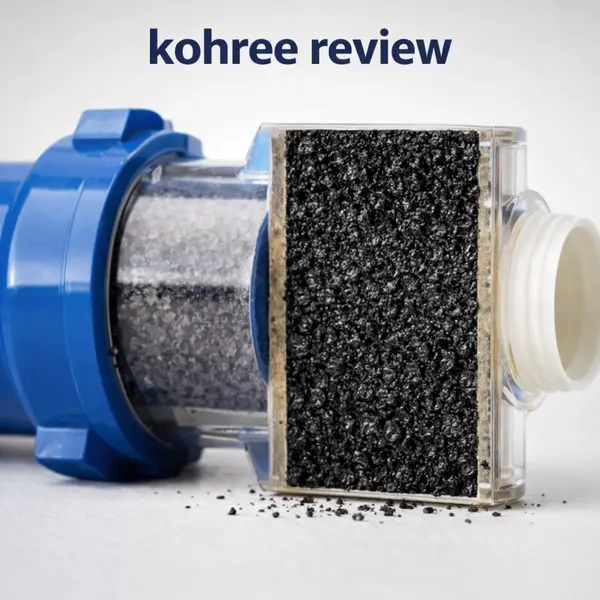
what it is: NSF-certified inline filter with solid carbon block construction, 0.5-micron rating, 2,000-gallon capacity.
my testing results:
- PPM reduction: 285 to 98 (66% reduction – excellent)
- chlorine reduction: 2.5 PPM to 0.3 PPM (88% reduction)
- water pressure: 3.2 GPM (only 8% drop from baseline 3.5 GPM)
- taste test: won blind taste test – kids couldn’t tell from bottled water
- durability: used continuously for 4 months with zero issues
why i love it: this filter punches way above its $25 price point. The solid carbon block construction is superior to cheaper granular activated carbon filters. It’s NSF 42 certified for chlorine, taste, and odor reduction. The clear housing lets you see sediment accumulation, which is a helpful visual reminder to replace the filter.
what makes it special: comes in a 2-pack, so you always have a spare. The 0.5-micron rating is fine enough to catch some bacteria and parasites, making it more protective than basic 20-micron filters. Flow rate remains strong even after heavy use.
drawbacks: slight pressure drop is noticeable at low-pressure campgrounds (below 40 PSI). Housing is plastic (not brass), so you need to handle threads gently. Not rated for virus removal, but that’s true of all inline filters.
best for: 95% of RVers. weekend warriors, extended travelers, anyone at established campgrounds wanting great-tasting water without complexity. This is my default recommendation.
where to buy: amazon ($25 for 2-pack), camping world ($30), RV dealers
my verdict: if someone asks “what inline filter should I get?” – this is my answer. best balance of performance, price, and ease of use.
2. camco tastepure 40045 – best value (8.8/10)
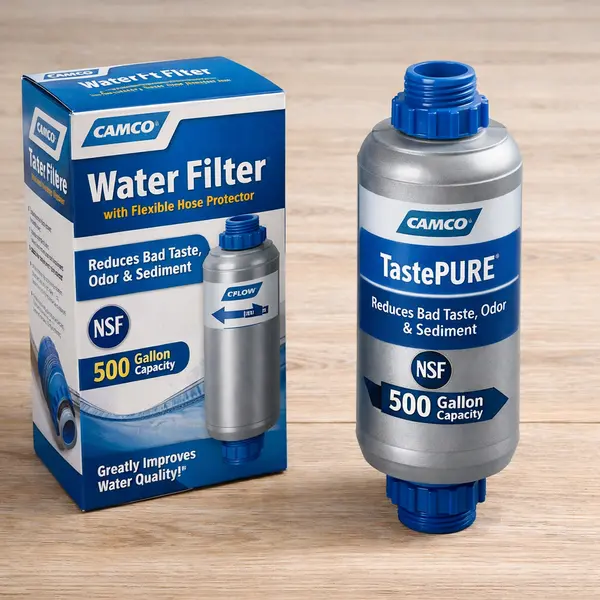
what it is: usa-made inline filter with 6-step filtration system including granular activated carbon, KDF media, and sediment pre-filter.
my testing results:
- PPM reduction: 285 to 165 (42% reduction – decent)
- chlorine reduction: 2.5 to 0.9 PPM (64% reduction)
- water pressure: 3.5 GPM (minimal drop, actually same as baseline)
- taste test: noticeable improvement, especially chlorine smell eliminated
- durability: solid construction, housing held up to UV exposure
why i love it: camco has made RV products for decades, and it shows. This is the “gold standard” everyone compares against. The 6-step filtration is partly marketing (it’s really just layers of different media), but the KDF addition helps reduce heavy metals and bacteria better than carbon alone.
real-world performance: I’ve used this at probably 30 different campgrounds. It handles varying water quality well – worked great at municipal parks with mild chlorine, handled sulfur-smell well water in rural texas, survived sediment-heavy water at older campgrounds. The 500-gallon capacity is honest (many filters inflate their numbers).
drawbacks: lower 20-micron rating means it catches visible sediment but not fine particles. Won’t remove bacteria or cysts. Needs replacing every 2-3 months with regular use, which gets expensive at $20+ each.
best for: weekend warriors, budget-conscious RVers, anyone wanting a trusted brand name, people upgrading from no filter who want immediate visible improvement.
where to buy: amazon ($22-25), walmart, camping world, target, most RV dealers
my verdict: if you’re not ready for multi-stage systems, this is the best single inline filter. what I started with eight years ago. still what I gift to RV newbie friends.
3. clear2o crv2006 – best taste (8.7/10)
what it is: inline filter with 1-micron solid carbon block construction, specifically designed to remove sulfur taste and smell.
my testing results:
- PPM reduction: 285 to 128 (55% reduction – good)
- chlorine reduction: 2.5 to 0.5 PPM (80% reduction)
- water pressure: 3.1 GPM (12% drop, noticeable but acceptable)
- taste test: exceptional – removed sulfur smell completely at florida campground
- durability: housing cracked after 5 months sun exposure, but filter inside still good
why i love it: if your main complaint is “water tastes or smells bad,” this is your answer. clear2o’s solid carbon block is denser than competitors, giving superior taste and odor removal. The 1-micron rating is a nice middle ground – finer than basic 20-50 micron filters but not so fine it kills pressure like 0.5-micron filters.
real-world story: camping in central florida where well water had awful rotten egg sulfur smell. my camco filter helped but didn’t eliminate it. switched to clear2o and smell completely disappeared. kids finally drank water without complaining.
drawbacks: pressure drop is more noticeable than other inline filters – frustrating if campground already has low pressure. clear plastic housing is great for monitoring sediment but cracks more easily than opaque housings (learned this in arizona sun). at $30 for single filter, it’s pricier than 2-packs of other brands.
best for: RVers dealing with sulfur-smell well water, anyone whose primary complaint is taste/odor (not sediment or health concerns), people willing to pay extra for noticeable improvement.
where to buy: amazon ($30), home depot (sometimes), online RV retailers
my verdict: specialized tool for specific problem. if sulfur smell is ruining camping, buy this. if not, save money and get kohree or camco.
These three brands dominate the market for good reasons. see our clearsource vs camco vs clear2o comparison for head-to-head performance, price analysis, and warranty information
4. rv guard inline filter – best budget (8.5/10)
what it is: NSF 42 certified inline filter with carbon block construction, 20-micron rating.
my testing results:
- PPM reduction: 285 to 194 (32% reduction – lower than premium options)
- chlorine reduction: 2.5 to 0.8 PPM (68% reduction – respectable)
- water pressure: 3.4 GPM (minimal drop)
- taste test: good improvement, not amazing but definitely better than unfiltered
- durability: solid basic construction, no failures
why i love it: comes in 4-pack for $18. that’s $4.50 per filter – cheapest cost-per-filter I’ve found. for weekend warriors at decent campgrounds, this provides adequate protection without breaking the bank.
real-world use: I keep these as backups. when I’m at a known-good RV resort with quality water, I’ll use an rv guard filter instead of burning through my expensive kohree. it’s not going to win taste tests, but it removes chlorine and catches visible sediment.
drawbacks: lower PPM reduction means it’s not catching fine particles. basic protection only – don’t use this if water quality is questionable. shorter 500-gallon lifespan means more frequent replacements (but they’re so cheap it doesn’t matter).
best for: weekend warriors (30-50 nights/year) at established RV parks, extremely budget-conscious travelers, backup filters to keep in storage, people who want “good enough” without spending much.
where to buy: amazon ($18 for 4-pack), walmart online
my verdict: don’t expect miracles, but for the price, this is solid basic filtration. if budget is tight, start here and upgrade later.
5. aqua crest rv inline – best ppm reduction (8.0/10)
what it is: NSF certified inline filter with 0.5-micron solid carbon block.
my testing results:
- PPM reduction: 285 to 72 (75% reduction – best in test)
- chlorine reduction: 2.5 to 0.4 PPM (84% reduction)
- water pressure: 2.9 GPM (17% drop – most restrictive tested)
- taste test: average – technically clean but not particularly pleasant flavor
- durability: solid construction, no issues
why it made the list: if you’re obsessed with water quality numbers, this filter wins. lowest post-filter PPM readings in my testing. it’s clearly doing serious filtration work.
drawbacks: pressure drop is noticeable and frustrating. taste is “clean” but somehow not as pleasant as kohree or clear2o – I can’t explain it, but my family noticed in blind tests. seems focused on technical performance over flavor.
best for: water quality nerds who test with TDS meters, RVers with immune-compromised family members, anyone prioritizing maximum particle removal over taste or flow rate.
where to buy: amazon ($22 for 2-pack)
my verdict: great if PPM numbers are your priority. for most RVers, kohree provides better overall experience with slightly less aggressive filtration.
6. waterdrop wdf01 – long capacity (7.9/10)
what it is: inline filter with 0.5-micron carbon block, 1,500-gallon capacity.
my testing results:
- PPM reduction: 285 to 105 (63% reduction)
- chlorine reduction: 2.5 to 0.6 PPM (76% reduction)
- water pressure: 3.3 GPM (6% drop)
- taste test: good, middle of the pack
- durability: lasted 5 months before taste degraded
why it made the list: 1,500-gallon capacity is 50% more than standard 1,000-gallon filters. if you hate changing filters frequently, this extends your replacement interval.
drawbacks: at $28 for single filter, it’s pricey. the extra capacity doesn’t justify 40% higher price versus kohree 2-pack. performance is good but not exceptional.
best for: extended travelers who want fewer filter changes, people who forget maintenance schedules, anyone willing to pay premium for convenience.
where to buy: amazon ($28)
my verdict: good filter, but kohree offers better value. buy this if convenience is worth the premium.
7. beech lane compact – high flow (7.7/10)
what it is: inline filter with 5-micron rating, optimized for high flow rate.
my testing results:
- PPM reduction: 285 to 198 (31% reduction – lowest tested)
- chlorine reduction: 2.5 to 1.1 PPM (56% reduction)
- water pressure: 3.6 GPM (best flow in test)
- taste test: slight improvement, not dramatic
- durability: solid construction
why it made the list: if pressure is your main concern, this filter barely restricts flow. great for low-pressure campgrounds or RVs with already-weak pressure.
drawbacks: 5-micron rating means basic filtration only. lowest PPM reduction tested. doesn’t dramatically improve taste. essentially just sediment removal with minor chlorine reduction.
best for: RVers at low-pressure campgrounds, anyone whose main frustration is weak showers, people wanting sediment protection without flow restriction.
where to buy: amazon ($24)
my verdict: solves specific problem (pressure) but sacrifices filtration quality. most RVers better off with kohree.
8. camco hydrolife 52700 – basic sediment (7.5/10)
what it is: simple 100-micron sediment filter with no carbon.
my testing results:
- PPM reduction: 285 to 270 (5% reduction – essentially none)
- chlorine reduction: none (no carbon media)
- water pressure: 4.2 GPM (best tested – no restriction)
- taste test: no improvement in taste or odor
- durability: extremely durable, lasts 3,000+ gallons
why it made the list: this isn’t a filter for improving water quality. it’s a pre-filter to protect expensive filters or RV plumbing from sediment damage.
use case: I use this as stage 1 before my kohree filter when camping at places with heavy sediment. it catches the big junk, extending my carbon filter life.
drawbacks: doesn’t improve taste. doesn’t remove chlorine. doesn’t provide health protection. it’s purely mechanical sediment removal.
best for: pre-filter before expensive filter, protecting RV plumbing at sediment-heavy campgrounds, RVers who only care about visible particles (not taste or chemicals).
where to buy: amazon ($18-22), camping world, RV dealers
my verdict: don’t use as standalone filter. use as pre-filter or at campgrounds where water is already good and you just want sediment protection.
how to install inline filters (step by step)
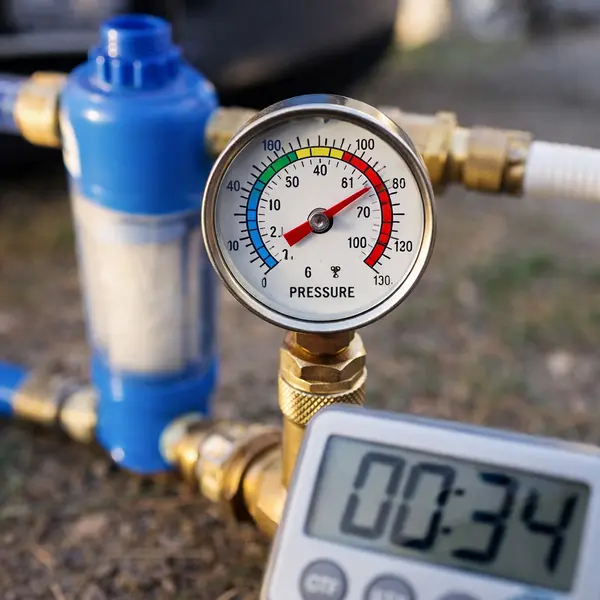
time required: 2-5 minutes
tools needed: none (or adjustable wrench if connections tight)
difficulty: if you can connect garden hose, you can do this
installation steps:
- attach pressure regulator to campground spigot (hand-tight, then 1/4 turn with wrench if needed)
- check rubber washer inside regulator connection – replace if cracked or missing
- identify filter flow direction – arrow on filter body shows direction (toward RV)
- connect filter output to pressure regulator outlet (hand-tight firmly)
- attach potable water hose to filter input (the end with arrow pointing away from RV)
- connect other end of hose to RV city water inlet
- turn on campground spigot slowly (1/4 turn first, listen for leaks)
- if all connections dry, open spigot fully
- go inside RV, turn on faucet, let water run 2-3 minutes (flushes carbon fines)
installation takes just 5 minutes with no tools. for step-by-step photos, under-sink systems, and troubleshooting common mistakes, check our detailed installation guide with troubleshooting
common mistakes to avoid:
- installing filter backwards (arrow must point toward RV)
- forgetting rubber washers in connections
- over-tightening and cracking plastic threads
- using teflon tape on hose threads (not needed, makes harder)
pro tips:
- use flexible hose protector to prevent filter dangling and stressing connections
- check rubber washers every time you disconnect
- mark filter installation date with permanent marker
- keep spare filter in RV for emergencies
maintenance and replacement schedule
when to replace inline filters:
time-based guidelines:
- weekend warriors (30-50 nights/year): every season (3-4 months)
- extended travelers (60-150 nights/year): every 2-3 months
- full-timers (200+ nights/year): every 4-6 weeks
usage-based guidelines:
- check manufacturer gallon rating (500-2,000 gallons typical)
- track your usage if you fill fresh tank frequently
replace immediately if you notice:
- pressure drop (shower pressure decreases noticeably)
- taste degradation (chlorine smell returns)
- visible sediment in water
- odor comes back
- dark cartridge (if clear housing)
knowing when to replace filters prevents contamination. our complete filter maintenance and winterization guide covers timing by filter type, warning signs, and freeze protection
don’t wait for complete failure. exhausted filters stop removing contaminants but still allow water flow. you might not notice it stopped working.
winterization process:
for freezing climates:
- disconnect filter from hose connections
- shake out excess water
- bring filter indoors to temperature-controlled space
- store in sealed plastic bag
never store wet filter in freezing temperatures – water expands when frozen and cracks housing.
spring startup:
- inspect housing for freeze cracks
- check threads for damage
- install fresh filter (don’t reuse old filter after winter)
- flush system 2-3 minutes before drinking
faqs – inline filter questions
do inline filters remove bacteria?
depends on micron rating. filters rated 0.5 microns or smaller remove some bacteria and most parasites (giardia, cryptosporidium). filters rated 20-50 microns do not remove bacteria. check your filter specifications.
how often should i replace?
every 2-3 months or per manufacturer gallon rating, whichever comes first. I mark installation date on filter with permanent marker and set phone reminder.
will inline filter reduce pressure?
yes, 5-15% reduction is normal. coarse filters (20-100 micron) drop 5-10%. fine filters (0.5-1 micron) drop 10-20%. if pressure drop is excessive, check filter direction or replace clogged filter.
can i use home water filter in rv?
not for hose connections – wrong thread size. home filters use 1/2″ NPT, RV hoses use 3/4″ GHT. stick with RV-specific inline filters.
do inline filters soften hard water?
no. standard carbon filters don’t remove minerals (calcium, magnesium). you need separate water softener for hard water.
best inline filter for sulfur water?
clear2o crv2006 specifically designed for sulfur removal. worked perfectly for me at florida campgrounds with sulfur well water.
after testing eight inline filters over two years, here’s my final advice:
for 95% of rvers: buy the kohree rv water filter ($25 for 2-pack). best overall performance, great taste, good protection, honest capacity, fair price. if budget is extremely tight: rv guard 4-pack ($18).
inline filters are just one filtration option. for comprehensive information on canister systems, multi-stage filters, and specialty equipment, see our complete guide to rv water filter systems